
Shopping Cart
There are no more items in your cart
- News
- 0 likes
- 209 views
- 0 comments
- Types of Miniature Bearings, Miniature Bearings, Miniature Bearings price, Buy Miniature Bearings online
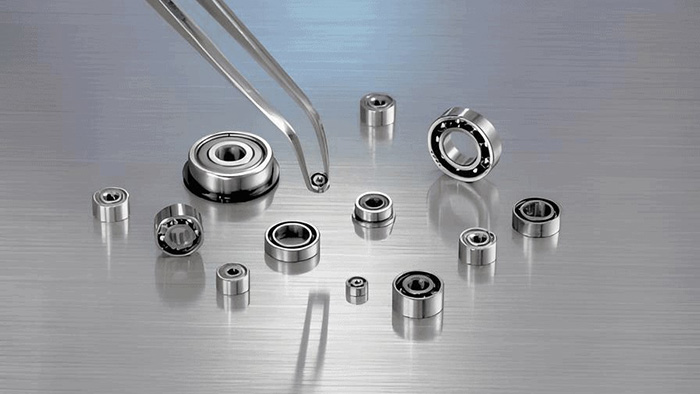
In many machines, the most important components are not always the largest ones. Some of the most precise and essential systems in modern industry depend on very small parts working perfectly under constant motion. One of those parts is the bearing. More specifically, Miniature Bearings play a major role in compact devices where space is limited but performance still matters. They are used in medical tools, robotics, dental equipment, small electric motors, instruments, aerospace assemblies, and many other applications where accuracy, low friction, and reliability are critical.
At first glance, these bearings may look too small to make a meaningful difference. In reality, they often determine whether a compact machine runs smoothly, quietly, and efficiently or fails earlier than expected. Because small systems usually operate at high speeds and tight tolerances, the quality and selection of the bearing become even more important than in many larger machines. Choosing the wrong size, material, shield type, or internal design can lead to heat, vibration, early wear, and expensive maintenance.
If you are sourcing compact bearing solutions for precision equipment, reviewing application-specific options from Alma Bearings can help you compare suitable designs and select components built for stable long-term performance.
Our products: Ball Bearings
Understanding What Miniature Bearings Are
The term Miniature Bearings generally refers to very small bearings manufactured for compact mechanical systems. These bearings are designed to reduce friction and support rotating or moving parts in equipment where standard bearing sizes would be too large. In most cases, miniature designs are associated with bearings that have a bore diameter of less than 10 millimeters, although exact size classifications may vary slightly by manufacturer or market.
Despite their small dimensions, these bearings are engineered with the same basic purpose as larger bearings. They support shafts, guide movement, carry radial or axial loads, and help maintain smooth mechanical operation. The difference is that they must do all of this inside highly restricted spaces, often under demanding speed and precision requirements.
That small size changes everything. In a large industrial gearbox, there may be more tolerance for vibration or slight variation in movement. In a handheld device, a surgical tool, or a miniature motor, there is much less room for error. This is why Miniature Bearings are often manufactured with very fine tolerances and high-quality surface finishes. In many cases, they must also operate quietly and with minimal resistance.
Their compact dimensions do not make them simple. In fact, the engineering behind them is often more delicate and more specialized than people expect.
Why Miniature Bearings Matter in Modern Equipment
Modern machinery is becoming smaller, lighter, and more precise across many industries. Medical devices are becoming less invasive and more portable. Robotics systems are using compact joints and actuators. Consumer electronics are getting thinner and more efficient. High-speed dental and laboratory tools require smooth rotation in very small assemblies. All of these developments increase the importance of Miniature Bearings.
When designers work with reduced space, they cannot simply shrink every component without considering mechanical consequences. A small bearing still has to carry load, maintain alignment, resist wear, and survive repeated motion cycles. In many applications, it must do so while operating at high speed. That means selection is not just about finding a bearing that fits into the housing. It is about finding one that fits the operating reality of the machine.
In practical terms, the right bearing can improve product lifespan, reduce noise, stabilize movement, and lower maintenance frequency. The wrong one can create inconsistent rotation, thermal issues, and reduced reliability. In sectors where precision matters, that difference is substantial.
Basic Working Principle of Miniature Bearings
Like other rolling bearings, Miniature Bearings reduce friction by replacing sliding motion with rolling motion. Instead of allowing two surfaces to rub directly against each other, the bearing places rolling elements between inner and outer rings. These rolling elements rotate as the shaft moves, greatly reducing resistance.
Most miniature bearing designs include an inner ring, an outer ring, rolling elements such as balls, and a cage that spaces the rolling elements apart. In small applications, the internal geometry must be controlled very carefully because even a tiny variation can affect performance.
The bearing may be open, shielded, or sealed depending on how much protection is needed from dust, debris, or moisture. Lubrication is also critical. Because miniature devices often run at high speeds, lubrication quality has a direct impact on heat generation and service life.
The basic principle sounds simple, but compact systems usually demand much more precision than larger machines. This is why manufacturing quality matters so much in this category.
Common Types of Miniature Bearings
Although the category sounds narrow, there are several types of Miniature Bearings used across modern equipment. The choice depends on speed, load direction, operating conditions, and available installation space.
Miniature Deep Groove Ball Bearings
This is the most common style. Deep groove designs are widely used because they are versatile, compact, and capable of handling radial loads as well as moderate axial loads. They are common in small motors, instruments, fans, and precision devices.
Miniature Angular Contact Bearings
These are used when the application involves combined loads and greater axial support is needed. They are especially useful in high-speed systems where rigidity and accurate shaft positioning are important.
Miniature Thrust Bearings
When the primary load acts along the shaft axis rather than perpendicular to it, thrust designs become a better choice. These are less common than deep groove styles but important in specialized assemblies.
Miniature Stainless Steel Bearings
In environments with moisture, chemicals, or hygienic requirements, stainless steel versions may be preferred. They are frequently used in medical devices, food-related equipment, and sensitive laboratory systems.
Miniature Ceramic or Hybrid Bearings
These designs use ceramic balls or ceramic construction to improve speed capability, corrosion resistance, and electrical insulation. They are often selected for advanced precision systems and specialized high-performance applications.
Because each design serves a different purpose, engineers should avoid selecting based only on dimensions. Matching the internal design to the real operating conditions is what produces reliable results.
Where Miniature Bearings Are Commonly Used
One reason Miniature Bearings are so important is that they serve a very wide range of industries. Their small size makes them essential wherever compact rotating systems are used.
In electric micro motors, they support the shaft while allowing high-speed operation with low friction. In dental drills and medical handpieces, they help deliver smooth, accurate movement. In robotics, they are used inside small joints, actuators, wheels, and precision motion assemblies. In aerospace instruments, they support lightweight, high-accuracy components where every gram and every millimeter matter.
You will also find them in laboratory devices, optical instruments, printers, small gearboxes, precision pumps, compact fans, measuring tools, surveillance systems, and consumer electronics. Even small household products can depend on them, although the performance expectations vary greatly by industry.
The interesting part is that the same general bearing concept can appear in products with completely different operating demands. A bearing in a medical tool may need ultra-low noise and clean operation. A bearing in a small electric motor may need high-speed endurance. A bearing in a precision sensor system may need exceptional rotational accuracy. That is why application analysis must come before product selection.
Key Factors to Consider Before Choosing Miniature Bearings
Selecting Miniature Bearings correctly requires more than checking diameter and width. Size matters, of course, but it is only the starting point. The real selection process involves understanding the full operating environment.
Load Type and Direction
The first question is simple: what kind of force will the bearing carry? If the load is mostly radial, a deep groove ball bearing may be sufficient. If axial loads are significant, another design may be more appropriate. Some applications involve both, and the bearing must be able to handle combined loading without instability.
Speed Requirements
Many miniature systems run faster than people expect. Small motors, handpieces, spindles, and compact fans can operate at very high revolutions per minute. High-speed operation increases the importance of precision, lubrication, and material quality. A bearing that fits physically may still fail if its speed rating is too low.
Available Space
Compact systems often leave very little room for surrounding structures, seals, lubrication access, or mounting adjustments. Engineers need to account not just for the bearing size but also for tolerances, fit, shaft support, and assembly method.
Environmental Exposure
Dust, moisture, chemicals, sterilization cycles, and temperature swings can all affect performance. In clean indoor equipment, open or lightly shielded bearings may work well. In contaminated or wet environments, sealed or corrosion-resistant options are often safer.
Noise and Smoothness
In instruments, medical tools, and premium devices, noise level can be a major concern. Surface finish, cage design, lubrication, and manufacturing precision all contribute to quiet operation.
Service Life and Maintenance
Some machines allow frequent maintenance. Others are expected to run for long periods with limited intervention. The bearing choice should reflect realistic maintenance intervals and replacement accessibility.
Material Selection and Why It Changes Performance
Material choice has a major effect on how Miniature Bearings perform in real conditions. Standard chrome steel is often used because it provides hardness, wear resistance, and good fatigue strength. It is suitable for many dry and controlled industrial settings.
Stainless steel is selected when corrosion resistance becomes important. It may not always match chrome steel in every mechanical characteristic, but it offers major advantages where moisture or chemical exposure is part of the operating environment.
Hybrid bearings, usually combining steel rings with ceramic balls, offer another level of performance. Ceramic rolling elements are lighter and harder than steel, which can improve high-speed behavior and reduce friction under certain conditions. They also provide electrical insulation benefits in some systems. However, they usually come at a higher cost and are selected when their specific advantages justify the investment.
Material selection should always follow the application. A premium material is not automatically the best choice if the operating environment does not require it. On the other hand, trying to save cost by using a standard material in a demanding environment can create reliability problems very quickly.
If your equipment depends on compact precision motion, choosing the right bearing design early can prevent costly redesigns and maintenance issues later. Explore the miniature and precision bearing options available through Alma Bearings to compare solutions suited to speed, load, and environmental requirements.
Shielded, Sealed, or Open: Which Style Is Better?
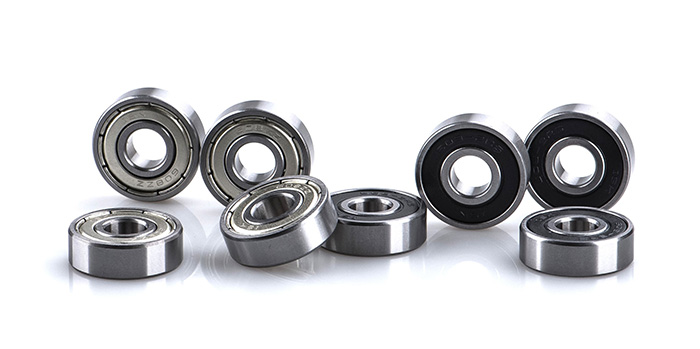
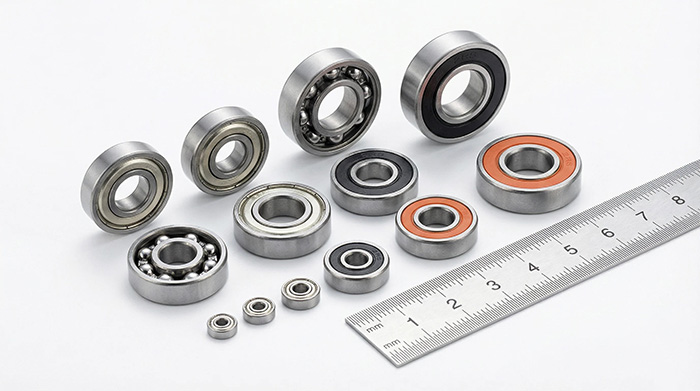
A common selection question involves protection design. Miniature Bearings are available in open, shielded, and sealed configurations, and each has advantages.
Open bearings usually offer the lowest friction and are useful where external lubrication and clean operating conditions are available. They are common in controlled environments where contamination risk is low.
Shielded bearings include thin metallic shields that help reduce dust entry while preserving relatively low running resistance. These are often a balanced choice for small electric motors and general compact equipment.
Sealed bearings provide stronger protection against contamination and lubricant loss. They are often preferred in environments with dust, moisture, or where maintenance access is limited. However, seal contact can add a little more friction compared with open or shielded versions.
The best choice depends on the machine, not just the catalog. In compact assemblies, contamination can damage the bearing quickly, so protection level should never be treated as a minor feature.
Precision, Tolerances, and Why Small Size Increases Sensitivity
One reason Miniature Bearings require careful sourcing is that small bearings are highly sensitive to manufacturing quality. Tiny variations in roundness, raceway finish, radial runout, or ball size can noticeably affect performance.
In many compact systems, there is no room for rough operation. If tolerances are poor, the bearing may produce vibration, inconsistent rotation, or extra heat. That is especially problematic in instruments and devices where stability and repeatability matter.
Higher precision grades are often necessary in high-speed or low-noise applications. The smoother the internal geometry, the better the load distribution and lubricant behavior. This usually leads to longer life and more stable performance.
For procurement teams, this means miniature bearing selection should not be based on dimension alone. Two bearings with the same size can perform very differently depending on manufacturing quality.
Installation Matters More Than Buyers Expect
Even the best Miniature Bearings can fail early if installed incorrectly. Small components are especially vulnerable to handling damage because the contact surfaces are delicate and the internal clearances are tight.
Improper pressing force, contamination during assembly, misalignment, or using unsuitable tools can create immediate or gradual damage. For example, applying force through the wrong ring during mounting can transfer stress through the rolling elements and damage the raceways before the machine even starts running.
In miniature assemblies, fit tolerances must also be controlled carefully. Excessive interference can reduce internal clearance. A loose fit can create instability or creeping. Clean installation conditions are essential because even small particles can interfere with smooth movement.
This is one reason technical support from experienced suppliers can be very valuable, especially in precision industries.
How to Identify High-Quality Miniature Bearings Before Buying
Not all bearings that look similar are built to the same standard. High-quality Miniature Bearings usually come from reputable manufacturers with strong quality control, traceability, and technical documentation. Buyers should review dimensional accuracy, material details, seal type, load ratings, speed ratings, and lubricant information whenever possible.
Packaging and supplier credibility also matter. Counterfeit or low-grade bearings may imitate the appearance of established brands while lacking the internal precision needed for real performance. A small price difference at purchase can become a much larger maintenance cost later.
Reliable suppliers can help verify authenticity, suggest appropriate alternatives, and make sure the selected product matches the application instead of simply matching the size. That distinction is crucial.
Common Selection Mistakes to Avoid
When people select Miniature Bearings without full application analysis, they often make similar mistakes. One common error is choosing based only on dimensions. Another is underestimating speed. A third is ignoring contamination or moisture exposure because the machine “looks clean” during design, even though real operation is harsher.
Some buyers also focus too heavily on unit price and ignore long-term performance. In compact machines, the bearing cost is often small compared with the cost of failure, warranty claims, downtime, or damage to connected components.
Another mistake is assuming that all miniature bearings are interchangeable if the size is the same. In practice, internal design, material, lubricant, shield style, and precision grade can change the performance dramatically.
Avoiding these mistakes usually comes down to one principle: treat the bearing as a functional engineering component, not just a catalog item.
Conclusion
Choosing the right bearing in a compact system is never a small decision. Miniature Bearings may be physically small, but their influence on performance, precision, reliability, and service life is enormous. They support the motion of modern tools, instruments, motors, robotics systems, and sensitive equipment that depend on smooth and consistent operation.
To select the right one, it is important to look beyond size. Load direction, speed, environment, sealing, material, precision class, lubrication, and installation conditions all play a role. When those factors are evaluated properly, the result is a bearing that performs quietly, efficiently, and reliably over the long term. When they are ignored, problems usually appear much sooner than expected.
The best buying decisions come from understanding the real application, not just reading part numbers. Whether you are designing a new product, replacing an existing component, or sourcing compact bearing solutions for industrial use, careful selection will always pay off in durability and performance.
For dependable sourcing and technical guidance on Miniature Bearings, visit Alma Bearings to review precision bearing options tailored to compact and high-performance applications.
Our products: Roller Bearings
Frequently Asked Questions
1. What size qualifies as a miniature bearing?
In most cases, miniature bearings are bearings with very small dimensions, often with a bore diameter below 10 mm. Exact definitions can vary by manufacturer, but the term generally refers to bearings designed for compact, precision-driven applications.
2. Where are miniature bearings most commonly used?
They are widely used in small electric motors, medical and dental tools, robotics, laboratory devices, instrumentation, compact pumps, optical systems, and many precision mechanical assemblies where space is limited.
3. Are miniature bearings only for light loads?
Not necessarily. While they are small, many are engineered to handle meaningful loads relative to their size. The key is choosing the correct design, material, and precision level for the actual operating conditions.
4. How do I choose between open, shielded, and sealed miniature bearings?
Open bearings are best for clean environments with external lubrication access. Shielded versions offer light contamination protection with lower friction, while sealed versions provide stronger protection in dusty or moist conditions and are often better for low-maintenance applications.
Comments (0)