
Shopping Cart
There are no more items in your cart
- News
- 0 likes
- 90 views
- 0 comments
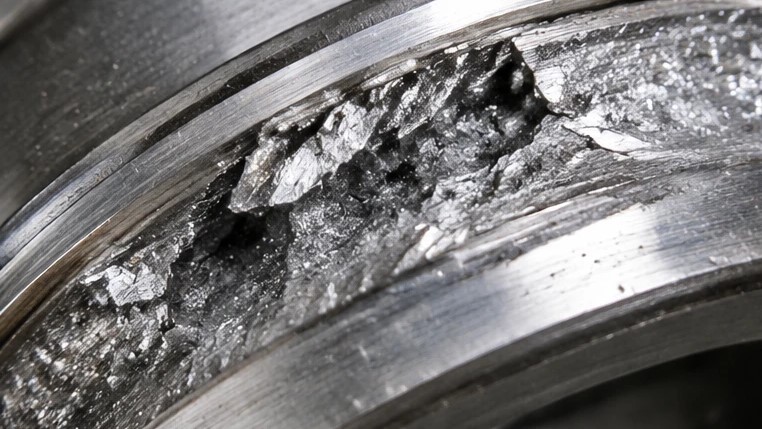
Inside heavy industrial machinery, rolling element bearings operate quietly beneath solid cast iron and steel housings, serving as the essential pivot points that support dynamic loads and ensure smooth rotational movement. Whether mounted inside multi-megawatt electric motors, high-speed centrifugal pumps, heavy mining conveyors, or industrial gearboxes, bearings are engineered to withstand millions of continuous stress cycles. However, bearings are finite-life wear components. When operating conditions deviate from design parameters or when scheduled maintenance is neglected, the physical consequences of bearing failure begin to unfold.
Bearing failure is rarely an instantaneous event. Instead, it is an escalating physical progression that transforms localized microscopic surface distress into severe mechanical destruction. When an operational bearing begins to deteriorate, the mechanical equilibrium of the entire machine is compromised. The clearance holding the rotating shaft in precise alignment widens, friction levels climb rapidly, operating temperatures surge, and destructive kinetic vibrations transmit through adjacent mechanical assemblies.
Understanding the full spectrum of events triggered by bearing failure is vital for reliability engineers, plant managers, and maintenance teams. Left unchecked, a damaged bearing does not simply stop spinning; it frequently triggers catastrophic collateral destruction, ruining motor stators, destroying expensive shafts, cracking cast housings, and triggering unscheduled emergency plant shutdowns that cost tens of thousands of dollars per hour.
Click to purchase deep groove ball bearings.
The Four Progressive Stages of Bearing Failure
To understand what physically happens inside machinery when bearings deteriorate, reliability professionals categorize the progression into four distinct chronological stages based on physical degradation, acoustic emission, and vibration behavior.
| Failure Stage | Physical Condition of Bearing | Measurable Operational Symptoms | Recommended Maintenance Action |
|---|---|---|---|
| Stage 1: Micro-Fatigue Initiation | Subsurface micro-cracks form beneath raceways; lubricant begins minor shearing | Ultrasonic stress waves present; no visible physical wear or audible noise | Trend high-frequency acoustic data; optimize lubrication viscosity and volume |
| Stage 2: Surface Distress & Pitting | Micro-cracks breach raceway surface; microscopic spalls and indentations develop | Detectable high-frequency vibration acceleration peaks; slight acoustic changes | Schedule planned replacement during the next routine plant maintenance window |
| Stage 3: Macroscopic Damage | Severe flaking, raceway spalling, ball/roller surface scoring, and cage looseness | Elevated overall vibration velocity; audible whining or rumbling; rising temperature | Order replacement components immediately; plan shutdown within days |
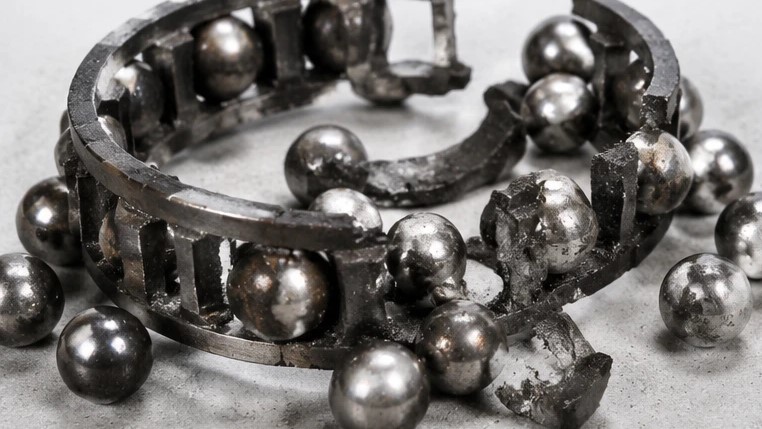
| Stage 4: Catastrophic Breakdown | Cage collapse, rolling element jamming, thermal seizure, and ring fracture | Extreme vibration, high noise levels, heavy smoke, and machine shutdown | Immediate emergency machine trip to avoid catastrophic collateral destruction |
Stage 1: Subsurface Micro-Fatigue
In the initial stage of bearing degradation, external surfaces of the raceways and rolling elements remain polished and visually pristine. However, deep within the metallurgical matrix of the hardened steel, cyclic shear stresses occurring beneath the contact zones begin to break down the crystalline structure. These alternating stresses eventually initiate microscopic cracks below the surface. At this early juncture, traditional vibration meters reading velocity or displacement show normal machine operation, and the bearing runs cool to the touch. The only measurable signature is high-frequency stress waves that can be picked up exclusively through specialized ultrasonic detection or high-frequency acoustic emission sensors.
Stage 2: Surface Pitting and Micro-Spalling
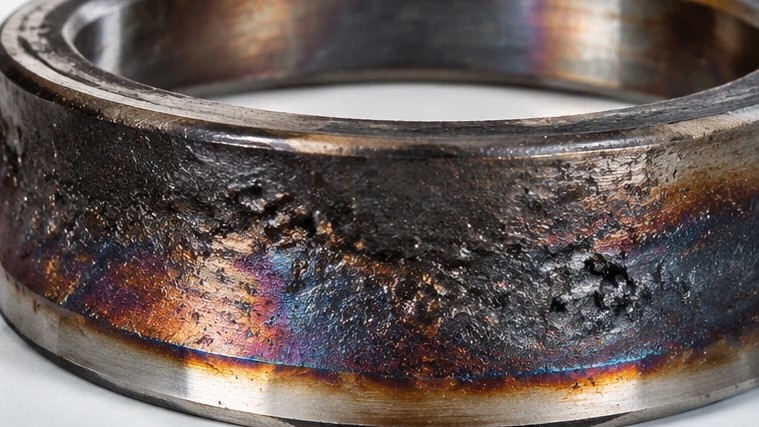
As machine operation continues, continuous cyclic contact drives subsurface micro-cracks upward toward the raceway surface. Eventually, microscopic pieces of steel flake away, leaving behind tiny pits and craters measuring mere microns across. As rolling elements pass over these localized indentations, micro-shocks occur, breaking through the elastohydrodynamic oil film. These micro-impacts excite the natural frequencies of the bearing rings, generating distinct high-frequency acceleration spikes. At this stage, slight discoloration may appear in the lubricant, but overall machine performance remains largely functional, providing maintenance teams with an ideal operational window to schedule a controlled component replacement.
Click to purchase ball bearings.
Stage 3: Macroscopic Flaking and Geometric Distortion
If Stage 2 warnings are ignored, the degradation accelerates rapidly into macroscopic destruction. The microscopic pits link together, creating deep, jagged craters across the primary contact tracks of both inner and outer raceways. Rolling elements suffer severe surface erosion, flat spots, and pitting, while the bearing cage begins to flex, rattle, and deform due to erratic ball dynamics. The physical geometry of the bearing is industrial induction motors, the air gap between the rotating rotor and the stationary stator core is remarkably small, often measuring less than a single millimeter. When excessive wear causes the bearing to drop, the rotating rotor contacts the stationary stator laminations at full operational speed. This event, known as rotor rub, generates massive frictional friction, tears the stator slot insulation, short-circuits the copper windings, and completely destroys the electric motor beyond repair.
Furthermore, severe bearing degradation transfers destructive radial and axial shock loads into connected gearboxes and couplings. When a supporting bearing loses its geometric rigidity, the shaft deflects under load. This deflection tilts the mounted spur or helical gears, destroying the engineered tooth contact pattern. Dynamic forces concentrate entirely onto gear tooth tips and edges rather than distributing evenly across the entire face width, leading to premature tooth breakage, severe pitting, and eventual gearbox seizure.
Mechanical seals are equally vulnerable to bearing failure. Precision pump seals rely on a microscopic fluid barrier between stationary and rotating seal faces to contain high-pressure liquids. When an adjacent pump bearing begins to fail, elevated vibration and shaft runout force the seal faces apart. Abrasive friction rapidly grooves the polished silicon carbide or tungsten carbide faces, while the excessive shaft deflection destroys secondary elastomer O-rings, leading to immediate pump leakage, toxic fluid releases, or environmental contamination.
Chemical, Lubrication, and Thermal Degradation During Bearing Breakdown
The relationship between bearing failure and lubricant breakdown is cyclical and mutually destructive. While lubrication starvation or contamination frequently triggers initial bearing wear, the physical progression of bearing damage actively destroys the surrounding lubricant through thermal and chemical pathways.
As rolling elements encounter damaged raceways, frictional resistance escalates dramatically. The heat generated within the localized rolling contacts cannot dissipate efficiently through the bearing housing. Operating temperatures quickly climb beyond the maximum thermal rating of standard mineral and synthetic greases, which typically ranges from 120 to 150 degrees Celsius. At these elevated temperatures, the liquid base oil separates from the metallic soap thickener through accelerated thermal bleeding.
Once the base oil drains away or evaporates, the remaining thickener bakes onto the raceways and cage pockets, transforming into a hard, blackened, carbonaceous sludge. This dry carbon crust provides zero hydrodynamic lubrication. Without an active oil film, bare metal asperities contact directly under extreme contact pressures, leading to severe adhesive wear and galling.
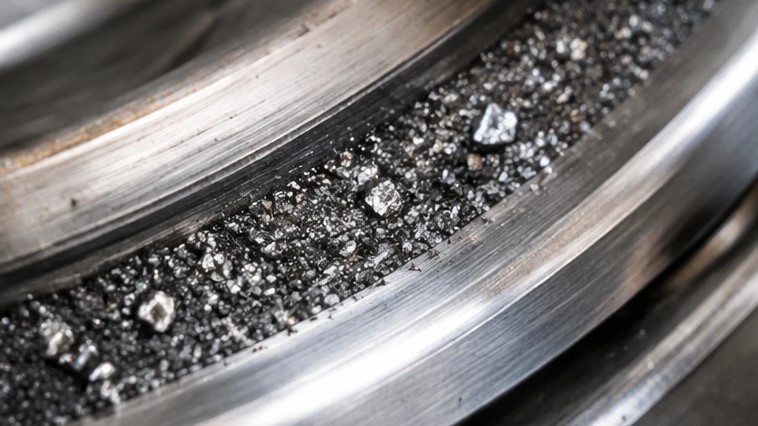
Simultaneously, the continuous mechanical impact of rollers grinding over spalled surfaces shears microscopic metal flakes and sub-micron steel particles directly into the lubricant reservoir. These metallic particles act as a destructive grinding paste, accelerating abrasive wear across any remaining polished surfaces. Furthermore, the newly exposed fresh steel surfaces act as a catalyst for rapid oil oxidation, resulting in severe acidification of the lubricant that corrodes internal bearing rings and adjacent machine components.
Systematic Root Cause Analysis: Why Do Bearings Fail?
To prevent recurrent mechanical breakdowns, maintenance teams must perform rigorous forensic failure analysis rather than simply fitting a new bearing onto a damaged machine. Research across global industrial facilities indicates that bearings rarely fail due to natural material fatigue alone; premature failure is almost always driven by operational and environmental factors.
- Lubrication Deficiencies: Insufficient lubricant volume, excessive grease quantity causing viscous churning and overheating, degraded lubricant viscosity, or using incompatible grease thickeners accounts for approximately 40 to 50 percent of all premature industrial bearing failures.
- Environmental Contamination: Ingress of moisture, water washdown sprays, abrasive airborne particulate matter, and chemical process vapors through deteriorated seals causes severe raceway pitting, rapid abrasive wear, and accelerated lubricant breakdown.
- Installation and Mechanical Alignment Errors: Excessive force applied via hammers during installation, improper shaft or housing bore tolerances, excessive preloading, and angular shaft misalignment generate severe static stresses that drastically shorten bearing fatigue life.
- Electrical Shaft Current Erosion: High-frequency parasitic voltage induced by variable frequency drives discharges across the thin lubricating oil film, creating micro-electrical arcs that cause washboard fluting, surface hardening, and acoustic buzzing.
Click to purchase roller bearings.
Economic and Operational Impact of Unscheduled Failures
The financial fallout of industrial bearing failure extends far beyond the direct purchase cost of a replacement bearing. In modern automated processing plants, continuous manufacturing lines rely on uninterrupted machine uptime, making mechanical reliability a critical driver of profitability.
When a critical induced draft fan bearing fails inside a power generation plant or a raw mill trunnion bearing seizes in a cement facility, the direct cost of the replacement component is negligible compared to the secondary losses. Emergency crane rentals, overtime technician rates, and expedited freight for replacement components quickly add up. However, the catastrophic cost driver remains lost production output.
Unscheduled plant shutdowns halt revenue generation while overhead costs continue to accrue. In high-throughput operations such as petrochemical refining, automotive assembly, or continuous steel casting, unscheduled downtime easily exceeds 50,000 dollars per hour. If a seized bearing damages a custom-machined drive shaft or cracks a massive gearbox housing casting, the lead time for replacement forgings can stretch into weeks or months, resulting in millions of dollars in lost operational capacity, missed delivery deadlines, and compromised customer contracts.
Engineering Strategies to Prevent Catastrophic Bearing Failure
Mitigating the destructive effects of bearing failure requires implementing proactive engineering protocols that identify mechanical distress long before Stage 4 seizure occurs. Modern reliability management integrates advanced technology with disciplined maintenance execution.
1. Advanced Condition Monitoring and Vibration Analysis
Continuous and route-based vibration monitoring provides the earliest and most reliable defense against catastrophic bearing breakdowns. By placing high-frequency industrial accelerometers permanently on bearing housings, maintenance teams track overall vibration velocity, peak acceleration, and high-frequency demodulation trends. Automated supervisory control systems can be programmed with two-tier alarm thresholds: an alert warning that prompts technicians to schedule an inspection when Stage 2 pitting begins, and an automated emergency trip circuit that halts the machine before Stage 4 cage collapse can damage the motor core or drive shaft.
2. Ultrasonic Acoustic Greasing
Traditional preventive maintenance often relies on calendar-based relubrication schedules, which frequently result in either fatal grease starvation or destructive over-greasing. Transitioning to ultrasonic condition-based lubrication eliminates these human errors. Technicians listen to high-frequency friction waves using digital ultrasonic receivers while slowly introducing grease into the bearing cavity. As fresh lubricant forms a protective fluid film, the acoustic decibel reading drops sharply; once the decibel level plateaus, the technician stops pumping, ensuring the bearing cavity receives precisely the correct volume of grease.
3. Thermal Imaging and Automated Temperature Telemetry
Because friction inevitably generates heat, monitoring temperature trends across bearing housings provides valuable corroborating data for vibration analysis. Permanently embedded resistance temperature detectors (RTDs) or non-contact infrared thermal sensors track surface temperatures in real time. A sudden upward step-change in steady-state operating temperature flags abnormal internal preloading, loss of internal clearance, or severe grease degradation, allowing operators to intervene before thermal seizure welds rotating components together.
Click to purchase bearing units.
4. Precision Mechanical Installation Practices
Eliminating installation-induced stresses prevents early bearing failure. Technicians should never use impact tools or open torches to mount bearings onto shaft journals. Instead, bearings must be uniformly heated using microprocessor-controlled induction heaters equipped with automatic temperature sensors and demagnetizing cycles. Furthermore, high-precision laser alignment systems should be utilized to align drive shafts within fractions of a millimeter, completely eliminating destructive dynamic bending moments and off-axis loads that initiate early raceway fatigue.
Conclusion
When a bearing failure occurs in industrial machinery, it is never an isolated mechanical event. It represents an escalating chain reaction that begins with invisible subsurface micro-cracks and ends with broken cages, seized shafts, burnt motor windings, and massive operational disruption. The consequences ripple across the entire facility in the form of hazardous working conditions, extensive secondary equipment destruction, and tens of thousands of dollars in lost manufacturing revenue.
By adopting a disciplined reliability strategy centered on predictive vibration analysis, ultrasonic precision lubrication, laser shaft alignment, and proper thermal mounting, industrial plants can reliably detect bearing distress during its earliest stages. Taking decisive action before a bearing enters catastrophic failure safeguards valuable rotating machinery, maximizes operational uptime, and ensures consistent industrial productivity.
Facing recurrent bearing breakdowns or seeking to protect critical rotating assets from catastrophic failure? Connect with the engineering and diagnostic specialists at Alma Bearings for high-performance industrial bearings, condition monitoring consulting, and professional failure analysis support.
Click to purchase plain bearings.
Frequently Asked Questions
1. Can a bearing fail suddenly without warning?
True sudden bearing failure without prior physical distress is exceptionally rare and is almost exclusively caused by catastrophic external events, such as severe dynamic shock loads, lightning strikes, or immediate mechanical jamming by foreign objects. In over 90 percent of industrial cases, bearing failure progresses through distinct vibrational, acoustic, and thermal stages over a period spanning days, weeks, or even months before catastrophic seizure occurs.
2. What are the earliest physical signs that a bearing is beginning to fail?
The earliest physical signs are ultrasonic acoustic emissions and high-frequency stress waves, which occur when microscopic cracks form beneath the raceway surfaces. These early indicators cannot be heard by the human ear or felt by hand. The earliest noticeable sensory symptoms include subtle changes in operational sound, a slight increase in operating temperature, and fine metallic particulate visible in grease samples.
3. What happens if a seized bearing continues to be driven by a powerful motor?
If a bearing seizes solid while connected to a high-horsepower electric motor or diesel engine, the immense mechanical rotational torque must dissipate elsewhere. Common outcomes include the drive shaft shearing completely off, the bearing inner ring slipping and friction-welding itself to the shaft, the bearing outer ring spinning and destroying the cast housing bore, or the motor stalling and drawing excessive locked-rotor current until thermal overloads trip or electrical windings burn out.
4. How does contaminated lubricant accelerate bearing failure?
Contaminants such as solid grit, airborne dust, or water severely disrupt the microscopic elastohydrodynamic fluid film. Solid abrasive particles indent the mirror-polished steel surfaces, creating stress-concentration craters that accelerate surface fatigue and micro-spalling. Water contamination hydrolyzes lubricant additives, causes hydrogen embrittlement in the bearing steel, and promotes rust pitting, which quickly leads to catastrophic surface flaking.
5. Why is soft foot inspection important for preventing bearing failure?
Soft foot refers to a condition where a machine frame does not sit completely flat against its baseplate or foundation. When hold-down bolts are tightened on a machine with soft foot, the entire cast iron machine frame twists and distorts. This internal distortion misaligns bearing housings, pinches internal radial clearances, and imposes severe parasitic static loads directly onto the rolling elements, causing early fatigue failure.
Comments (0)