
Shopping Cart
There are no more items in your cart
- News
- 0 likes
- 3 views
- 0 comments

Determining the correct bearing lubrication interval is a delicate engineering balance between preventing mechanical starvation and avoiding the catastrophic consequences of over-greasing. Maintenance engineers across industrial sectors frequently struggle with generic rules of thumb, relying on outdated calendar schedules that fail to reflect the actual mechanical stress experienced by plant assets.
In modern high-uptime manufacturing environments, the traditional approach of lubricating every machine once a month is frequently either dangerously insufficient or wildly excessive, leading to premature component failure or wasted labor and lubricant resources. Proper relubrication intervals must be established using scientific calculations and empirical observations that account for the unique operating dynamics of each machine, including rotational speed, radial and axial load profiles, operating temperatures, and external environmental contamination.
This comprehensive guide details the engineering principles required to calculate precise lubrication frequencies, evaluate operating variables, avoid the pitfalls of improper grease replenishment, and implement an advanced maintenance schedule that maximizes industrial equipment availability and service life.
View our bearing units for a practical, ready-to-mount solution for your equipment.
The Fundamental Mechanics of Grease Degradation in Bearings
To understand how often a bearing requires fresh grease, reliability teams must first comprehend how grease degrades inside an operating housing. Grease is not a permanent fixture; it is a semi-solid composite that undergoes continuous physical and chemical stress from the moment equipment starts up.
As rolling elements churn through the lubricant, the thickener matrix is subjected to constant shear forces that gradually break down its structural integrity, causing the trapped base oil to bleed out and coat the raceways and rolling elements. Over time, exposure to ambient atmospheric oxygen triggers oxidation, darkening the grease, increasing its viscosity, and eventually turning it into a stiff, ineffective compound.
Furthermore, mechanical wear particles generated by normal operation accumulate within the grease volume, increasing internal friction and accelerating the breakdown of the lubricating film. Because different operating environments accelerate these degradation mechanisms at varying rates, establishing a fixed universal interval is impossible. Instead, engineers must analyze the specific degradation drivers acting upon each individual bearing assembly.
Rotational Speed and the Speed Factor Calculation
Rotational speed is perhaps the most influential parameter governing how frequently an industrial bearing must be relubricated. As shaft RPM increases, the rolling elements pass through the load zone at a much higher frequency, subjecting the grease to intense hydrodynamic churning and high shear rates.
This rapid mechanical agitation forces the base oil to separate from the thickener at an accelerated pace, requiring frequent, small-volume replenishment to maintain an unbroken lubricating film. To quantify this requirement, engineers rely on the speed factor, which is typically calculated by multiplying the bearing pitch circle diameter in millimeters by the operating rotational speed in revolutions per minute.
Bearings operating at low speeds with large diameters handle high loads but require infrequent grease replenishment because the shear stress on the lubricant is relatively low. Conversely, high-speed electric motor bearings, machine tool spindles, and high-RPM centrifugal pumps operate at elevated speed factors, necessitating precise, frequent relubrication cycles to prevent the localized depletion of the lubricating film and subsequent metal-to-metal contact.
Factoring Load and Stress Profiles into the Schedule
The magnitude and nature of the mechanical load applied to a bearing dictate how rapidly the lubricant film is squeezed out from between the rolling elements and raceways. Pure radial loads, combined radial and axial loads, and severe shock loads create intense localized pressure points where the hydrodynamic oil film is thinned to microscopic thicknesses.
Under heavy industrial loads, such as those found in mining crushers, metal rolling mills, and heavy-duty industrial gearboxes, the grease must possess exceptional film-forming capabilities and robust extreme-pressure additives. If the load exceeds the capacity of the current lubricant film, boundary lubrication conditions occur, generating localized frictional heat that accelerates the thermal breakdown of the grease.
Consequently, heavily loaded bearings require shorter lubrication intervals and specialized high-viscosity greases to ensure that fresh lubricant is continuously introduced to the load zone before boundary friction causes surface fatigue, micropitting, or catastrophic scoring of the rolling elements and raceways.
Learn more about cylindrical roller bearings engineered for high radial loads and industrial use.
Operating Temperature and Thermal Acceleration Limits
Temperature acts as Almabearings primary accelerator of grease degradation and chemical breakdown in industrial applications. Every lubricating grease is formulated with an upper continuous operating temperature limit dictated by the thermal stability of its thickener chemistry and base oil.
As a general engineering rule, for every increase in operating temperature of ten to fifteen degrees Celsius above the normal threshold, the oxidation rate of the grease doubles, effectively cutting its service life in half. If an industrial motor, pump, or conveyor bearing consistently runs hot due to external ambient heat, poor ventilation, or internal misalignment, the calculated lubrication interval must be significantly shortened to compensate for the accelerated thermal aging of the lubricant.
Reliability engineers must utilize thermal imaging and continuous temperature sensors to monitor housing temperatures closely. If a bearing experiences an unexplained thermal spike, adjusting the lubrication frequency is often only a temporary bandage, and the underlying root cause of the thermal stress must be investigated and resolved immediately to protect the mechanical asset.
Environmental Contamination and Washdown Realities
External environmental conditions frequently override calculated theoretical lubrication intervals, serving as the dominant factor in real-world maintenance schedules. Bearings operating in clean, climate-controlled environments experience minimal external disruption, allowing them to achieve maximum operating hours between service events.
However, the vast majority of industrial assets operate in hostile environments characterized by abrasive dust, airborne particulates, process chemicals, heavy moisture, and aggressive high-pressure washdown procedures. In pulp and paper mills, aggregate quarries, food processing plants, and marine applications, external contaminants inevitably bypass inferior seals and infiltrate the bearing cavity, where they mix with the grease to form an abrasive lapping paste.
In these severe operating environments, the lubrication interval is driven primarily by the need to purge contaminated grease rather than simply replacing oxidized base oil. Frequent, controlled relubrication serves a vital dual purpose here: it flushes out abrasive particulate matter and contaminated lubricant while simultaneously creating a fresh, water-resistant grease collar at the housing seals to prevent further ingress.
Browse our selection of deep groove ball bearings for smooth, dependable operation across a wide range of machinery.
The Dangerous Fallacy of Over-Lubrication
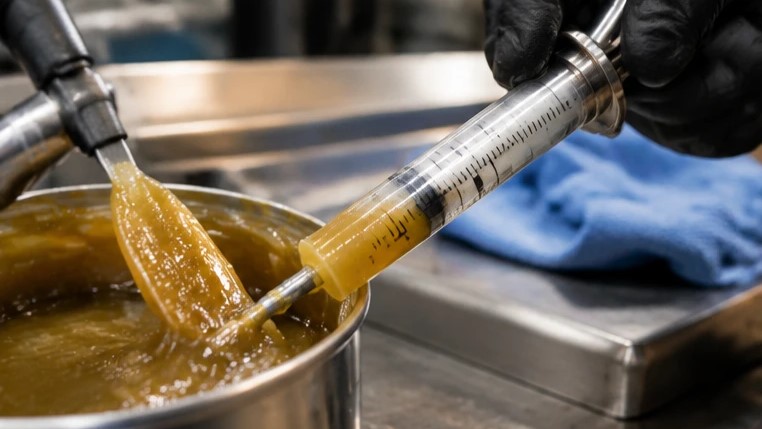
One of the most persistent and costly misconceptions in industrial plant maintenance is the belief that if a certain amount of grease is good, a larger quantity must be significantly better. In reality, over-lubrication is one of the leading causes of premature bearing failure, particularly in electric motors and high-speed machinery.
When a bearing housing is packed completely full of grease, the rolling elements have no empty space to clear, forcing them to continuously plow through a massive excess of lubricant. This excessive churning generates intense internal fluid friction, which causes the operating temperature of the bearing to skyrocket.
The resulting thermal surge causes the grease to bleed its base oil rapidly, leaving behind a hardened, carbonized soap residue that bakes onto the cage and rolling elements, ultimately locking up the bearing. Furthermore, excessive grease pressure can blow out labyrinth or contact seals, allowing massive amounts of external contamination to enter the housing or forcing grease directly into motor windings, leading to catastrophic electrical insulation failure.
Maintenance technicians must be thoroughly trained to calculate the precise grease volume required for every specific housing size and strictly adhere to those calculated limits during every service event.
Transitioning to Condition-Based Lubrication Strategies
Modern reliability engineering has largely shifted away from rigid, time-based lubrication calendars in favor of dynamic, condition-based maintenance strategies. Relying solely on calendar time assumes that operating conditions remain perfectly constant, which is rarely true in a dynamic industrial facility where production loads fluctuate daily.
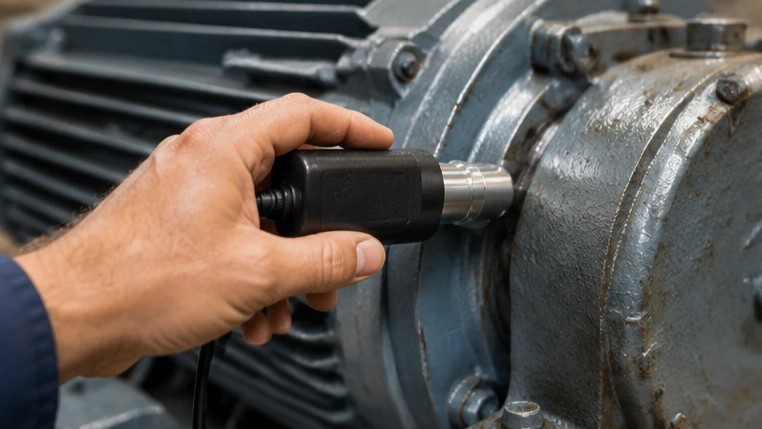
By implementing advanced condition monitoring tools, such as high-frequency ultrasound technology, reliability teams can evaluate the real-time lubrication state of operating bearings. As the lubricating film begins to thin and minor metal-to-metal asperity contact occurs, the high-frequency friction generates distinct acoustic emissions that can be detected by specialized listening devices long before the bearing begins to vibrate audibly or overheat.
By measuring these acoustic decibel levels, technicians can perform precision relubrication exactly when the machine requires it, completely eliminating the guesswork associated with fixed calendar intervals while preventing both the starvation of the bearing and the dangers of over-greasing.
Discover durable roller bearings designed to handle demanding loads and operating conditions.
Establishing a Standardized Plant-Wide Lubrication Program
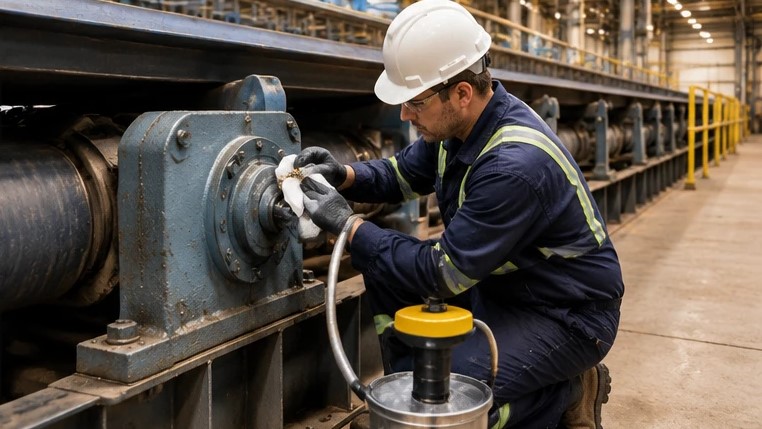
Achieving long-term reliability and optimal bearing lifespan requires the establishment of a rigorous, standardized lubrication management program across the entire industrial facility. Maintenance managers must create a centralized lubrication database that catalogs every critical asset, identifying its precise bearing model, operating speed, load profile, assigned grease type, calculated relubrication volume, and specific interval.
This master data must be integrated directly into the facility Computerized Maintenance Management System to generate automated work orders for the maintenance team. Equally critical is maintaining strict lubricant discipline; technicians must ensure that grease guns, transfer containers, and zerk fittings are color-coded and kept scrupulously clean to prevent cross-contamination between incompatible grease thickener chemistries.
Interchanging incompatible greases, such as mixing a lithium complex grease with a polyurea formulation, can cause the thickener matrix to collapse instantly, turning the lubricant into a fluid soup that drains entirely out of the housing and leaves the bearing completely unprotected regardless of how recently it was serviced.
Summary
Determining how often bearings should be lubricated is a multifaceted engineering task that requires analyzing rotational speed, load severity, operating temperature, and environmental contamination levels rather than relying on arbitrary calendar dates.
By calculating precise relubrication intervals, avoiding the severe mechanical hazards of over-greasing, embracing advanced condition-based ultrasound monitoring, and maintaining strict lubricant hygiene and product consistency, industrial plants can dramatically extend bearing lifespans, eliminate unscheduled downtime, and achieve peak operational reliability across all mechanical assets.
Explore our range of ball bearings for reliable performance in industrial applications.
FAQ
1. How do I calculate the correct grease volume for my industrial bearing?
Grease volume is calculated using standard engineering formulas such as multiplying the bearing outside diameter by its total width and applying an industry-standard constant, though exact quantities vary based on housing design and OEM specifications.
2. What are the primary warning signs that an industrial bearing has been over-greased?
Common indicators include a sudden, abnormal rise in housing temperature immediately following a relubrication event, grease leaking past the protective seals or into motor windings, and increased mechanical vibration or audible high-frequency noise.
3. How do harsh environmental conditions alter the standard lubrication interval?
In wet, dusty, or corrosive industrial environments, moisture and particulate contamination rapidly degrade the lubricant and ruin the protective film, requiring significantly shorter lubrication intervals to continuously purge contaminants and maintain fresh seals.
4. Can ultrasound monitoring completely replace fixed lubrication schedules?
Yes, ultrasound monitoring allows maintenance teams to track real-time acoustic friction inside the bearing, ensuring that grease is added only when the lubrication film begins to break down, thereby optimizing maintenance labor and protecting against over-greasing.
5. Why is mixing different grease thickeners dangerous to the bearing?
Mixing incompatible thickener chemistries, such as lithium complex and polyurea, causes the molecular soap structure of the grease to break down completely, releasing all base oil simultaneously and leaving the bearing unlubricated and prone to sudden failure.
Comments (0)