
Shopping Cart
There are no more items in your cart
- News
- 0 likes
- 4 views
- 0 comments
Industrial bearing maintenance is the bedrock of plant reliability, dictating whether heavy machinery operates at peak efficiency or suffers from costly, unplanned downtime. Bearings endure punishing operating conditions, including immense radial loads, severe vibration, high rotational speeds, and aggressive environmental contamination. When maintenance programs rely on reactive firefighting rather than structured, proactive strategies, equipment fails prematurely, driving up operational expenses and reducing overall productivity.
This comprehensive guide establishes the core best practices for industrial bearing maintenance in 2026, covering proactive inspection routines, precision installation, contamination control, advanced condition monitoring, and systematic troubleshooting to maximize asset lifespan.
Visit AlmaBearings to learn more about our bearing products, technical capabilities, and industrial support.
For applications requiring high-speed precision and minimal friction, explore our full technical catalog of deep groove ball bearings and angular contact ball bearings.
The Shift from Reactive Repair to Proactive Reliability
Historically, industrial maintenance was strictly reactive—run equipment until failure occurred, then scramble to replace the damaged components. In modern high-throughput manufacturing, this approach is financially unsustainable due to the staggering cost of lost production time. Proactive bearing maintenance focuses on eliminating the root causes of premature failure before they can manifest as physical damage. By establishing rigorous cleaning protocols, controlling lubricant quality, ensuring precise shaft and housing fits, and monitoring operational stress in real-time, maintenance teams can shift from emergency repairs to predictable, scheduled interventions. This paradigm shift not only preserves expensive mechanical assemblies but also stabilizes plant output and significantly lowers total maintenance costs.
Precision Handling and Storage Best Practices
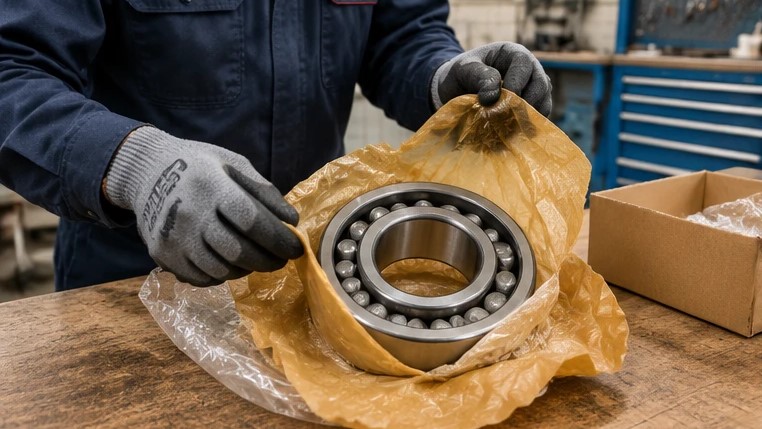
Maintenance excellence begins long before a bearing is ever installed into a machine. Improper storage and careless handling during unpacking are leading causes of microscopic raceway bruising and premature brinelling. Industrial bearings must be stored in a clean, temperature-controlled, dry indoor environment, kept flat in their original protective packaging, and elevated completely off concrete floors to prevent moisture wicking and vibration damage. When preparing for installation, technicians should never unwrap a bearing until the exact moment of mounting. Rushing installation steps or using makeshift hand tools like hammers and chisels directly against bearing rings causes internal impact damage that drastically shortens service life. Utilizing proper induction heaters, hydraulic mounting tools, and clean handling procedures ensures that the bearing enters service in pristine condition.
Engineers seeking pre-assembled, ready-to-mount solutions should review our extensive range of bearing units designed for rapid installation and alignment stability.
Shaft and Housing Fit Tolerances
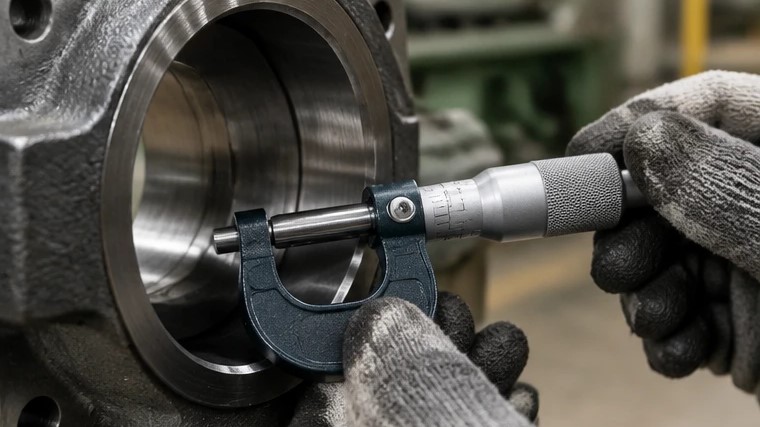
The physical interface between the bearing rings, the rotating shaft, and the stationary housing is critical for load distribution and operational stability. If a shaft journal is machined slightly undersized, the inner ring may slip during operation, causing severe fretting corrosion, frictional heat, and accelerated wear on the shaft surface. Conversely, if the housing bore is too tight, it can eliminate the necessary internal radial clearance of the bearing, causing the rolling elements to pinch, overheat, and suffer rapid thermal expansion failure. Maintenance technicians must utilize calibrated micrometers and bore gauges to verify that shaft and housing tolerances strictly conform to engineering specifications before attempting any mechanical assembly.
Contamination Control as a Core Maintenance Pillar
Contamination is the silent destroyer of industrial bearings. Even microscopic particulate matter—such as fine metal dust, sand, or chemical residues—can become trapped between the rolling elements and precision ground raceways, acting as a lapping compound that rapidly pits and wears away the steel surfaces. Effective maintenance requires strict contamination control at every stage of handling and operation. Technicians must wipe down grease fittings before lubrication, use dedicated and sealed transfer containers, and ensure that labyrinth and contact seals are inspected regularly for signs of wear, cracking, or leakage. Preventing moisture and particulate ingress is infinitely more cost-effective than repeatedly replacing damaged bearing assemblies.
When your equipment demands superior load-carrying capacity in rigorous operating environments, discover our selection of cylindrical roller bearings, tapered, and spherical roller bearings.
Vibration Analysis and Acoustic Condition Monitoring
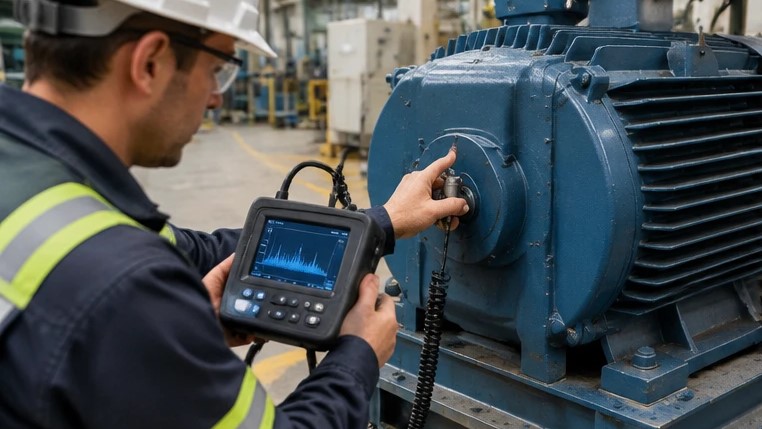
Modern industrial bearing maintenance relies heavily on condition-based monitoring technologies to detect subsurface fatigue and early-stage wear long before it becomes audible or causes catastrophic seizure. Vibration analysis allows reliability engineers to track distinct frequencies associated with inner ring, outer ring, rolling element, and cage defects. As micro-cracks form beneath the raceway surface, specific vibration spikes appear in the spectral data, providing weeks or months of advance warning. Similarly, high-frequency ultrasound monitoring detects acoustic friction caused by failing lubrication films or initial asperity contact. Integrating these predictive tools into the maintenance workflow ensures that interventions occur precisely when needed, avoiding unnecessary teardowns while eliminating unexpected failures.
Thermal Imaging and Operating Temperature Tracking
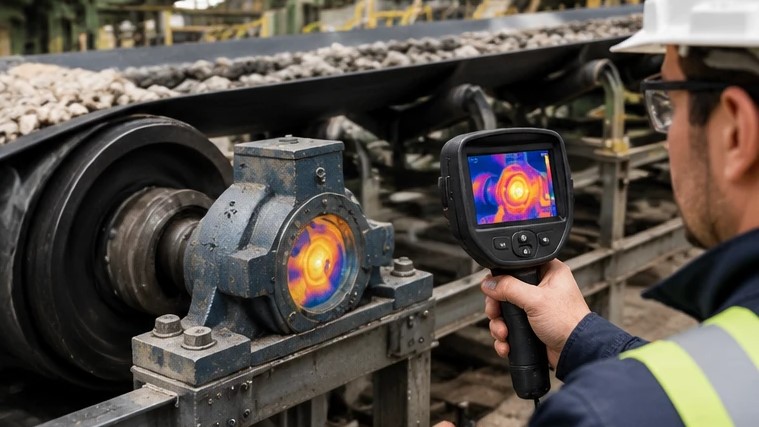
Monitoring operating temperature is another vital pillar of a proactive maintenance program. A sudden or steady rise in housing temperature is often the first macroscopic indicator of an impending mechanical failure, signaling issues such as over-greasing, lubricant breakdown, internal misalignment, or excessive preload. Infrared thermography enables maintenance teams to scan entire production lines rapidly, identifying thermal anomalies in bearing housings without interrupting plant operations. When a hot-running bearing is detected, engineers can cross-reference the temperature data with vibration readings and lubrication history to diagnose the root cause—whether it is an overloaded motor, a failing seal, or a blocked lubrication line—and take corrective action before a seizure occurs.
Root Cause Failure Analysis (RCFA)
When an industrial bearing eventually reaches the end of its service life or experiences premature failure, discarding the damaged component without investigation is a missed opportunity for continuous improvement. Root Cause Failure Analysis (RCFA) involves systematically cleaning and examining the failed bearing to decode the physical evidence left on the raceways, rolling elements, and cage. Spalling, brinelling, electrical arc pitting, severe scoring, and false brinelling each tell a distinct story about the operating conditions that caused the breakdown. By identifying whether a failure originated from contamination, improper lubrication, misalignment, or electrical stray currents, maintenance teams can implement engineering solutions that prevent the exact same failure from recurring on identical machinery across the plant.
For machinery involving oscillatory motion or structural misalignment, our high-durability spherical plain bearings provide the necessary articulation and service life.
Training and Workforce Standardization
The most advanced diagnostic tools and premium replacement bearings are ineffective if the maintenance workforce lacks standardized training and rigorous procedural discipline. Industrial plants must establish comprehensive internal training programs that cover proper mounting techniques, lubrication hygiene, alignment standards, and condition monitoring interpretation. Standard operating procedures (SOPs) should be documented for every critical asset, ensuring that all maintenance tasks—from routine greasing to complex overhauls—are performed with absolute consistency regardless of which technician is on duty. Investing in workforce capability directly translates to reduced human error, extended equipment lifespans, and higher overall plant reliability.
Summary
Industrial bearing maintenance is a comprehensive discipline that extends far beyond simple reactive replacements. By embracing proactive handling, maintaining precise shaft and housing tolerances, enforcing strict contamination control, leveraging advanced vibration and thermal condition monitoring, and conducting thorough root cause failure analyses, industrial plants can achieve unprecedented levels of operational reliability. Standardizing these best practices ensures maximum asset uptime, reduced maintenance expenditures, and sustained productivity across demanding heavy-duty environments.
Explore the AlmaBearings product range to find reliable bearing solutions for demanding industrial applications.
In high-temperature or non-conductive applications where traditional steel components fail, our advanced ceramic bearings offer unmatched performance and thermal stability.
FAQ
1. What is the most common cause of premature industrial bearing failure?
Contamination and improper lubrication are widely recognized as the leading causes of premature bearing failure, accounting for the vast majority of all documented mechanical breakdowns in industrial plants.
2. How does vibration analysis detect bearing damage before failure?
Vibration analysis tracks specific high-frequency spectral peaks generated when rolling elements pass over microscopic fatigue cracks or surface spalls on the raceways, providing early warning weeks before catastrophic failure occurs.
3. Why is improper shaft fit dangerous to a bearing?
An incorrect shaft or housing fit can either cause the inner ring to slip and cause fretting corrosion or pinch the rolling elements by eliminating internal radial clearance, leading to rapid overheating and seizure.
4. What is Root Cause Failure Analysis (RCFA) in bearing maintenance?
RCFA is the systematic inspection of a failed bearing’s physical wear patterns, such as spalling or pitting, to determine the exact mechanical or environmental root cause of failure and prevent future occurrences.
5. How often should industrial bearing housings be thermally scanned?
Critical industrial bearings should be scanned using infrared thermography on a routine, scheduled basis—ranging from weekly to monthly depending on operating severity—to catch abnormal temperature spikes early.
Comments (0)