
Shopping Cart
There are no more items in your cart
- News
- 0 likes
- 0 views
- 0 comments
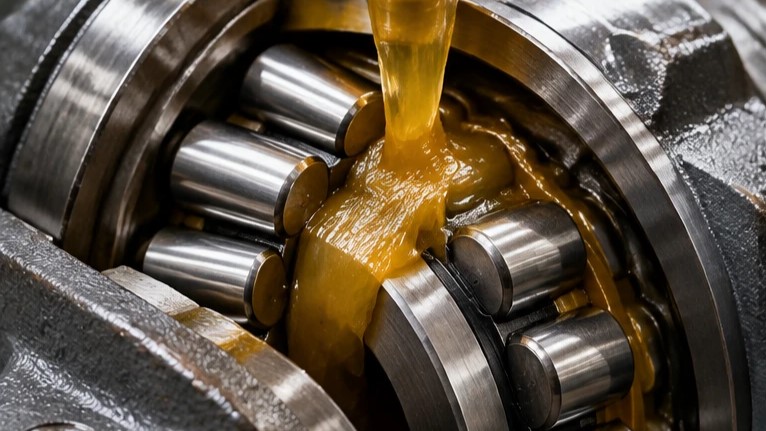
Selecting the best grease for industrial bearings is a critical engineering decision that dictates equipment reliability, energy efficiency, and maintenance intervals. Grease is not a generic commodity; it is a specialized compound of base oil, thickener, and performance additives engineered to withstand heavy loads, high temperatures, moisture, and contamination. In industrial plants, using the wrong grease leads to rapid oil bleed, thermal breakdown, oxidation, and catastrophic bearing failure. This guide examines how to evaluate grease properties, compare thickener types, match base oil viscosities to operating environments, and select the optimum formulation for diverse industrial applications without relying on complex formulas or proprietary guesswork.
- Explore our range of ball bearings for reliable performance in industrial applications.
Understanding Grease Composition: The Three Pillars
Every lubricating grease consists of three core components that determine its performance profile: the base oil, the thickener, and the additive package. The base oil, which accounts for the vast majority of the volume, provides the actual hydrodynamic film that separates rolling elements from raceways. The thickener acts as a sponge or molecular matrix that holds the base oil in place, releasing it gradually under shear and temperature stress. The additives enhance specific properties such as extreme-pressure load capacity, oxidation resistance, rust prevention, and anti-wear protection. Understanding how these three pillars interact allows reliability teams to look beyond brand names and select greases engineered for specific mechanical demands.
Base Oil Viscosity: The Foundation of Load Capacity
The performance of any industrial bearing grease starts with the viscosity of its base oil. If the base oil is too light, the lubricating film collapses under heavy loads or slow speeds, leading to metal-to-metal contact and scuffing. If the base oil is too heavy, internal fluid friction increases, generating excessive heat and accelerating oxidation. For standard electric motors operating at moderate speeds in clean environments, an ISO VG 68 to 100 base oil is typically ideal. Heavy-duty industrial applications such as jaw crushers, large conveyor pulleys, and low-speed steel mill rolls require much heavier base oils, often ISO VG 220, 320, or higher, to maintain film thickness under extreme shock loads. Matching the base oil viscosity to the operating speed factor and load rating is the single most important step in grease selection.
Thickener Chemistry: Matching Soap Structure to Environment
The thickener type dictates the grease’s mechanical stability, temperature limits, and water resistance. Lithium soap greases have long served as general-purpose standards, but lithium complex formulations offer superior high-temperature performance and structural stability under heavy shear. Polyurea thickeners have become the preferred choice for electric motor bearings due to their outstanding oxidation resistance, long service life, and silent running characteristics. Calcium sulfonate complex greases provide exceptional natural extreme-pressure performance and remarkable resistance to water washout, making them the best choice for wet washdown environments in food processing, pulp and paper mills, and marine applications. Evaluating the operating environment ensures the thickener maintains its sponge matrix without prematurely bleeding or hardening.
- Discover durable roller bearings designed to handle demanding loads and operating conditions.
Operating Temperature and Thermal Stability
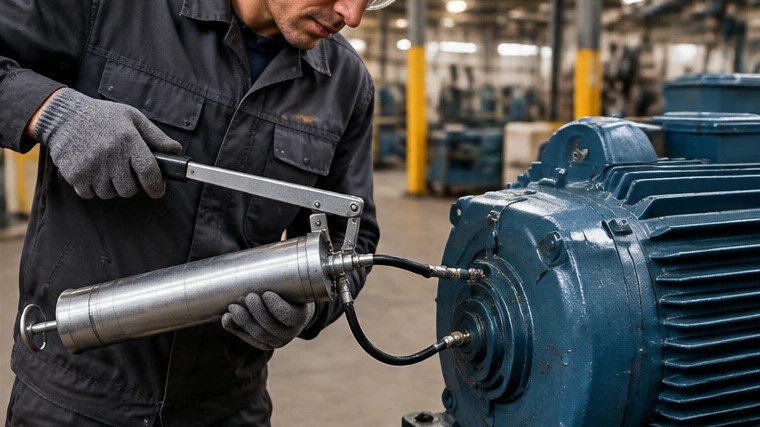
Temperature is Almabearings’ primary accelerator of grease degradation. Every grease has a dropping point—the temperature at which the thickener structure collapses and turns liquid—which must be well above the maximum operating temperature of the bearing. However, continuous operating temperature is even more crucial; continuous heat near the upper limit of the grease halves its life for every specific increment of temperature rise. Synthetic base oils, such as PAO or ester blends combined with polyurea or high-temperature lithium complex thickeners, offer extended operating windows for hot-running fans, kiln trunions, and steel mill rolls. Choosing a grease with thermal headroom prevents carbonization, caking, and premature oil dry-out in demanding thermal environments.
Extreme Pressure and Anti-Wear Additives
Industrial bearings often operate under severe shock loads, vibration, and boundary lubrication conditions where base oil alone cannot prevent wear. Extreme pressure (EP) additives, typically sulfur-phosphorus compounds, react chemically with metal surfaces under high loads to form a sacrificial protective layer that prevents micro-welding and scoring. Anti-wear agents reduce friction during startup and shutdown when hydrodynamic films have not fully established. However, certain solid additives like molybdenum disulfide must be used with caution; while excellent for sliding contacts and heavy slow-moving pins, they can disrupt film formation in high-speed precision rolling bearings. Selecting the right additive package ensures long raceway life under heavy industrial duty cycles.
Water Resistance and Corrosion Protection
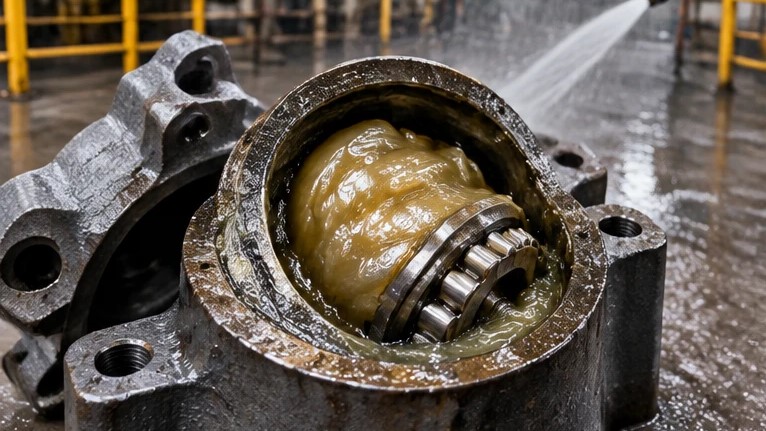
Moisture ingress is a primary destroyer of industrial bearings, emulsifying grease, washing away protective films, and causing aggressive rust pitting. The best greases for wet environments incorporate water-repellent thickeners like calcium sulfonate and specialized rust inhibitors that chemically bond to bare steel surfaces. In washdown plants, paper mills, and outdoor aggregate quarries, greases must resist water washout and spray-off while maintaining structural integrity when contaminated with moisture. Selecting a grease with high water washout resistance prevents the lubricant from dissolving and leaving the rolling elements vulnerable to corrosion and abrasive wear.
Browse our selection of deep groove ball bearings for smooth, dependable operation across a wide range of machinery.
Food-Grade and Specialized Industrial Requirements
Specialized industries demand specialized grease formulations. Food, beverage, and pharmaceutical processing plants require NSF H1-registered lubricants that are physiologically safe in case of incidental contact with products. These food-grade greases must deliver robust anti-wear and corrosion protection while complying with strict regulatory standards. Similarly, cleanroom applications, vacuum environments, and extreme cold storage facilities require bespoke synthetic greases with low outgassing properties or low-temperature torque characteristics. Aligning grease selection with industry certifications and environmental mandates protects equipment compliance without sacrificing mechanical reliability.
Evaluating Grease Compatibility: Avoiding Chemical Disasters
Mixing incompatible greases is a frequent cause of sudden bearing failure in industrial plants. When two greases with different thickener types—such as a lithium complex and a polyurea—are mixed, the thickener matrix can collapse, releasing all the oil simultaneously and turning the mixture into a fluid soup or a hardened mass. Plant maintenance teams must maintain strict grease discipline, color-code application guns, and consult compatibility charts before introducing a new lubricant. If transitioning to a superior grease formulation, the old grease should be completely purged from the housing during a scheduled maintenance window to ensure pristine operating conditions.
Application-Specific Grease Recommendations
Different industrial sectors require distinct grease profiles to maximize uptime. Electric motors perform best with shear-stable, long-life polyurea greases with moderate viscosity. Heavy industrial gearboxes and conveyor pillow blocks thrive on lithium complex or calcium sulfonate greases with robust EP additives. Fans and blowers operating at moderate temperatures benefit from oxidation-resistant greases that resist oil bleeding into motor windings. By categorizing plant assets by speed, load, and environment, maintenance managers can consolidate inventory to a few high-performance greases while eliminating inferior or mismatched products.
Learn more about cylindrical roller bearings engineered for high radial loads and industrial use.
Storage, Handling, and Contamination Control
The best grease in the world will fail prematurely if contaminated before it reaches the bearing. Store grease drums and cartridges indoors in climate-controlled, clean environments off the floor. Use dedicated, sealed grease guns and color-coded transfer containers to prevent dust, dirt, and moisture ingress during handling. Keep zerk fittings clean and wipe them thoroughly before coupling the grease gun. Implementing strict lubrication hygiene ensures that abrasive particles never enter the bearing cavity during routine relubrication tasks.
Condition Monitoring and Performance Verification
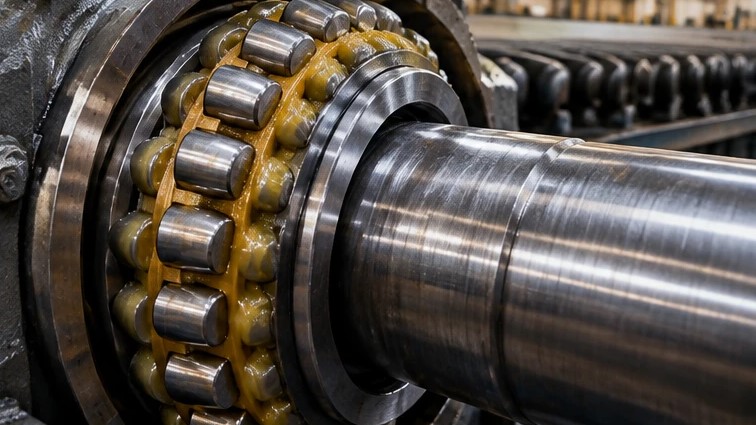
Selecting the right grease is only half the battle; verifying its ongoing performance ensures long-term reliability. Use ultrasound monitoring to detect subtle changes in acoustic friction during relubrication, ensuring the bearing receives adequate lubrication without over-greasing. Combine acoustic tracking with thermal imaging to confirm that operating temperatures remain stable under steady load. Regular oil analysis of extracted grease samples can reveal microscopic wear particles, moisture levels, and oxidation byproducts, providing early warning before minor issues escalate into costly downtime.
Summary
Choosing the best grease for industrial bearings requires balancing base oil viscosity, thickener chemistry, operating temperature, and environmental factors such as moisture and load. Plants that standardize on premium high-performance formulations, maintain rigorous lubrication hygiene, and verify performance through condition monitoring consistently achieve maximum bearing lifespan, reduced grease consumption, and zero unscheduled mechanical downtime.
View our bearing units for a practical, ready-to-mount solution for your equipment.
FAQ
What is the best all-around grease for standard industrial electric motors?
Polyurea-thickened greases with an ISO VG 68 to 100 synthetic or high-quality mineral base oil are widely considered the best choice for electric motors due to their exceptional oxidation resistance and long service life.
Can I mix different types of industrial greases?
No. Mixing incompatible thickeners, such as lithium complex and polyurea, can cause the grease structure to break down, resulting in oil leakage, bearing overheating, and rapid failure. Always purge old grease completely when switching types.
Which grease is best for wet and corrosive environments?
Calcium sulfonate complex greases offer superior natural water resistance, extreme pressure performance, and rust protection, making them ideal for wet washdown plants, paper mills, and outdoor applications.
How do I know if my grease viscosity is too high?
An excessively high base oil viscosity causes internal fluid friction, leading to abnormal temperature rises in the bearing housing during operation. If a bearing runs unusually hot after regreasing, check the viscosity grade and operating speed.
Why are food-grade greases different from standard industrial greases?
Food-grade greases must meet NSF H1 certification requirements for incidental food contact, utilizing specialized non-toxic thickeners and white mineral or synthetic base oils without compromising load-carrying capacity.
Comments (0)