
Shopping Cart
There are no more items in your cart
- News
- 0 likes
- 252 views
- 0 comments
- high speed bearings, bearings for high speed machines, high RPM bearing selection
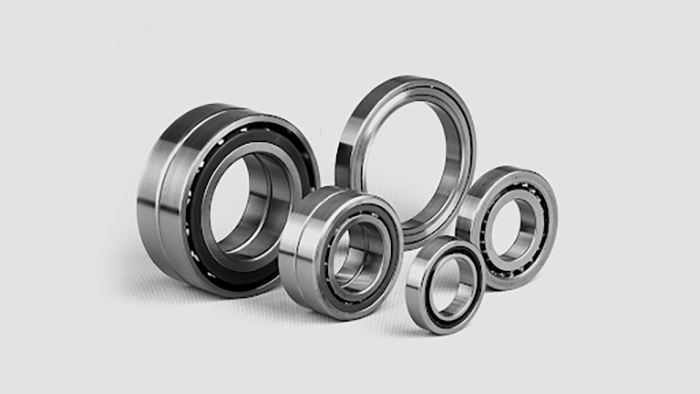
Selecting the right high speed bearings is critical when designing or maintaining machinery that operates at thousands of revolutions per minute. Whether it’s a turbo‑compressor, spindle, electric motor, or aerospace system, choosing the wrong bearing can lead to vibration, frictional heat, and costly downtime.
Modern engineering demands precision components able not only to sustain extreme rotational speed but also to minimize loss, energy consumption, and wear. To achieve that, proper bearing selection becomes a science based on geometry, lubrication, material, and tolerance.
Engineers sourcing verified bearings for high‑speed industrial use can find trusted options through AlmaBearings — a global supplier of performance‑grade bearings for demanding rotating equipment.
Understanding What “High Speed” Means in Bearing Engineering
“High speed” is relative. In bearing design, it refers to applications where shaft RPMs approach or exceed the limiting speed listed in manufacturer data sheets. Limiting speed depends on:
- bearing type and geometry
- size and bore diameter
- internal friction levels
- lubrication method
- load and operating temperature
Generally:
| Bearing Type | Typical Speed Capability (rpm) |
|---|---|
| Deep Groove Ball Bearings | Up to 1,000,000 × DmN (bore × speed) |
| Angular Contact Ball Bearings | Even higher due to optimized contact angles |
| Cylindrical Roller Bearings | Moderate speeds; designed for rigidity |
| Tapered Roller Bearings | Lower speed limits due to roller geometry |
For high‑speed machine elements like spindles or turbines, the bearing’s limiting speed is one of the first design constraints.
The Core Factors When Choosing Bearings for High Speed
To ensure reliable performance, engineers must balance speed with load, stiffness, lubrication, and temperature control.
Bearing Type and Geometry
Ball bearings generally outperform roller bearings at very high speeds because of their point contact surfaces. Among them, Angular Contact Ball Bearings are preferred for combined axial and radial loads at high rotational velocities.
In contrast, Cylindrical Roller Bearings offer enhanced rigidity but are better suited for moderate speeds under heavier loads.
Material and Precision Grade
For ultra‑high speeds, bearings are produced under strict tolerance classes such as ISO P4 or ABEC 7‑9. These grades minimize vibration and heat.
Hybrid bearings that utilize ceramic balls with steel races further reduce friction, allowing higher speeds and lower operating temperatures. Materials must also handle centrifugal forces and maintain dimensional stability.
Lubrication Method
Lubrication is crucial at high RPMs. The wrong lubricant can cause drag or catastrophic failure.
Common methods include:
- Oil‑air lubrication (mist or jet systems) for spindles
- Grease lubrication for moderate speed systems
- Oil‑mist or oil‑jet for turbines and compressors
Selecting low‑viscosity oils for minimal drag ensures heat is dissipated efficiently. Continuous monitoring systems are recommended for critical equipment.
Effects of Heat and Centrifugal Forces
At high speed, bearings experience strong centrifugal forces and thermal expansion. Excess heat can degrade grease, change internal clearances, and distort the cage. That’s why:
- Low‑mass cages (phenolic or polyamide) are preferred
- Internal clearances (C3–C4) are chosen to compensate for expansion
- Cooling systems may be integrated into the design
Ignoring thermal effects is one of the leading causes of early bearing failure in high‑speed machinery.
Selecting the Ideal Bearing Configuration
Depending on design and load direction, certain configurations outperform others.
Single‑Row Angular Contact Ball Bearings
Recommended for most high‑speed spindles. They support axial loads in one direction, offer high stiffness, and maintain precision at elevated RPMs.
Paired Back‑to‑Back Arrangement (DB)
Two bearings mounted opposite each other accommodate axial loads in both directions and improve shaft rigidity.
Cylindrical Roller Bearings for Support Positions
For applications combining speed with strength — such as gas turbines — Cylindrical Roller Bearings often complement angular contact pairs to handle radial load while maintaining precision.
Hybrid Ceramic Bearings
Silicon‑nitride balls minimize friction and are up to 60 % lighter than steel. These are used in aerospace turbines, precision spindles, and electric high‑speed motors.
Looking for bearings that can handle ultra‑high rotational speeds with exceptional stability? AlmaBearings offers a complete range of Angular Contact Ball Bearings, Deep Groove Ball Bearings, and hybrid ceramic models designed for advanced industrial and automotive systems.
Explore global‑grade solutions tailored for your machinery and operating conditions at AlmaBearings.
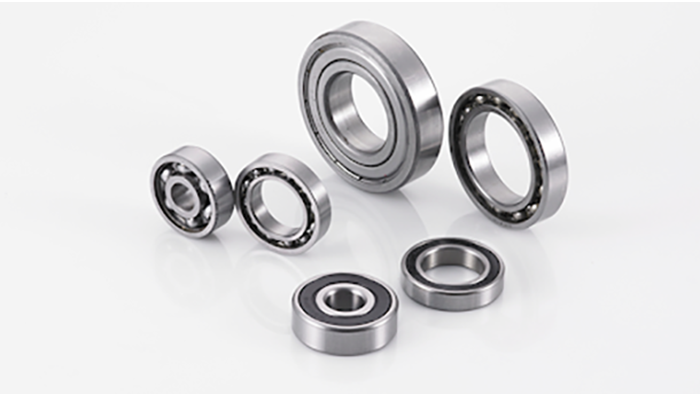
Important Design Parameters to Verify
Before finalizing your selection, review these performance parameters to ensure optimal bearing behavior:
- Speed Factor (DmN) – product of bearing pitch diameter and speed. Each design has a maximum safe DmN limit.
- Contact Angle – smaller angles (15–25°) allow higher speeds; larger angles support more axial load.
- Preload – essential for stiffness but excessive preload increases friction.
- Bearing Clearance (C2–C4) – must be matched with operating temperature.
- Balance of the Shaft‑Rotor Assembly – imbalance directly impacts bearing vibration.
A precision‑balanced rotor with optimized preload ensures smooth operation and minimal heat generation.
Common Mistakes to Avoid in High‑Speed Bearing Selection
Even advanced engineers occasionally misjudge bearing choice for high‑speed systems. The following issues are responsible for most premature failures:
- ignoring manufacturer‑specified limiting speeds
- excessive preload or incorrect assembly torque
- insufficient or excess lubrication
- overheating due to poor heat dissipation
- selecting heavy or inappropriate cages for high RPMs
- using roller bearings where ball types are more suitable
Avoiding such mistakes protects your machinery and minimizes operational costs.
Application‑Specific Recommendations
Different sectors demand specialized bearing properties:
| Application | Recommended Bearing Types | Notes |
| Machine‑tool spindles | Angular Contact Ball Bearings (15° contact angle) | High precision & preloaded pairs |
| Electric motors | Deep Groove Ball Bearings (sealed variants) | Smooth running & noise reduction |
| Aerospace turbines | Hybrid ceramic or thin‑section ball bearings | Lightweight & high temperature resistance |
| Compressors / Turbochargers | Cylindrical Roller Bearings + thrust support | High radial load + rigidity |
| Robotics / Automation | Miniature ball bearings (ABEC 7+) | Ultra‑low friction |
Proper selection ensures stable rotation even under prolonged operation.
Maintenance Strategies for High‑Speed Bearings
Even the best bearing requires careful maintenance practice:
- schedule periodic vibration analysis
- monitor temperature and noise signatures
- keep contaminants away during installation
- replace lubricants at intervals defined by manufacturer
- align shafts accurately before operation
Condition‑monitoring sensors combined with predictive maintenance analytics improve bearing lifespan significantly for high‑speed systems.
Conclusion
Selecting bearings for high‑speed machines requires deep understanding of dynamic forces, lubrication behavior, precision grades, and temperature control. The correct choice ensures low noise, minimal vibration, higher efficiency, and long service life.
Partnering with a trusted industrial supplier simplifies the process. AlmaBearings provides an extensive range of high speed bearings including Angular Contact Ball Bearings, Cylindrical Roller Bearings, and hybrid ceramic models engineered for the most demanding environments. By sourcing verified components, engineers achieve optimal machine performance and long‑term stability.
FAQ – High Speed Bearings
1. What type of bearing is best for high‑speed applications?
Angular Contact Ball Bearings and hybrid ceramic ball bearings are preferred for high‑speed precision operations.
2. Why are ceramic bearings used in high‑speed machines?
Ceramic balls are lighter, generate less friction, and withstand higher temperatures than steel, making them ideal for extreme speeds.
3. How do I reduce heat in high‑speed bearings?
Choose low‑friction lubrication, proper clearance, and ensure balanced rotation with effective cooling systems.
4. Are roller bearings suitable for high‑speed use?
Only certain Cylindrical Roller Bearings designed for moderate‑to‑high speeds are appropriate; most roller bearings are better for heavy loads.
5. What preload should I use for high‑speed bearings?
Preload should be minimal yet sufficient for stability. Excessive preload increases friction and heat buildup.
6. Where can I purchase reliable high‑speed bearings?
Buy from verified suppliers like AlmaBearings, which offers genuine, high‑precision bearings for global industrial use.
Comments (0)