
Shopping Cart
There are no more items in your cart
- News
- 0 likes
- 295 views
- 0 comments
- How to Choose Miniature Bearings
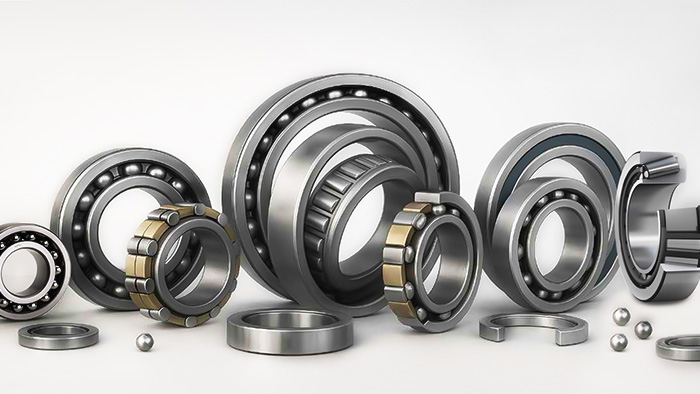
In precision engineering, even the smallest mechanical component can affect the performance of the entire system. This is especially true for miniature bearings. These compact components are used in equipment where space is limited, movement must be smooth, and reliability is essential. From medical handpieces and laboratory instruments to robotics, micro motors, optical devices, and aerospace assemblies, miniature bearings often determine whether a device runs quietly, accurately, and consistently.
Understanding How to Choose Miniature Bearings is important because selecting the wrong bearing can create problems that are difficult and expensive to fix later. A bearing may fit the shaft dimension perfectly, but still fail if it cannot handle the operating speed, load direction, contamination level, lubrication requirement, or precision demand of the application. In small systems, the margin for error is usually much lower than in larger industrial machines.
For engineers, procurement teams, and equipment manufacturers, miniature bearing selection should never be treated as a simple size-matching task. The right decision requires a careful review of operating conditions, material options, bearing type, tolerance class, shielding or sealing design, and long-term service expectations.
If your application depends on compact, high-precision motion, sourcing from a knowledgeable supplier such as Alma Bearings can help you compare suitable miniature bearing options and select components that support performance, durability, and reliability.
Our products: Ball Bearings
What Are Miniature Bearings?
Miniature bearings are small-sized bearings designed to reduce friction and support rotating or moving parts in compact mechanical assemblies. They are commonly used where standard bearings are too large or too heavy for the design. In many industry classifications, miniature bearings are associated with bore diameters below 10 mm, although exact definitions may vary depending on the manufacturer or standard.
Despite their small size, these bearings perform the same essential function as larger bearings. They support shafts, guide motion, reduce friction, maintain alignment, and improve the efficiency of rotating parts. The difference is that they must do this within very restricted dimensions and often under strict performance requirements.
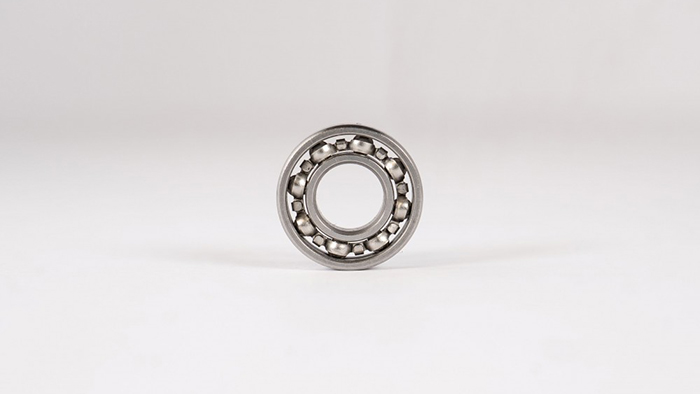
A miniature bearing typically includes an inner ring, an outer ring, rolling elements, and a cage. Depending on the application, it may be open, shielded, or sealed. It may also use different materials such as chrome steel, stainless steel, ceramic, or hybrid ceramic construction.
What makes miniature bearings challenging is their sensitivity. Small changes in internal clearance, surface finish, lubrication amount, or mounting force can significantly affect performance. That is why learning How to Choose Miniature Bearings correctly is essential for precision applications.
Why Miniature Bearing Selection Matters in Precision Applications
Precision applications demand consistency. A small vibration, slight misalignment, or unexpected friction increase can reduce the accuracy of the system. In medical devices, this may affect tool performance. In robotics, it can influence positioning accuracy. In optical instruments, even tiny movement irregularities can disturb measurement or imaging quality.
Miniature bearings are often used in high-speed or low-torque systems. Because of their small size, they may seem simple, but they are actually highly sensitive to operating conditions. If the selected bearing is not suitable, common problems include noise, heat generation, excessive friction, early wear, shaft instability, and reduced service life.
For example, a miniature bearing used in a dental handpiece must handle very high rotational speeds while maintaining smooth operation and low vibration. A bearing used in a laboratory instrument may need excellent cleanliness and quiet running. A bearing used in a compact robot joint may need accurate movement and predictable torque.
This is why How to Choose Miniature Bearings is not only a procurement question. It is an engineering decision that directly affects device quality, user experience, and maintenance cost.
Start with the Application Requirements
The first step in choosing miniature bearings is understanding the application in detail. Before selecting a bearing type or material, engineers should define how the bearing will be used, what loads it will carry, how fast it will rotate, and what environmental conditions it will face.
Important questions include:
- What is the shaft diameter?
- What radial and axial loads will the bearing experience?
- What is the operating speed?
- Will the motion be continuous, intermittent, or oscillating?
- Is low noise required?
- Will the bearing be exposed to dust, moisture, chemicals, or sterilization?
- What temperature range will it experience?
- Is maintenance possible, or must the bearing be lubricated for life?
- Is high precision or low torque required?
These questions help narrow the selection and prevent one of the most common mistakes: choosing a bearing only because it matches the available dimensions.
In precision applications, the best bearing is not always the smallest one that fits. It is the one that fits the mechanical, environmental, and performance requirements of the system.
Analyze Load Type: Radial, Axial, and Combined Loads
Load direction is one of the most important factors in miniature bearing selection. Bearings are designed to handle forces in different directions, and choosing the wrong design can lead to early failure.
A radial load acts perpendicular to the shaft. This is common in small motors, fans, and rotating shafts. A deep groove miniature ball bearing is often suitable for radial loads and can also handle moderate axial loads.
An axial load acts along the shaft. This type of load appears in applications where force pushes or pulls in the direction of rotation. If axial load is significant, engineers may need angular contact bearings, thrust bearings, or a special arrangement of bearings.
Combined loads include both radial and axial forces. Many precision systems experience combined loading even when it is not obvious at first. For example, a compact gearbox or robotic joint may apply both side loads and thrust loads to the bearing.
Understanding the load profile is essential when learning How to Choose Miniature Bearings because bearing life depends heavily on load. Even small overloads can shorten life significantly when dimensions are compact and internal contact areas are small.
Consider Speed and Rotational Accuracy
Many miniature bearings operate at high speeds. Small electric motors, dental tools, medical handpieces, laboratory centrifuge components, compact fans, and precision spindles may require bearings that can run smoothly at thousands or even hundreds of thousands of revolutions per minute, depending on the application.
Speed affects several aspects of bearing performance. At higher speeds, friction generates more heat. Lubricant behavior becomes more important. Cage design, internal clearance, material quality, and precision grade also become more critical.
A bearing with the correct size but insufficient speed rating may overheat or fail prematurely. In high-speed applications, engineers should review the manufacturer’s limiting speed, lubrication type, preload condition, and installation method.
Rotational accuracy is another key consideration. Precision equipment may require very low runout and smooth torque. Higher precision grades can improve consistency and reduce vibration. However, precision class should be selected based on actual application requirements. Over-specifying precision can increase cost without adding meaningful value, while under-specifying can harm performance.
Choose the Right Miniature Bearing Type
There are several miniature bearing types, and each is suited to different operating conditions. Selecting the right type is a central part of How to Choose Miniature Bearings for precision applications.
Miniature Deep Groove Ball Bearings
These are the most common miniature bearings. They are versatile, compact, and suitable for many radial load applications. They can also handle moderate axial loads in both directions. They are widely used in small motors, instruments, fans, robotics, and general precision assemblies.
Miniature Angular Contact Bearings
Angular contact miniature bearings are designed to handle combined loads and provide better axial load capacity than standard deep groove bearings. They are often used in high-speed spindles, precision tools, and applications requiring accurate shaft positioning.
Miniature Thrust Bearings
Thrust bearings are used when the main load acts along the shaft axis. They are not suitable for significant radial loads, but they perform well in compact assemblies where axial force is dominant.
Miniature Flanged Bearings
Flanged miniature bearings include a flange on the outer ring, which helps with positioning during installation. They are useful in compact housings where accurate axial location is needed.
Miniature Stainless Steel Bearings
Stainless steel miniature bearings are preferred where corrosion resistance is important. They are commonly used in medical devices, food-related equipment, clean environments, and applications exposed to moisture.
Miniature Ceramic and Hybrid Bearings
Hybrid bearings usually combine steel rings with ceramic rolling elements. Ceramic balls are lighter, harder, and electrically insulating. They can improve high-speed performance and reduce friction in certain applications. Full ceramic bearings may be selected for special environments involving corrosion, high temperature, or electrical insulation requirements.
The correct bearing type depends on the load, speed, environment, and precision requirements. No single type is best for every application.
Material Selection: Steel, Stainless Steel, Ceramic, or Hybrid?
Material choice has a direct impact on durability, corrosion resistance, speed capability, and cost. For many general precision applications, chrome steel miniature bearings provide excellent hardness and fatigue resistance. They are suitable for clean, dry environments where corrosion risk is low.
Stainless steel bearings are better for applications exposed to moisture, cleaning agents, sterilization cycles, or mildly corrosive environments. They may be used in medical instruments, dental tools, laboratory devices, and food-related systems.
Hybrid ceramic bearings are often selected when high speed, low friction, electrical insulation, or improved wear resistance is required. Ceramic rolling elements are lighter than steel, which can reduce centrifugal forces at high speed. They also resist corrosion better than steel balls.
Full ceramic bearings are more specialized. They can be useful in chemical environments, non-magnetic systems, or high-temperature applications, but they are usually more expensive and must be selected carefully.
When deciding How to Choose Miniature Bearings, material should never be selected only by price. The operating environment and performance requirement should guide the decision.
Need help matching miniature bearings to your precision equipment requirements?
Explore compact and high-performance bearing solutions from Alma Bearings for reliable sourcing and technical guidance.
Evaluate Shielding and Sealing Options
Miniature bearings are available in open, shielded, and sealed designs. This choice affects friction, contamination protection, lubricant retention, and service life.
Open bearings have no shield or seal. They usually offer the lowest friction and are useful in clean environments where external lubrication is available. However, they are vulnerable to dust and contamination.
Shielded bearings use thin metal shields to help block particles while maintaining relatively low friction. They are commonly used in small motors, instruments, and general compact equipment. Shields do not provide complete sealing, but they offer a good balance between protection and low resistance.
Sealed bearings provide stronger protection against dust, moisture, and lubricant leakage. They are useful in equipment where maintenance access is limited or contamination risk is higher. However, contact seals may increase friction and torque slightly, which can matter in very low-torque precision systems.
The right choice depends on the balance between cleanliness and friction. A high-speed, clean laboratory motor may perform better with shielded or open bearings, while a compact device exposed to dust or liquid may require sealed bearings.
Understand Internal Clearance and Preload
Internal clearance refers to the small amount of movement between the bearing rings and rolling elements before installation. It affects friction, temperature, vibration, and service life. In miniature bearings, clearance is especially important because the dimensions are small and tolerances are tight.
If clearance is too large, the bearing may produce vibration, noise, or poor rotational accuracy. If clearance is too small, the bearing may run hot or experience excessive friction after mounting.
Preload is sometimes used in precision applications to remove internal play and improve stiffness. This can be important in spindles, optical equipment, measuring devices, or robotic assemblies. However, preload must be carefully controlled. Too much preload increases heat and reduces life.
Mounting fit also affects internal clearance. A tight shaft fit or housing fit can reduce clearance after installation. Engineers should account for this during selection.
For precision systems, internal clearance should be matched to operating temperature, fit conditions, load, and required stiffness.
Lubrication: Grease, Oil, and Special Lubricants
Lubrication plays a critical role in miniature bearing performance. It reduces friction, protects surfaces, lowers wear, and helps control noise. However, miniature bearings require careful lubrication because too much lubricant can increase drag, while too little can cause wear.
Grease is commonly used because it stays in place and supports long service intervals. Many miniature bearings are supplied pre-lubricated for life. Grease selection depends on speed, temperature, noise requirements, and environmental exposure.
Oil lubrication may be used in very high-speed or low-torque applications where minimal resistance is needed. However, oil systems require more careful control and may not be practical for every compact device.
Special lubricants may be required for medical devices, vacuum environments, food-grade equipment, high temperatures, or cleanroom applications. In some cases, low-outgassing lubricants or dry-film lubricants may be considered.
When learning How to Choose Miniature Bearings, lubrication should be treated as part of the bearing design, not as an afterthought.
Our products: Cylindrical Roller Bearings
Noise, Vibration, and Smooth Operation
Precision applications often require low noise and low vibration. In small devices, bearing noise may be more noticeable because the equipment is handheld, close to the user, or used in sensitive environments.
Noise and vibration can come from several sources: poor raceway finish, contamination, incorrect clearance, improper lubrication, misalignment, or low manufacturing quality. Even a tiny particle inside a miniature bearing can affect smoothness.
For applications such as medical tools, laboratory instruments, camera systems, optical devices, and premium electronics, buyers should consider bearings with appropriate precision grades, clean lubrication, and reliable quality control.
Smooth operation is not only about comfort. It can also affect measurement accuracy, tool performance, and system stability.
Installation and Handling Best Practices
Miniature bearings are delicate components. Incorrect installation can damage them before the machine is even used. Because they are small, they should be handled with clean tools and stored in protective packaging until installation.
During mounting, force should only be applied to the ring being fitted. If a bearing is pressed onto a shaft, force should be applied to the inner ring. If it is pressed into a housing, force should be applied to the outer ring. Applying force through the rolling elements can damage the raceways.
Cleanliness is critical. Dust, fibers, metal chips, or fingerprints can affect bearing life. In precision environments, assembly should be performed under controlled conditions when possible.
Misalignment should also be avoided. Miniature bearings generally have limited tolerance for alignment errors. Poor alignment increases friction, heat, and wear.
A high-quality bearing can still fail early if installation is careless.
Check Supplier Quality and Product Authenticity
Because miniature bearings are widely used and often visually similar, sourcing quality is very important. Low-grade or counterfeit bearings may match the listed dimensions but fail to meet performance expectations.
A reliable supplier should provide technical information such as dimensions, material, seal type, load ratings, speed ratings, lubrication details, and manufacturer traceability. For critical applications, documentation and authenticity are essential.
Buyers should be cautious of suspiciously low prices, unclear packaging, missing technical data, or suppliers who cannot explain product differences. In precision applications, the cost of bearing failure is usually much higher than the price difference between a low-quality bearing and a reliable one.
Working with an experienced supplier such as Alma Bearings helps reduce sourcing risk and improves confidence in long-term performance.
Common Mistakes When Choosing Miniature Bearings
Many bearing failures happen because selection was based on incomplete information. One common mistake is choosing only by size. While dimensions are important, they do not tell the full story.
Another mistake is ignoring speed. A bearing that works at low speed may not survive high-speed operation. Lubrication and precision class must match speed requirements.
Some buyers underestimate contamination. A device may appear clean during design, but real operating conditions may expose the bearing to dust, moisture, or cleaning fluids.
Another issue is overloading. Because miniature bearings are small, their load capacity is limited. Even moderate forces can be significant relative to bearing size.
Overlooking mounting fit is also common. Tight fits can reduce internal clearance and increase heat. Loose fits can create instability.
Finally, choosing the cheapest option without reviewing quality can lead to early failure, noise problems, and poor device performance.
Miniature Bearings for Medical, Robotics, and Instrumentation
Different precision industries require different bearing priorities. In medical devices, cleanliness, low noise, corrosion resistance, and sterilization compatibility may be important. Bearings may need stainless steel, special lubricants, or sealed designs depending on the device.
In robotics, miniature bearings are often used in joints, actuators, wheels, grippers, and compact gearboxes. These applications may require low friction, accurate positioning, and resistance to repeated start-stop cycles.
In laboratory and measurement instruments, vibration control and rotational accuracy are critical. Even small irregularities can affect test results or measurement stability.
In optical and imaging equipment, smooth motion and low torque are often more important than high load capacity. Bearings must support precise adjustments without stick-slip behavior.
This is why How to Choose Miniature Bearings depends strongly on the industry and the specific function inside the device.
2026 Buying Perspective: What Engineers and Procurement Teams Should Prioritize
In 2026, miniature bearing selection is becoming more focused on reliability, traceability, and application-specific performance. As devices become smaller and more advanced, buyers are paying closer attention to technical details that were sometimes overlooked in the past.
Engineers should prioritize accurate load data, speed ratings, precision grade, material compatibility, lubrication, and installation conditions. Procurement teams should prioritize supplier credibility, documentation, authenticity, and consistent availability.
Total cost of ownership matters more than unit price. A slightly cheaper bearing can become expensive if it creates warranty issues, product failures, noise complaints, or maintenance problems.
For critical precision applications, the strongest approach is collaboration between engineering and procurement. This ensures that the selected bearing meets both performance and commercial requirements.
For precision devices, the right miniature bearing can improve accuracy, reduce vibration, and extend service life.
Contact Alma Bearings to compare miniature bearing options based on speed, load, material, sealing, and application requirements.
Step-by-Step Miniature Bearing Selection Checklist
Although every application is different, a practical selection process can help reduce mistakes.
- define the application and operating conditions. This includes load, speed, temperature, environment, duty cycle, and maintenance access.
- confirm the required dimensions, including bore diameter, outside diameter, width, shaft fit, and housing fit.
- identify the bearing type that matches the load direction and motion requirement.
- choose the material based on corrosion risk, speed, temperature, and cleanliness requirements.
- select open, shielded, or sealed construction based on contamination risk and friction sensitivity.
- review internal clearance, preload needs, precision grade, and noise requirements.
- confirm lubrication type and service life expectations.
- verify supplier credibility, technical documentation, and product authenticity before purchase.
This structured approach is the safest way to understand How to Choose Miniature Bearings for demanding precision applications.
Conclusion
Choosing miniature bearings for precision applications requires more than finding a small bearing that fits the available space. These components directly affect accuracy, smoothness, noise, heat, service life, and overall equipment reliability.
To make the right choice, engineers should evaluate load direction, speed, bearing type, material, sealing, clearance, lubrication, mounting conditions, and supplier quality. Each factor influences performance, especially in compact systems where tolerances are tight and operating conditions can be demanding.
The best miniature bearing is not always the cheapest or the most advanced option. It is the bearing that matches the real requirements of the application. When selection is done carefully, miniature bearings can support reliable motion in medical devices, robotics, instruments, micro motors, aerospace systems, and many other precision technologies.
If you need help sourcing reliable miniature bearings for compact and high-precision equipment, visit Alma Bearings and connect with a specialist to find the right solution for your application.
Our products: Roller Bearings
Frequently Asked Questions
1. How do I choose miniature bearings for precision applications?
Start by analyzing load type, speed, environment, available space, precision requirement, lubrication needs, and sealing requirements. Then choose the bearing type, material, internal clearance, and supplier based on those conditions.
2. What is the most common type of miniature bearing?
Miniature deep groove ball bearings are the most common because they are compact, versatile, and suitable for many radial load applications with moderate axial load capacity.
3. Are stainless steel miniature bearings better than chrome steel bearings?
Not always. Stainless steel is better for corrosion resistance and moisture exposure, while chrome steel often provides excellent hardness and fatigue performance in clean, dry environments. The better choice depends on the application.
4. Should miniature bearings be sealed or shielded?
Shielded bearings are often better for low-friction applications with moderate contamination protection. Sealed bearings provide stronger protection against dust and moisture but may create slightly higher friction. Open bearings are suitable only for very clean environments with controlled lubrication.
Comments (0)