
Shopping Cart
There are no more items in your cart
- News
- 0 likes
- 329 views
- 0 comments
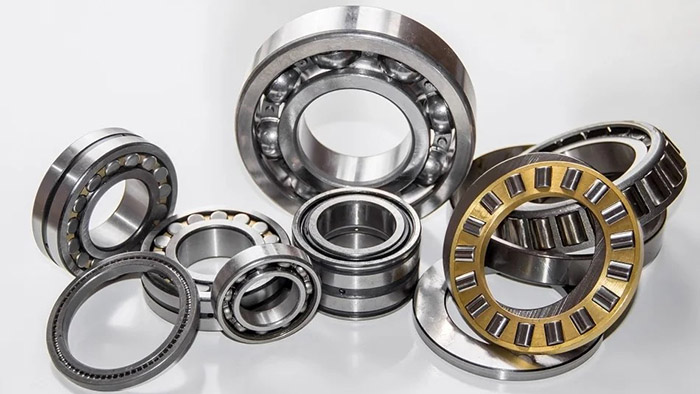
Selecting bearings for heavy industrial machinery is not a simple matter of matching a part number to a shaft size. In large-scale equipment, bearings carry massive loads, operate under harsh conditions, and directly affect machine uptime, safety, and maintenance cost. That is why understanding How to Select Large Diameter Bearings is essential for engineers, maintenance teams, and industrial buyers working with heavy-duty systems.
Large diameter bearings are used in machinery where standard bearing sizes cannot provide the required load capacity, rotational stability, or structural support. They are commonly found in mining equipment, steel mills, wind turbines, marine systems, cranes, tunnel boring machines, cement plants, paper mills, heavy gearboxes, rotary kilns, and large industrial turntables. These machines often work under continuous stress, shock loads, contamination, temperature variation, and slow but highly loaded rotation.
The right bearing can improve reliability and reduce downtime. The wrong bearing can lead to overheating, vibration, premature wear, shaft damage, unplanned shutdowns, and costly repairs. Because large diameter bearings are expensive and difficult to replace, the selection process must be systematic and technically accurate.
This guide explains How to Select Large Diameter Bearings for heavy industrial machinery by focusing on the most important selection factors: load type, bearing design, operating speed, mounting arrangement, lubrication, sealing, material quality, precision, clearance, environment, and supplier reliability.
Our products: Ball Bearings
What Are Large Diameter Bearings?
Large diameter bearings are bearings with a significantly larger bore or outside diameter than standard general-purpose bearings. The exact size range depends on the industry and manufacturer, but they are generally used in heavy machinery where the bearing must support large shafts, rotating structures, or high-load assemblies.
Unlike small or medium bearings, large diameter bearings are often part of the main structural support system of a machine. They do not only reduce friction; they help maintain alignment, carry heavy radial and axial loads, absorb overturning moments, and support slow or continuous rotation under demanding conditions.
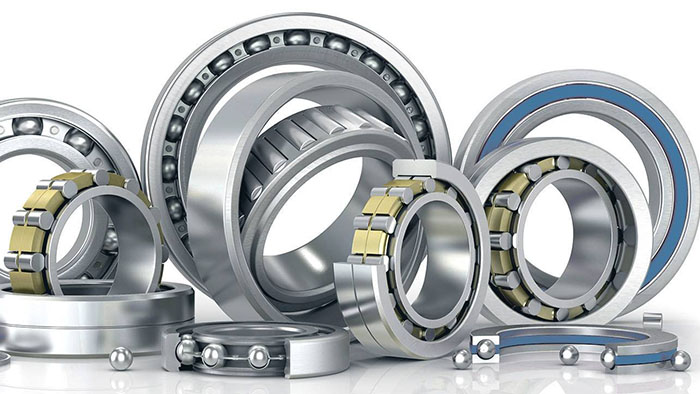
Large diameter bearings may include several bearing types, such as:
- Large spherical roller bearings
- Large cylindrical roller bearings
- Large tapered roller bearings
- Large thrust bearings
- Slewing ring bearings
- Large angular contact bearings
- Split large diameter bearings
In heavy industrial machinery, choosing the correct bearing design is just as important as choosing the correct size. Each bearing type handles loads differently, responds differently to misalignment, and requires different lubrication and installation methods.
Why Large Diameter Bearing Selection Matters
Large diameter bearings are critical components in heavy machinery. When they fail, the result is rarely a minor repair. A bearing failure in a mining crusher, cement kiln, crane, wind turbine, or steel mill can stop production and create major financial losses.
The cost of the bearing itself may be high, but the cost of downtime is often much higher. In some industries, one unplanned shutdown can cost more than the bearing replacement. This is why selecting the right bearing from the beginning is essential.
Proper bearing selection helps achieve:
- Longer service life
- Lower vibration
- Better load distribution
- Reduced heat generation
- Improved machine stability
- Lower maintenance frequency
- Safer operation
- Less unplanned downtime
When studying How to Select Large Diameter Bearings, the goal is not just to find a bearing that fits. The goal is to select a bearing that can survive the real working conditions of the machine.
Our products: Deep Groove Ball Bearings
Start with Load Analysis
Load analysis is the first and most important step in large diameter bearing selection. Heavy machinery often creates complex loads that include radial loads, axial loads, shock loads, vibration, and moment loads.
A radial load acts perpendicular to the shaft. This is common in large electric motors, crushers, rollers, and gearboxes. An axial load acts along the shaft axis and is common in vertical machines, thrust systems, marine propulsion, and some crane applications. Moment loads occur when forces try to tilt or overturn the rotating component. These are especially important in slewing bearings, cranes, excavators, wind turbines, and turntables.
Large industrial machines may also experience shock loads. For example, mining crushers and steel mill equipment can face sudden impact forces. If the bearing is not selected for shock loading, raceway damage and rolling element fatigue may occur quickly.
Engineers should calculate both static and dynamic loads. Static load is important when the machine is stationary or moving slowly under heavy pressure. Dynamic load is important during continuous rotation. In many heavy-duty applications, the bearing must handle both.
Understanding the real load condition is the foundation of How to Select Large Diameter Bearings correctly.
Choose the Right Bearing Type
After load conditions are known, the next step is choosing the right bearing type. Different large diameter bearings are designed for different load directions and operating conditions.
Large Spherical Roller Bearings
Spherical roller bearings are widely used in heavy industrial machinery because they can handle high radial loads and moderate axial loads. They also tolerate misalignment better than many other bearing types. This makes them useful in crushers, conveyors, vibrating screens, paper mills, and heavy gearboxes.
Large Cylindrical Roller Bearings
Cylindrical roller bearings are suitable for high radial loads and applications where shaft expansion may occur. They have high load capacity and are often used in electric motors, rolling mills, gearboxes, and large industrial drives. However, they generally have limited axial load capacity unless designed specifically for it.
Large Tapered Roller Bearings
Tapered roller bearings can handle combined radial and axial loads. They are commonly used in heavy-duty gearboxes, wheel assemblies, mining equipment, and industrial drive systems. They require careful setting of preload or clearance.
Large Thrust Bearings
Thrust bearings are designed mainly for axial loads. They are used in vertical shafts, marine applications, heavy presses, and machinery where axial force is dominant. They are not suitable for major radial loads unless combined with another bearing arrangement.
Slewing Ring Bearings
Slewing bearings are large diameter bearings designed to support axial loads, radial loads, and moment loads at the same time. They are used in cranes, excavators, wind turbines, radar systems, turntables, and heavy rotating platforms.
Selecting the correct type is central to How to Select Large Diameter Bearings because each type has a different strength profile.
Consider Operating Speed
Large diameter bearings often operate at lower speeds than small bearings, but speed is still important. Because the bearing diameter is large, even moderate rotational speed can create high surface velocity, friction, and heat.
A bearing that works well at low speed may overheat if the speed increases. Cage design, lubricant type, clearance, and bearing geometry all affect speed capability.
For slow-speed heavy-load applications, the focus may be on static capacity, lubrication film strength, and resistance to surface fatigue. For higher-speed industrial systems, heat generation and lubrication flow become more important.
When learning How to Select Large Diameter Bearings, engineers should not assume that low RPM always means easy operation. A large bearing rotating slowly under huge load may still experience severe contact stress.
Evaluate Operating Environment
Heavy industrial machinery often operates in harsh environments. Dust, moisture, abrasive particles, chemicals, heat, vibration, and heavy contamination can all reduce bearing life.
In mining and cement plants, dust and abrasive particles are major concerns. In marine equipment, corrosion and saltwater exposure are critical. In steel mills, high temperature and scale contamination can affect bearing performance. In wind turbines, changing loads and remote maintenance conditions are important.
The environment affects bearing material, sealing system, lubrication method, and maintenance schedule. A bearing selected only for load capacity may fail early if contamination protection is poor.
For large diameter bearings, environmental analysis should include:
- Dust and particle exposure
- Water or moisture contact
- Chemical exposure
- Temperature range
- Vibration level
- Shock loading
- Maintenance accessibility
- Outdoor or indoor operation
Environmental conditions are a major part of How to Select Large Diameter Bearings for heavy machinery.
Sealing System Selection
Sealing is critical for large diameter bearings because contamination is one of the most common causes of bearing failure. Dust, dirt, moisture, and metal particles can enter the bearing and damage raceways, rolling elements, and lubricant.
Large bearings may use seals, labyrinth systems, grease barriers, external covers, or custom sealing arrangements depending on the application. In extremely dirty environments, a single seal may not be enough.
The sealing system must keep contaminants out while retaining lubricant inside. However, seals must also allow practical maintenance and not create excessive friction or heat.
In heavy industrial machinery, sealing should be selected based on real operating conditions, not ideal laboratory conditions. For example, a large bearing in a cement plant may require more aggressive sealing than a similar bearing in a clean indoor drive system.
A strong sealing strategy is essential when deciding How to Select Large Diameter Bearings for harsh environments.
Lubrication Requirements
Lubrication is one of the most important factors in large diameter bearing performance. Without proper lubrication, even a correctly selected bearing can fail early.
Large diameter bearings may use grease, oil bath lubrication, oil circulation, oil mist, or automatic lubrication systems. The best method depends on load, speed, temperature, bearing type, and accessibility.
Grease lubrication is common in slow-speed or moderate-speed heavy machinery. It is relatively simple and helps protect against contamination. However, grease must be selected for load, temperature, water resistance, and consistency.
Oil lubrication is preferred in higher-speed or high-temperature applications where heat removal is important. Circulating oil systems can provide cooling and remove contaminants, but they require more complex equipment.
Automatic lubrication systems are often useful for large bearings in difficult-to-access machines. They help maintain consistent lubrication and reduce human error.
When considering How to Select Large Diameter Bearings, lubrication must be planned from the beginning. It should not be treated as a maintenance detail after installation.
Internal Clearance and Preload
Internal clearance affects heat generation, vibration, load distribution, and bearing life. In large diameter bearings, clearance must be selected carefully because thermal expansion, shaft fits, housing fits, and operating loads can change the internal condition of the bearing.
Too little clearance can lead to overheating, excessive friction, and premature failure. Too much clearance can cause vibration, poor load distribution, and reduced accuracy.
Some bearing types, especially tapered roller bearings, may require careful adjustment of preload or endplay. Incorrect preload can create serious performance issues. Excessive preload increases temperature and contact stress. Insufficient preload can allow looseness, vibration, and uneven load sharing.
Large bearings often operate with heavy interference fits, which can reduce internal clearance after mounting. Engineers must account for this during selection.
Clearance selection is a key part of How to Select Large Diameter Bearings because large industrial systems are strongly affected by thermal and mechanical expansion.
Mounting and Installation Conditions
Large diameter bearings are difficult to install because of their size, weight, and precision requirements. Improper installation can damage the bearing or reduce its service life before operation begins.
Correct mounting requires suitable lifting equipment, clean working conditions, accurate alignment, controlled heating or hydraulic mounting methods, and proper tools. Hammering or applying force through rolling elements can damage raceways.
The shaft and housing must be checked for dimensional accuracy, roundness, surface finish, and alignment. A bearing cannot compensate for poor mounting surfaces. In large machinery, housing distortion can also affect bearing performance.
Installation planning should include:
- Shaft and housing inspection
- Correct fit selection
- Heating or hydraulic mounting method
- Alignment control
- Cleanliness during assembly
- Proper tightening sequence
- Lubrication before startup
In the process of How to Select Large Diameter Bearings, installation feasibility must be considered early. A bearing that is difficult to mount correctly may create long-term maintenance problems.
Material and Heat Treatment Quality
Large diameter bearings must be manufactured from high-quality materials because they operate under high stress. Bearing steel quality, heat treatment, raceway hardness, surface finish, and rolling element quality all affect fatigue life.
In heavy-duty applications, material cleanliness is especially important. Internal steel defects can lead to fatigue cracks and premature failure. Proper heat treatment improves hardness, toughness, and resistance to wear.
For special environments, stainless steel, coated surfaces, or special materials may be needed. In corrosive or high-temperature conditions, standard bearing steel may not be enough.
Buyers should consider supplier quality, manufacturing standards, inspection processes, and traceability. Large diameter bearings are costly, and quality differences may not be visible from appearance alone.
Material quality is an important part of How to Select Large Diameter Bearings for reliable long-term operation.
Our products: Our products:
Precision and Running Accuracy
Not every heavy industrial machine requires ultra-high precision, but running accuracy still matters. Large bearings must maintain stable rotation, proper alignment, and controlled vibration.
Applications such as wind turbines, machine tools, large gear drives, and rotary tables may require higher precision. In other heavy-duty applications, durability and load capacity may be more important than fine rotational accuracy.
Precision should match the application. Over-specifying precision can increase cost unnecessarily, while under-specifying can cause vibration, uneven loading, and mechanical instability.
Large diameter bearings can be affected by housing accuracy and mounting distortion. Even a precision bearing will not perform correctly if installed in a poor-quality structure.
When reviewing How to Select Large Diameter Bearings, precision should be considered together with machine stiffness, alignment, load distribution, and operating speed.
Maintenance and Replacement Planning
Large diameter bearings are often difficult and expensive to replace. In many machines, replacement requires long downtime, cranes, disassembly of major components, and skilled labor. Therefore, maintenance planning should be included in the selection process.
A good bearing choice should support practical inspection, lubrication, condition monitoring, and replacement planning. In critical equipment, vibration monitoring, temperature sensors, lubricant analysis, and regular inspections can help detect early problems.
Split large diameter bearings may be useful in some applications because they can reduce replacement time. However, they must still meet load and performance requirements.
When selecting a large bearing, consider how it will be maintained throughout its life. A bearing that is technically suitable but difficult to inspect or lubricate may not be the best long-term option.
Maintenance accessibility is a practical but important part of How to Select Large Diameter Bearings.
Supplier Reliability and Technical Support
Large diameter bearings should be sourced from reliable suppliers because quality, authenticity, and technical support are essential. These bearings are high-value components, and mistakes in selection or sourcing can be costly.
A capable supplier should provide technical data, load ratings, dimensional drawings, material information, lubrication guidance, and installation recommendations. For critical machinery, traceability and documentation are also important.
Industrial buyers should avoid choosing only by the lowest price. A cheaper bearing that fails early can create far greater losses through downtime and machine damage.
Working with an experienced supplier such as Alma Bearings helps buyers compare suitable large diameter bearing options and select components based on real operating conditions.
Common Mistakes When Selecting Large Diameter Bearings
One common mistake is selecting only by size. A bearing may match the shaft diameter but still fail if the load, speed, clearance, lubrication, or sealing is wrong.
Another mistake is ignoring moment loads. This is especially risky in slewing applications, cranes, excavators, and rotating platforms.
Poor lubrication planning is also a major issue. Many large bearing failures are related to insufficient lubricant, incorrect lubricant type, contamination, or irregular relubrication.
Some buyers underestimate installation requirements. Large bearings require careful handling, proper tools, and accurate mounting surfaces.
Another mistake is focusing only on purchase price. For heavy industrial machinery, total cost of ownership is more important than initial cost.
Avoiding these mistakes is essential when applying How to Select Large Diameter Bearings in real machinery.
Final Selection Checklist
Before finalizing a large diameter bearing, review the complete operating profile. Confirm the load type, load magnitude, speed, temperature, environment, sealing system, lubrication method, mounting arrangement, clearance, precision class, and maintenance plan.
A practical checklist includes:
- Define radial, axial, shock, and moment loads
- Select the correct bearing type
- Confirm static and dynamic load ratings
- Review operating speed and heat generation
- Evaluate contamination and sealing needs
- Choose lubrication method and lubricant type
- Confirm internal clearance or preload
- Check shaft and housing fits
- Plan installation procedure
- Review material quality and supplier documentation
- Consider maintenance and condition monitoring
- Compare total cost of ownership
This step-by-step process is the safest way to understand How to Select Large Diameter Bearings for heavy industrial machinery.
Conclusion
Selecting large diameter bearings for heavy industrial machinery requires a careful technical approach. These bearings are not simple replacement parts; they are critical components that support heavy loads, maintain machine stability, and protect production uptime.
To select the right bearing, engineers and buyers must evaluate load conditions, bearing type, speed, environment, sealing, lubrication, clearance, installation, material quality, precision, and maintenance requirements. Every factor affects service life and reliability.
The key to How to Select Large Diameter Bearings is matching the bearing to the real operating conditions of the machine. When selection is based on complete technical data rather than size or price alone, heavy equipment can operate more reliably, with fewer failures and lower long-term costs.
Frequently Asked Questions
1. What are large diameter bearings used for?
Large diameter bearings are used in heavy industrial machinery where large shafts, high loads, or rotating structures need strong support. They are commonly used in cranes, mining equipment, wind turbines, steel mills, cement plants, marine systems, and large gearboxes.
2. How do I select large diameter bearings for heavy machinery?
To select large diameter bearings, start by analyzing radial loads, axial loads, shock loads, and moment loads. Then choose the correct bearing type, check speed requirements, evaluate the operating environment, select proper lubrication and sealing, and confirm internal clearance and mounting conditions.
3. Which bearing type is best for heavy industrial applications?
There is no single best type for every application. Spherical roller bearings are suitable for high radial loads and misalignment. Tapered roller bearings handle combined loads. Cylindrical roller bearings are strong for radial loads. Slewing bearings are ideal for axial, radial, and moment loads in rotating platforms.
4. Why is lubrication important for large diameter bearings?
Lubrication reduces friction, prevents wear, controls heat, and protects bearing surfaces from damage. In large diameter bearings, poor lubrication can quickly lead to overheating, surface fatigue, contamination problems, and premature bearing failure.
5. What is the biggest mistake when selecting large diameter bearings?
The biggest mistake is selecting only by size or price. A large diameter bearing must match the real operating conditions, including load type, speed, environment, sealing needs, lubrication method, clearance, and installation requirements.
Comments (0)