
Shopping Cart
There are no more items in your cart
- News
- 0 likes
- 124 views
- 0 comments
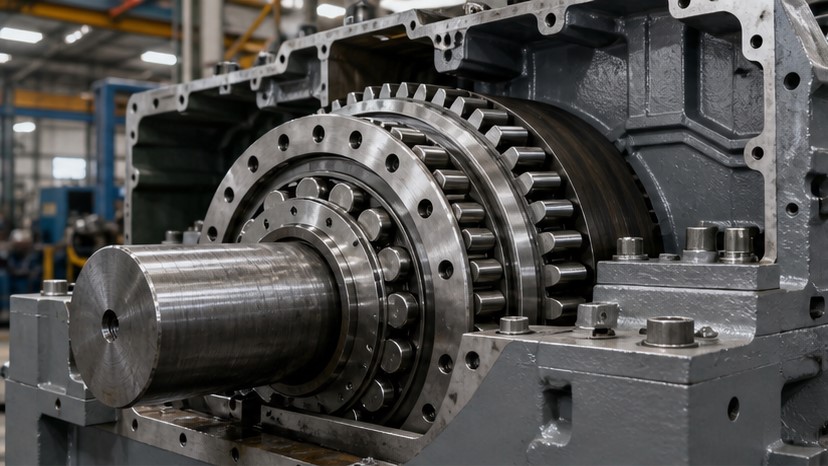
Rolling element bearings serve as the fundamental mechanical interface across rotating machinery, isolating kinetic friction, positioning drive shafts, and transmitting dynamic forces across assemblies. However, the engineering principles governing bearing design, material metallurgy, sealing integration, and maintenance cycles diverge significantly between industrial and automotive sectors. Navigating the technical distinction between industrial vs automotive bearings is essential for design engineers, procurement specialists, and plant maintenance managers who must specify components optimized for specific duty cycles and environmental conditions.
Industrial bearings are engineered to support continuous, severe duty cycles in fixed machinery such as electric motors, gearboxes, heavy process pumps, vibrating screens, and rolling mills. These components prioritize long fatigue life, standardized dimensional interchangeability, rebuildability, and relubrication flexibility under high dynamic loads and severe thermal variations. In contrast, automotive bearings are engineered around vehicle dynamics, spatial constraints, mass reduction, high-volume manufacturing, and integration with adjacent chassis or powertrain components. Modern automotive applications frequently demand pre-sealed, pre-adjusted, maintenance-free assemblies capable of enduring road shock, rapid acceleration changes, moisture, and chemical exposure across a defined vehicle service life.
Applying an automotive bearing inside an industrial drive or utilizing a standard industrial bearing within a vehicle hub assembly can lead to premature mechanical failure. Although both categories utilize rolling elements such as balls, cylindrical rollers, tapered rollers, or needle rollers, their fundamental internal geometry, cage metallurgy, seal lip design, clearance classes, and lubrication chemistry reflect distinct operational priorities. Understanding these core engineering differences ensures that rotating assemblies achieve maximum reliability, optimize maintenance schedules, and prevent costly component failures.
Our Products: Buy Ball Bearings online
Design Philosophy and System Integration
The core design philosophy of industrial bearings centers on universal standardization, structural modularity, and serviceable component life. Industrial machinery designers rely on international dimensional standards, such as ISO 15 and DIN 616, which establish standardized outer diameters, bore sizes, and widths across boundary dimension series. This modular design allows plant operators to replace a worn bearing with an equivalent unit from various global manufacturers without altering housing geometry, shaft machining, or seal arrangements. Industrial housings, such as plummer blocks and flanged units, are typically separate cast-iron or ductile-iron structures designed to facilitate periodic bearing inspection, relubrication, and precision realignment.
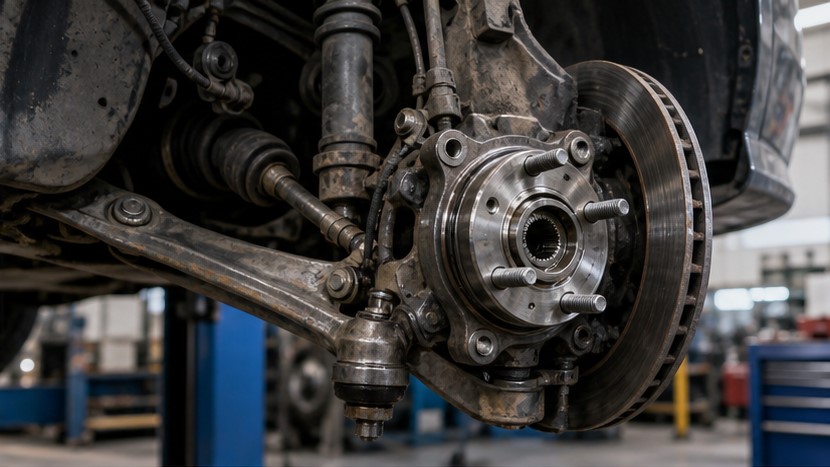
Automotive bearing engineering favors structural integration, parts consolidation, and mass reduction. Over recent decades, automotive wheel bearings have transitioned from standalone pairs of tapered roller bearings into Generation 1, Generation 2, and Generation 3 hub bearing units. Generation 3 hub units integrate the bearing raceways directly into the mounting flange that bolts to the vehicle suspension knuckle and wheel brake rotor. This consolidated architecture eliminates manual bearing preload adjustment during vehicle assembly, reduces total unsprung mass, and provides integrated mounting rings for digital ABS wheel speed sensors.
This integrated automotive design streamlines high-volume vehicle assembly lines and reduces assembly errors, but it alters component lifecycle management. When an integrated automotive wheel hub bearing reaches the end of its fatigue life, the entire structural hub assembly must be replaced as a single unit. Conversely, an industrial plummer block bearing failure requires only the replacement of the internal rolling bearing insert, allowing the heavy cast housing and adapter sleeve to be cleaned, inspected, and reused in the drive train.
Operational Profiles and Duty Cycles
Operating duty cycles establish distinct fatigue mechanisms for industrial and automotive bearings. Industrial bearings frequently operate under steady-state, continuous 24/7 duty cycles where machines run at constant rotational speeds and predictable mechanical loads for months or years without stopping. Power generation fans, continuous chemical agitators, paper mill rollers, and mining crushers require bearings that maintain hydrodynamic or elastohydrodynamic lubrication films under continuous rotation, where thermal equilibrium is reached and maintained for extended operating periods.
Automotive bearings operate under highly transient, unpredictable operational profiles dictated by vehicle maneuvers and environmental conditions. A vehicle wheel bearing, transmission bearing, or alternator bearing experiences constant fluctuations in rotational velocity, rapid directional reversals, stop-and-go traffic cycles, engine vibration harmonics, and severe shock loads induced by road potholes, speed bumps, and curb impacts. Furthermore, automotive bearings must perform across ambient temperature extremes ranging from sub-zero cold starts to high operating temperatures generated by adjacent disc brake friction.
These distinct duty cycles alter bearing fatigue calculations. Industrial bearing selection relies on achieving theoretical service lives often exceeding 40,000 to 100,000 continuous operating hours under ISO 281 calculation models. Automotive bearings are typically specified for a vehicle operational lifespan target, such as 150,000 to 300,000 road kilometers, which translates to a significantly lower number of total operating hours subjected to high peak shock loads, variable cornering forces, and harsh external contamination.
Our Products: Buy Roller Bearings online
Load Characteristics and Dynamic Forces
Load vectors in industrial equipment are primarily determined by driven mechanical mechanisms. Industrial bearings encounter high unidirectional radial forces from belt drives, gear meshing forces, and static rotor weight, combined with continuous axial thrust loads from helical gearsets, vertical pump impellers, or material feed screws. Because industrial machinery foundations are rigid, external shock loading is generally internal to the process, such as rock impacts in jaw crushers or material surges in shredders. Engineers accommodate these loads by selecting heavy-series bearings with high dynamic () and static () load ratings, ensuring sufficient surface contact to keep Hertzian contact stresses below material fatigue limits.
Automotive bearings encounter complex, multi-axis dynamic loads that vary continuously during operation. During vehicle cornering, wheel hub bearings are subjected to severe overturning moment loads and dynamic lateral axial forces generated by tire grip against the road surface. These moment loads attempt to tilt the inner and outer raceways relative to each other, necessitating specialized internal contact angles, such as back-to-back angular contact ball or tapered roller arrangements, to maintain structural stiffness and prevent uneven raceway edge loading.
Additionally, automotive suspension components flex elastically under dynamic driving maneuvers, transmitting transient bending moments into bearing raceways. To prevent localized stress concentrations, automotive bearing raceways are engineered with optimized crowning profiles that distribute contact stresses evenly along the roller path during severe cornering and impact loading.
Sealing Systems and Environmental Protection
Contamination exclusion is critical for bearing longevity, but sealing strategies differ based on application constraints and servicing practices. Industrial bearings operate in environments with airborne mineral dust, abrasive slurry, chemical vapors, washdown moisture, or extreme process heat. Because industrial housings offer ample spatial clearance, engineers deploy multi-stage sealing configurations, including external labyrinth rings, taconite seals, V-rings, and heavy-duty contact lip seals, supplemented by regular grease purging to push contaminants out of the bearing cavity.
Automotive bearings operate within compact envelopes exposed to road debris, gravel bombardment, high-pressure water spray, winter de-icing salts, and abrasive brake dust. Automotive wheel hub and transmission bearings rely on integrated cassette seals, multi-lip elastomeric seals with stainless steel flingers, and low-friction magnetic encoder seals. These seals must prevent fluid ingress while maintaining minimal frictional drag to optimize vehicle fuel economy and battery range in electric vehicles.
Automotive seals are engineered to remain effective for the entire lifespan of the component without grease replenishment. If an automotive seal lip degrades due to road debris abrasion, road moisture and fine particulates infiltrate the raceways, leading to rapid tribological failure. In industrial applications, stationary housing cavities allow continuous lubricant monitoring and seal maintenance, enabling plant technicians to replace damaged external lip seals before internal raceway contamination occurs.
Lubrication Regimes and Serviceability
Lubrication strategy represents a key operational distinction between industrial and automotive rolling element bearings. Industrial bearings utilize both grease and circulating oil lubrication depending on rotational speed, thermal dissipation demands, and housing configuration. High-power industrial gearboxes and paper machine dryer sections circulate synthetic gear oils through external filtration, cooling, and moisture-separation systems, continuously washing away wear particles and stabilizing bearing operating temperatures. For grease-lubricated industrial machinery, bearing housings incorporate grease nipples, relief ports, or automated single-point lubricators that deliver fresh grease at calculated intervals based on operating hours and environmental severity.
Automotive bearings are predominantly “sealed-for-life” units packed with specialized synthetic greases during factory assembly. These greases are formulated with synthetic base oils, polyurea or lithium-complex thickeners, extreme-pressure (EP) additives, and anti-corrosion inhibitors designed to endure thermal extremes and resist oxidation for the lifetime of the vehicle. Automotive wheel hub units, sealed clutch release bearings, and water pump bearings feature no relubrication fittings; any attempt to introduce external lubricant can damage the integrated seal lips or compromise embedded sensor rings.
While sealed-for-life automotive designs eliminate routine maintenance for vehicle owners, they require precise control over initial grease fill volume and distribution. Over-filling or under-filling the internal bearing cavity during manufacturing can result in excessive churning heat or localized boundary friction, accelerating grease degradation and component failure.
Standardization, Tolerances, and Customization
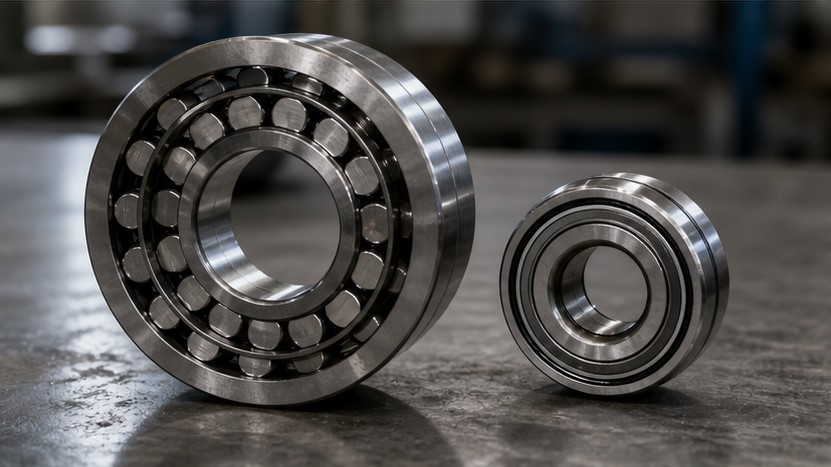
Industrial rolling element bearings adhere strictly to international dimensional standards established by ISO, ANSI/ABMA, and DIN organizations. Standard series designations—such as 6200, 6300, 22200, and 32000—ensure that a bearing manufactured by one supplier matches the bore, outside diameter, width, and radial internal clearance (CN, C3, C4) of an equivalent unit from another global manufacturer. Dimensional precision follows standard tolerance classes (ISO Normal/P0, P6, P5), allowing machine builders to calculate shaft fits (, ) and housing tolerances (, ) based on established engineering standards.
Automotive bearings frequently deviate from standard dimensional series to meet vehicle packaging constraints, crash safety structures, and weight reduction targets. Automotive original equipment manufacturers (OEMs) often collaborate with bearing manufacturers to develop custom-engineered bearing units featuring non-standard raceway diameters, integrated mounting flanges, proprietary contact angles, specialized snap-ring grooves, and asymmetric internal clearances.
Because these automotive bearing components are custom-engineered for specific vehicle platforms, they are not universally interchangeable across different vehicle makes or models. Sourcing a replacement requires specifying the exact OEM or aftermarket part number rather than referencing standard metric bearing dimensions, limiting replacement availability to automotive-specific distribution channels.
Our Products: Buy Angular Contact Ball Bearings online
Material Metallurgy and Heat Treatment
Material engineering for both bearing types begins with high-grade carbon-chromium bearing steel (100Cr6 / SAE 52100), but heat treatment and surface engineering techniques are tailored to operational conditions. Industrial bearings designed for heavy machinery, shock loads, and high temperatures often undergo through-hardening, martempering, or bainitic hardening to enhance core toughness and dimensional stability up to operating temperatures of 150°C to 200°C. For heavy rolling mills, steel mills, and mining crushers, industrial bearings may utilize carburized (case-hardened) alloy steels that combine an ultra-hard, wear-resistant surface layer with a ductile, shock-absorbing inner core to resist brittle fracture under extreme impact loading.
Automotive bearing components frequently incorporate specialized surface treatments to minimize micro-pitting, reduce rolling friction, and withstand severe electrical currents in electric vehicle (EV) drivetrains. In hybrid and EV powertrains, high-frequency switching from power inverters can induce shaft voltages that discharge through conventional bearings, causing electrical arcing, micro-crater flaking, and grease breakdown. Automotive engineers address this by deploying hybrid ceramic bearings (utilizing silicon nitride balls) or applying electrically insulating ceramic or polymer coatings to the outer bearing rings.
Automotive bearings also utilize advanced induction-hardening techniques along the raceways of integrated hub flanges. This selective hardening achieves high hardness on the ball or roller contact paths while maintaining core ductility across the structural mounting flange, ensuring the hub can absorb severe curb impacts without cracking.
Application Comparison Overview
To clearly delineate these design differences, the primary characteristics of industrial and automotive bearings are summarized below:
- Industrial Bearing Characteristics: Standardized ISO metric boundary dimensions, modular separate housings (plummer/flanged blocks), support for continuous 24/7 steady-state operation, field-relubricatable designs using grease or circulating oil, extended design lifecycles (40,000+ hours), heavy load capacities with C3/C4 clearance options, and universal cross-brand interchangeability.
- Automotive Bearing Characteristics: Custom integrated structural packaging (e.g., Gen 3 hub assemblies), pre-sealed and lubricated-for-life construction, optimized for transient speeds, stop-and-go duty cycles, and road shock loads, low-torque multi-lip cassette sealing with ABS sensor integration, design lifecycles matched to vehicle mileage targets, and platform-specific part numbers.
Typical Industrial Applications
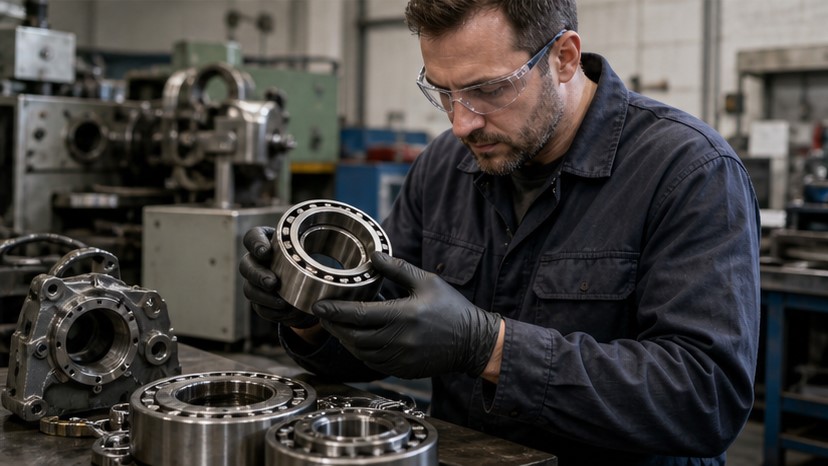
Industrial bearings are deployed across sectors where unscheduled downtime results in significant production losses. Typical equipment includes continuous-process electric motors driving factory machinery, heavy-duty industrial reduction gearboxes in cement and mining plants, centrifugal and progressive cavity pumps handling industrial fluids, vibrating screens, continuous casters in steel manufacturing, high-volume industrial air compressors, paper production calendar rolls, and utility-scale wind turbine main shafts. In all these applications, predictive condition monitoring using vibration analysis and thermal scanning allows plant teams to monitor bearing health and schedule maintenance during planned outages.
Typical Automotive Applications
Automotive bearings are installed across internal combustion, hybrid, and electric vehicle platforms. Critical installations include front and rear wheel hub assemblies (Gen 1, 2, and 3 units), transmission main shafts and differential pinion gearsets, engine accessory drive systems (alternators, air conditioning compressors, water pumps), turbocharger high-speed rotor assemblies, electric vehicle traction motors requiring ceramic insulation, steering column shafts, and suspension strut mounts. Each of these automotive locations demands compact packaging, low frictional torque, vibration damping, and resistance to road environmental hazards.
Our Products: Buy Deep Groove Ball Bearings online
Selection and Replacement Criteria
When specifying or replacing bearings in mechanical assemblies, engineers and technicians must evaluate the system’s operational requirements against the design characteristics of the bearing. Consider the following decision framework:
- Industrial Selection Focus: Prioritize when designing stationary machinery requiring standardized ISO replacements, continuous long-term operational reliability, customizable internal clearances, external oil or grease relubrication, high dynamic radial/axial load ratings, and rebuildable modular housing assemblies.
- Automotive Selection Focus: Prioritize when engineering or servicing vehicle chassis, drivetrains, or compact mobile machinery requiring integrated structural mounting, pre-set factory preloads, zero-maintenance sealed units, integrated speed sensing, minimum unsprung mass, and resistance to environmental road contamination.
Attempting to adapt an automotive bearing into an industrial application often fails due to inadequate continuous load ratings, lack of relubrication provisions, and incompatible mounting geometry. Conversely, attempting to install a standard industrial bearing into an automotive hub without proper pre-set preloads, appropriate multi-lip sealing, and ABS integration will lead to rapid bearing failure, seal breakdown, and safety risks.
Conclusion
The engineering distinction between industrial vs automotive bearings reflects differing mechanical priorities. Industrial bearings emphasize ISO dimensional standardization, modular housing architecture, high dynamic load capacities, continuous 24/7 operating reliability, and serviceable relubrication systems. Automotive bearings emphasize structural component integration, weight reduction, zero-maintenance sealed assemblies, low-friction operation, and durability against road shock and environmental contamination.
Selecting the correct bearing category requires evaluating load dynamics, operational duty cycles, sealing requirements, mounting constraints, and maintenance capabilities. Respecting these engineering differences ensures optimal equipment efficiency, maximizes component service life, and prevents premature failures in both heavy industrial plants and automotive systems.
Looking for technical guidance to specify the right industrial or specialized bearings for your machinery? Contact the engineering team at Alma Bearings for comprehensive product selection, load calculations, custom clearance specifications, and technical support.
Our Products: Buy Bearings Inserts online
Frequently Asked Questions
1. Can an industrial bearing be used in an automotive application?
Only in specific auxiliary applications where dimensions, load ratings, clearance classes, and sealing match vehicle specifications. Modern automotive wheel hubs and transmissions generally require specialized integrated designs, pre-set preloads, and ABS sensor rings that standard industrial bearings do not provide.
2. Why are most automotive wheel bearings sealed for life while industrial bearings are relubricatable?
Automotive bearings operate in compact environments exposed to road wash and debris, where sealed-for-life designs eliminate maintenance requirements for vehicle owners and protect grease from contamination. Industrial machinery provides physical space for relubrication channels and operates continuously, requiring periodic grease replenishment or circulating oil to achieve multi-year lifespans.
3. What is the difference between Generation 1, Generation 2, and Generation 3 automotive wheel bearings?
Generation 1 bearings consist of a dual-row sealed bearing cartridge pressed into the steering knuckle. Generation 2 integrates a mounting flange on either the outer or inner ring. Generation 3 integrates flanges on both the inner and outer rings, bolting directly to the suspension knuckle and brake rotor while incorporating ABS sensor rings.
4. How do electric vehicle (EV) bearings differ from standard industrial bearings?
EV bearings must operate at high rotational speeds (often exceeding 15,000 to 20,000 RPM) and resist electrical discharge erosion caused by inverter switching frequencies. They frequently utilize lightweight polymer cages, specialized low-noise greases, and ceramic silicon nitride rolling elements to prevent electrical arcing.
5. How do lifespan calculations differ between industrial and automotive bearings?
Industrial bearings are calculated based on continuous operating hours ( often targeting 40,000 to 100,000 hours under ISO 281 standards). Automotive bearings are calculated based on vehicle design lifecycles (typically 150,000 to 300,000 kilometers) under variable duty cycles, dynamic cornering forces, and road impact loads.
Comments (0)