
Shopping Cart
There are no more items in your cart
- News
- 0 likes
- 230 views
- 0 comments
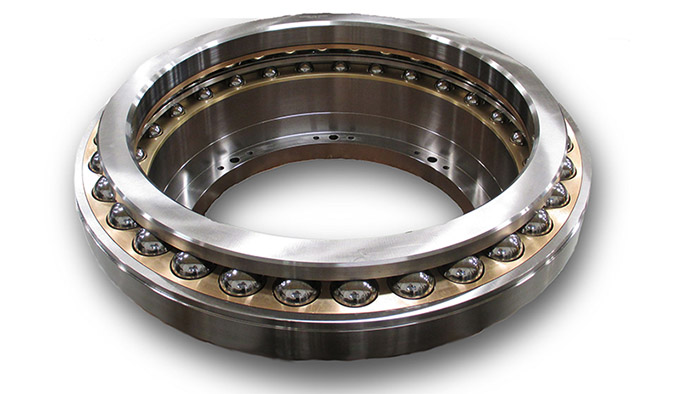
In heavy industrial machinery, some components work quietly in the background but carry enormous responsibility. Large Diameter Bearings are one of those components. They are used where machines need to support heavy loads, rotate large structures, maintain stability, and operate reliably under demanding conditions. Unlike small or standard industrial bearings, these bearings are designed for applications where the size of the equipment, the magnitude of the load, and the complexity of movement are much greater.
You can find them in cranes, wind turbines, mining equipment, tunnel boring machines, marine systems, steel mills, construction machinery, and large rotating platforms. In these applications, bearing failure is rarely a minor maintenance issue. It can stop production, damage surrounding components, create safety risks, and lead to very expensive downtime.
Choosing the right bearing for a large-scale application is not just about matching dimensions. Engineers must consider load direction, speed, stiffness, lubrication, sealing, mounting accuracy, environmental exposure, and long-term maintenance strategy. A bearing that looks correct on paper may still fail early if the operating conditions are not fully understood.
If you are evaluating bearing solutions for heavy-duty industrial equipment, working with experienced suppliers such as Alma Bearings can help you compare technical options and select reliable components for demanding applications.
Our products: Ball Bearings
What Are Large Diameter Bearings?
Large Diameter Bearings are bearings designed with significantly larger inner and outer diameters than standard industrial bearings. They are used in machines where large rotating or oscillating structures must be supported with stability and precision. In many cases, these bearings carry heavy radial loads, axial loads, overturning moments, or a combination of all three.
There is no single universal size that defines this category across every manufacturer. In general, the term refers to bearings used in large-scale machinery where diameter, load capacity, and structural support requirements are far beyond typical commercial bearing applications. Some may measure a few hundred millimeters in diameter, while others can reach several meters.
What makes these bearings special is not only their size. Their internal design, material quality, raceway geometry, lubrication system, sealing arrangement, and mounting method all need to be engineered carefully. Large bearings often become part of the structural behavior of the machine itself. If they deform, wear unevenly, or lose stiffness, the entire system can be affected.
In simple terms, these bearings allow large machine parts to move smoothly while staying properly supported under extreme mechanical stress.
Why Large Diameter Bearings Are Critical in Heavy Machinery
The larger a machine becomes, the more difficult it is to control movement and load distribution. Heavy equipment does not simply rotate like a small motor shaft. It may experience shock loads, uneven weight distribution, vibration, temperature changes, contamination, and external forces from wind, pressure, or material impact.
In these conditions, Large Diameter Bearings do much more than reduce friction. They help maintain alignment, control structural movement, absorb complex loads, and protect expensive mechanical assemblies from damage.
For example, in a wind turbine, the main bearing or pitch and yaw bearings must support large rotating components while dealing with changing wind loads. In a crane, a slewing bearing allows the upper structure to rotate while carrying the weight of the boom, load, and counterweight. In a tunnel boring machine, large bearings support massive rotating cutterheads under severe vibration and contamination.
If the bearing is undersized, poorly lubricated, incorrectly installed, or not suited to the load profile, failure can be severe. Repairing or replacing large bearings often requires heavy lifting equipment, extended shutdowns, and specialized labor. That is why proper selection at the beginning is far less expensive than correcting mistakes later.
Main Applications of Large Diameter Bearings
Large Diameter Bearings are used across many industries, especially where heavy loads and large rotating structures are involved. Their applications are diverse, but they all share one common requirement: stable movement under demanding conditions.
Wind Turbines
Wind turbines rely heavily on large bearing systems. Pitch bearings adjust the angle of the blades, yaw bearings allow the nacelle to rotate toward the wind, and main shaft bearings support the rotor assembly. These components must tolerate variable loads, vibration, temperature changes, and long service intervals.
Because wind turbines are often installed in remote locations, reliability is extremely important. Maintenance access can be difficult and expensive, especially for offshore turbines. Bearing quality, sealing, lubrication, and fatigue resistance all directly affect turbine uptime.
Cranes and Lifting Equipment
Cranes commonly use large slewing bearings to allow the upper structure to rotate. These bearings must support vertical loads, horizontal loads, and overturning moments at the same time. In lifting applications, safety is a major concern because sudden bearing failure can create serious risks.
The bearing must be matched carefully to the crane’s load chart, operating radius, rotation frequency, and duty cycle. Shock loads and uneven loading must also be considered.
Mining and Construction Machinery
Excavators, stackers, reclaimers, drilling rigs, and large conveyors often depend on large bearings. These machines usually operate in dusty, dirty, and high-impact environments. Contamination is one of the biggest threats in such applications, so sealing systems and maintenance practices are essential.
Mining machinery may also experience heavy vibration and shock. Bearings used in these environments need high load capacity and excellent resistance to surface fatigue.
Tunnel Boring Machines
Tunnel boring machines use extremely large bearing systems to support cutterheads that rotate through rock, soil, and mixed ground conditions. These bearings must withstand heavy axial loads, radial loads, and strong vibration while operating in highly contaminated environments.
Because replacing a bearing inside a tunnel boring machine can be extremely difficult, initial selection and preventive maintenance are critical.
Marine and Offshore Equipment
Marine cranes, propulsion systems, offshore platforms, and deck machinery may all use large bearing designs. Saltwater exposure creates corrosion risk, while offshore equipment may face continuous vibration, heavy loads, and limited maintenance access.
In these applications, material selection, protective coatings, sealing quality, and lubrication systems must be evaluated carefully.
Steel Mills and Heavy Manufacturing
Steel mills use large bearings in rolling mills, converters, continuous casting equipment, and heavy-duty rotating assemblies. These environments expose bearings to heat, vibration, scale contamination, and heavy loads.
Bearings in steel production must maintain performance despite harsh conditions. Heat resistance, lubrication control, and robust sealing are especially important.
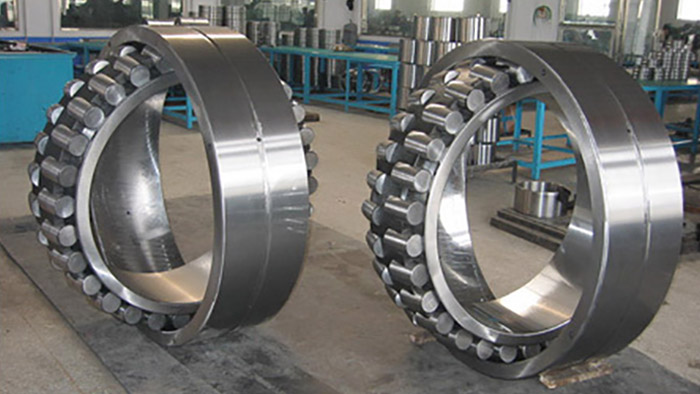
Common Types of Large Diameter Bearings
Although every application has unique requirements, several bearing designs are commonly used in large-diameter applications. The right choice depends on the load direction, speed, stiffness requirement, and mounting arrangement.
Slewing Bearings
Slewing bearings are among the most common types of Large Diameter Bearings. They allow rotational movement between large structures and are often used in cranes, excavators, wind turbines, radar systems, and rotating platforms.
A slewing bearing can support axial loads, radial loads, and tilting moments in a compact arrangement. Many designs include gear teeth on the inner or outer ring to transmit rotational motion through a drive system.
Cylindrical Roller Bearings
Cylindrical roller bearings are used where high radial load capacity is required. Their roller geometry provides line contact with the raceways, allowing them to support heavier radial loads than ball bearings of similar size.
They are often used in heavy industrial equipment, gearboxes, rolling mills, and large electric motors.
Spherical Roller Bearings
Spherical roller bearings are valuable in applications where misalignment may occur. Their internal design allows them to tolerate shaft deflection or housing misalignment while supporting heavy radial loads and moderate axial loads.
They are frequently used in mining machinery, conveyors, crushers, and heavy-duty rotating equipment.
Tapered Roller Bearings
Tapered roller bearings are suitable for combined radial and axial loads. Their design allows them to support high forces in one direction, and paired arrangements can handle loads from both directions.
Large tapered roller bearings are used in gear drives, industrial wheels, heavy vehicles, and large rotating machinery.
Thrust Bearings
Large thrust bearings are used when axial load is dominant. These bearings are common in vertical shafts, marine propulsion systems, hydroelectric equipment, and heavy machinery where force acts along the axis of rotation.
The bearing type should always be selected based on actual load conditions rather than general assumptions.
Load Analysis: The First Step in Selection
The most important part of selecting Large Diameter Bearings is understanding the load profile. Large machines rarely experience simple, constant loads. They often operate under changing forces, shock loading, vibration, and complex load combinations.
Engineers usually evaluate several types of load:
- Radial load
- Axial load
- Moment load
- Shock load
- Dynamic operating load
- Static holding load
Moment load is especially important in large rotating structures. For example, a crane slewing bearing must resist the overturning force created by the boom and lifted load. This force can be more critical than simple radial or axial loading.
It is also important to consider how often the machine operates, how loads change during cycles, and whether the bearing experiences frequent starts, stops, or reversals. A bearing used in continuous rotation may require different design priorities than one used in slow oscillating movement.
Ignoring load analysis is one of the most common causes of early bearing failure in heavy machinery.
Speed and Motion Characteristics
Large bearings usually do not rotate as fast as small motor bearings, but speed still matters. Some Large Diameter Bearings operate slowly with heavy loads, while others rotate continuously at moderate speeds. The motion pattern has a major influence on lubrication, heat generation, and fatigue behavior.
In slewing applications, movement may be intermittent. The bearing may rotate a few degrees at a time, stop, reverse direction, and then remain stationary under load. This type of operation can create specific wear patterns if lubrication is not adequate.
In wind turbines, bearing motion can be variable and unpredictable due to changing wind conditions. Pitch bearings may move in small oscillations rather than full rotations, which can increase the risk of false brinelling or fretting damage.
In continuous rotating applications, heat generation becomes more important. Lubricant viscosity, internal clearance, seal friction, and running accuracy must all be considered.
The key point is simple: bearing speed cannot be evaluated only by revolutions per minute. The full motion pattern matters.
Design Considerations for Large Diameter Bearings
Selecting a bearing for heavy equipment requires more than choosing a catalog number. The design of the surrounding structure, mounting surface, lubrication access, and sealing system all influence bearing life.
Stiffness and Structural Support
Large bearings are sensitive to the rigidity of the supporting structure. If the mounting surface is not stiff enough, the bearing rings may deform under load. This can lead to uneven load distribution, localized stress, and premature raceway damage.
For this reason, engineers must evaluate the complete assembly, not just the bearing itself. Bolt patterns, housing thickness, flange design, and surface flatness all matter.
Mounting Accuracy
The mounting surfaces must be flat, clean, and properly aligned. Even small errors can create uneven contact around the bearing circumference. In large-diameter applications, those errors are amplified because of the size of the component.
Improper mounting may cause tight spots, increased torque, vibration, and uneven wear. Correct bolt tightening sequence and torque control are also essential.
Internal Clearance and Preload
Internal clearance affects how the bearing handles load and temperature changes. Too much clearance may reduce stiffness and create vibration. Too little clearance may increase friction and heat.
In some applications, preload is used to improve rigidity and positioning accuracy. However, incorrect preload can reduce service life. This decision should be made based on the application’s load, speed, and thermal behavior.
Gear Integration
Many slewing bearings include internal or external gear teeth. Gear design must be matched with the drive system, torque requirements, backlash tolerance, lubrication method, and operating duty cycle.
Gear wear can affect positioning accuracy and load transfer, so it should be included in the selection and maintenance plan.
Lubrication Requirements
Lubrication is one of the most important factors affecting the service life of Large Diameter Bearings. Proper lubrication reduces friction, prevents metal-to-metal contact, protects against corrosion, and helps remove contaminants from contact surfaces.
Large bearings often operate under heavy loads and slow speeds, which makes lubricant film formation more challenging. In these cases, high-quality grease with appropriate base oil viscosity and extreme pressure additives may be required.
Some systems use automatic lubrication systems to deliver grease at regular intervals. This is especially useful in applications where manual lubrication is difficult or where consistent lubricant supply is critical.
However, more grease is not always better. Excessive lubrication can increase operating resistance, attract contamination, and create leakage problems. The right lubrication interval depends on load, speed, temperature, sealing condition, and environmental exposure.
In dusty or wet environments, lubrication also helps flush contaminants away from raceways and seals. For this reason, maintenance teams should follow a planned lubrication schedule rather than waiting for noise or vibration to appear.
When selecting bearings for heavy-duty equipment, the right technical match can prevent expensive downtime and extend machine life. Explore industrial bearing solutions from Alma Bearings to compare options designed for demanding large-scale applications.
Sealing and Contamination Protection
Contamination is a major cause of bearing damage, especially in large machinery. Dust, water, metal particles, sand, cement, scale, and chemical residues can all enter the bearing if sealing is inadequate.
Once contaminants reach the raceways, they can interrupt the lubrication film and create abrasive wear. Small particles may seem harmless, but under heavy loads they can damage contact surfaces quickly.
Sealing design should be selected based on the environment. A bearing used inside a clean factory does not need the same protection as one used in mining, offshore cranes, or cement production. In harsh conditions, multi-lip seals, labyrinth seals, protective covers, or external sealing systems may be necessary.
The sealing system must also be inspected regularly. A high-quality bearing can fail early if its seal is damaged during installation or degraded during operation.
Material Quality and Heat Treatment
The performance of Large Diameter Bearings depends heavily on material quality. Bearings used in demanding applications are typically manufactured from high-grade bearing steels with controlled hardness, toughness, and fatigue resistance.
Heat treatment is especially important. Proper hardening improves raceway durability and helps resist surface fatigue. However, material selection must balance hardness with toughness. A bearing that is too brittle may be vulnerable to cracking under shock loads.
In corrosive environments, stainless materials, special coatings, or surface treatments may be required. Offshore, marine, and chemical applications often demand additional protection against corrosion.
For buyers, this means documentation matters. Reliable manufacturers provide material information, heat treatment details, load ratings, and quality certifications. If this information is missing, the bearing should be evaluated carefully before purchase.
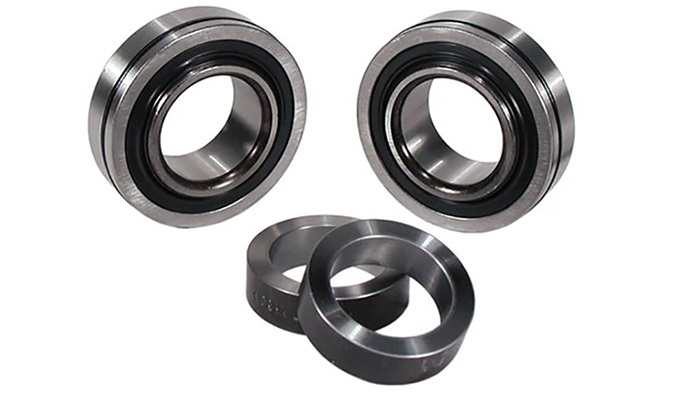
Installation Challenges and Best Practices
Installing a large bearing is not the same as installing a small standard bearing. The size and weight of Large Diameter Bearings make handling, alignment, and mounting much more complex.
Before installation, all mounting surfaces should be inspected for flatness, cleanliness, and damage. Any burrs, dirt, paint residue, or uneven surfaces can create stress points. The bearing should be lifted using proper equipment to avoid deformation or impact damage.
Bolt tightening must follow the recommended pattern and torque values. Uneven bolt tension can distort the bearing rings and create uneven load distribution. In many cases, cross-pattern tightening is used to gradually and evenly secure the bearing.
After installation, engineers should check rotational torque, alignment, lubrication, and seal condition. Early inspection after initial operation can help detect mounting issues before they become serious failures.
Proper installation is one of the most practical ways to improve bearing life.
Maintenance and Condition Monitoring
Because large bearings are expensive and difficult to replace, maintenance planning is essential. A good maintenance program focuses on lubrication, inspection, monitoring, and early problem detection.
Common inspection points include:
- Lubrication condition
- Seal damage
- Bolt tightness
- Abnormal noise
- Vibration changes
- Temperature increase
- Gear wear in slewing bearings
- Excessive clearance or movement
Condition monitoring technologies are becoming more common in 2026. Vibration analysis, temperature sensors, acoustic monitoring, and oil or grease analysis can help detect early signs of bearing damage.
For large industrial assets, predictive maintenance is often more cost-effective than reactive repair. Instead of waiting for failure, maintenance teams can identify wear trends and schedule service during planned shutdowns.
This approach reduces downtime and improves equipment reliability.
Common Causes of Failure in Large Diameter Bearings
Bearing failure usually has more than one cause. In large machinery, problems often develop from a combination of poor selection, poor installation, contamination, inadequate lubrication, or structural issues.
One common cause is overloading. If the actual operating load is higher than the bearing was designed to handle, fatigue damage will develop over time. Shock loads can accelerate this process.
Another major cause is insufficient lubrication. Without a proper lubricant film, raceways and rolling elements experience direct contact, leading to wear, heat, and surface damage.
Contamination is also extremely common. Dust and moisture can enter the bearing through damaged seals or poor maintenance practices.
Misalignment and mounting errors are especially damaging in large bearings. Because of their size, small installation errors can create significant uneven loading.
Finally, corrosion can reduce bearing life in outdoor, marine, or chemical environments. Once corrosion begins on raceways or rolling elements, smooth operation becomes difficult to maintain.
Understanding these causes helps engineers prevent failures before they happen.
How to Choose the Right Large Diameter Bearing
Selecting the correct bearing starts with a full understanding of the machine. Before choosing a product, engineers should define the load conditions, motion pattern, speed, duty cycle, environment, available space, lubrication system, and maintenance access.
The next step is choosing the bearing type that fits the load profile. If the application involves heavy radial loads and possible misalignment, spherical roller bearings may be suitable. If axial loads dominate, thrust designs may be required. If the machine needs to rotate a large structure while handling moment loads, a slewing bearing may be the correct option.
After the type is selected, the technical details must be reviewed. These include load rating, static safety factor, dynamic life, internal clearance, gear design, seal type, material, coating, lubrication recommendation, and mounting requirements.
Supplier support is also valuable. In large-scale applications, the cost of a wrong selection is high. A knowledgeable bearing supplier can help compare options and verify that the product matches real operating conditions.
Cost Considerations and Total Value
Large Diameter Bearings can be expensive, so price naturally matters. However, buyers should avoid evaluating cost only by purchase price. A low-cost bearing that fails early can create repair costs, lost production, equipment damage, and safety concerns.
Total value includes service life, reliability, technical support, ease of maintenance, availability, and risk reduction. In many heavy-duty applications, a higher-quality bearing with better sealing, stronger material, and reliable documentation can be more cost-effective over time.
Procurement teams and engineers should work together during selection. Engineers understand performance requirements, while buyers manage budget and supply chain considerations. When both sides collaborate, the final decision is usually stronger.
Conclusion
Large Diameter Bearings are essential components in heavy machinery where large structures must rotate, support heavy loads, and remain stable under demanding conditions. They are used in wind turbines, cranes, mining equipment, tunnel boring machines, marine systems, steel mills, and many other industrial applications.
Choosing the right bearing requires more than matching dimensions. Engineers must evaluate load direction, moment load, speed, motion pattern, stiffness, mounting accuracy, lubrication, sealing, material quality, and maintenance access. Each of these factors affects reliability and service life.
A well-selected bearing can improve machine performance, reduce downtime, and protect expensive equipment. A poorly selected bearing can create vibration, wear, overheating, and costly failure. For large-scale machinery, proper bearing selection is not just a technical detail; it is a major reliability decision.
If you are sourcing heavy-duty bearing solutions for demanding equipment, contact Alma Bearings to explore suitable Large Diameter Bearings and receive guidance for selecting reliable components based on your application requirements.
Our products: Roller Bearings
Frequently Asked Questions
1. What are Large Diameter Bearings used for?
They are used in heavy machinery and large rotating structures such as cranes, wind turbines, excavators, tunnel boring machines, marine equipment, steel mills, and industrial rotating platforms. Their main role is to support heavy loads while allowing smooth and controlled movement.
2. How do I choose the right large diameter bearing?
Start by analyzing load type, load magnitude, moment load, speed, motion pattern, operating environment, lubrication method, sealing requirements, and mounting structure. After that, select a bearing type and design that match those conditions.
3. Why do large bearings fail prematurely?
Common causes include overloading, poor lubrication, contamination, misalignment, incorrect installation, insufficient structural support, corrosion, and poor maintenance practices. In many cases, failure results from a combination of several factors.
4. Are slewing bearings the same as large diameter bearings?
Not exactly. Slewing bearings are one common type of large diameter bearing, but the category also includes large roller bearings, thrust bearings, tapered roller bearings, spherical roller bearings, and other heavy-duty designs.
Comments (0)