
Shopping Cart
There are no more items in your cart
- News
- 0 likes
- 191 views
- 0 comments
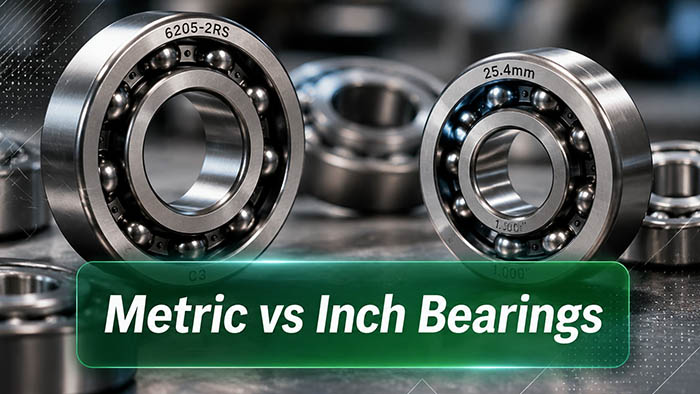
The choice between metric vs inch bearings is one of the most fundamental distinctions in mechanical engineering and industrial maintenance. While both types of bearings perform the same basic function—reducing friction and supporting loads—they originate from two different systems of measurement and follow distinct sets of international standards. This division often creates confusion during procurement, especially when a technician is trying to replace a bearing in a machine with an unknown origin.
Metric bearings are based on the International System of Units (SI) and are the global standard for most modern machinery produced outside of North America. Inch bearings, also known as Imperial bearings, are based on the United States customary system. These are predominantly found in equipment manufactured in the USA, as well as in specific historical or specialized sectors like the aerospace and classic automotive industries.
Understanding the nuances of metric vs inch bearings is critical because even a tiny difference in dimensions can lead to catastrophic failure. A bearing that “almost fits” can cause shaft damage, excessive vibration, or immediate seizure. This guide provides a comprehensive breakdown of the sizing, numbering, and application differences between these two standards to help you make accurate replacement decisions.
Unsure if your machinery requires metric vs inch bearings? Our technical team at Alma Bearings can help you decode part numbers and perform accurate measurements to ensure you receive the exact replacement for your application.
Historical Context and Standards
Metric bearings follow the standards set by the International Organization for Standardization (ISO). These standards define not only the dimensions but also the tolerances and load ratings for the vast majority of bearings used worldwide. The metric system was designed to be logical and scalable, which helped it become the default choice for the rapid industrialization of Europe and Asia during the 20th century.
Inch bearings are governed by standards such as those from the American National Standards Institute (ANSI) and the American Bearing Manufacturers Association (ABMA). These bearings were the backbone of the American industrial revolution and remains deeply embedded in the manufacturing infrastructure of the United States. While the world has largely moved toward the metric system, the sheer volume of existing “inch-based” machinery ensures that these bearings remain a vital part of the global supply chain.
Today, many global manufacturers produce both types to satisfy a diverse market. However, the design philosophy often differs. Metric bearings usually follow a specific series (like the 6000 or 7000 series) where the dimensions grow in a predictable pattern. Inch bearings often have more specialized configurations, with some designs featuring unique widths or flange arrangements that are less common in the metric world.
The Problem of Physical Interchangeability
The most dangerous mistake in the metric vs inch bearings comparison is assuming they are interchangeable because their sizes look similar. For example, a 1-inch shaft is exactly 25.4 millimeters. A common metric bearing might have a bore of 25 millimeters. While 0.4 millimeters seems like a negligible difference, it is a massive gap in the world of precision engineering.
If you attempt to force a 25mm metric bearing onto a 25.4mm (1-inch) shaft, you will likely damage the bearing inner ring or the shaft itself. Conversely, if you put a 1-inch bore bearing on a 25mm shaft, the fit will be too loose. This looseness causes “fretting,” where the bearing inner ring spins on the shaft, generating heat and eventually destroying the shaft surface.
Precision fit is the foundation of bearing life. Bearings require specific interference or clearance fits measured in microns. Mixing the two systems ignores these tolerances and almost guarantees a shortened service life. Always use a high-quality caliper or micrometer to verify whether your shaft and housing are designed for metric or imperial dimensions before ordering a replacement.
Numbering Systems: Metric
Metric bearing part numbers are highly standardized and relatively easy to decode once you understand the logic. A typical number like “6205” tells a specific story. The first digit (6) indicates the bearing type—in this case, a deep groove ball bearing. The second digit (2) represents the dimension series, which describes the relationship between the bore, outside diameter, and width.
The last two digits of a metric bearing number (if they are 04 or higher) are multiplied by five to determine the bore size in millimeters. Therefore, a “05” ending indicates a 25mm bore. This system allows engineers to quickly identify the basic characteristics of a bearing without looking at a data sheet. Suffixes are then added to indicate seals (2RS), shields (ZZ), or internal clearance (C3).
Because the metric system is so consistent, it is easier to find alternatives across different brands. An SKF 6205, an FAG 6205, and an NSK 6205 will all have the same fundamental dimensions. This standardization is a major advantage for global industries that need to source parts from multiple geographical regions.
Numbering Systems: Inch
The numbering system for inch bearings is significantly more complex and less intuitive than the metric system. There is no single universal code that applies to all inch bearings. Instead, they are often identified by a combination of letters and numbers that vary depending on the manufacturer and the specific series of the bearing.
For example, small inch ball bearings often use an “R” prefix (such as R8 or R12). In this specific series, the number represents the bore size in sixteenths of an inch. An R8 bearing has an 8/16" (or 1/2") bore. However, larger inch bearings or tapered roller bearings use completely different coding systems that involve separate numbers for the inner race (cone) and outer race (cup).
This lack of a single, simplified code means that identifying an inch bearing often requires a physical measurement or a cross-reference chart from the specific manufacturer. It also makes it more difficult to guess the dimensions of a bearing just by looking at the part number on a worn-out box.
Metric vs Inch Bearings: Key Differences
| Feature | Metric Bearings | Inch (Imperial) Bearings |
|---|---|---|
| Primary Unit | Millimeters (mm) | Inches (in) |
| Standardizing Body | ISO | ANSI / ABMA |
| Global Usage | Predominant everywhere | Mainly USA, Aerospace, Vintage Auto |
| Part Numbering | Predictable and coded | Varies by series and manufacturer |
| Bore Sizing | Usually in 5mm increments (above 20mm) | Fractional increments (1/16, 1/8, etc.) |
| Tapered Designs | Integrated assemblies | Separate cup and cone numbers |
| Availability | Extremely high worldwide | Specialized distributors outside the USA |
| Interchangeability | None (except for very rare “crossover” sizes) | None |
| Tooling Required | Metric wrenches and pullers | SAE (Imperial) wrenches and pullers |
| Market Trend | Growing as US manufacturers modernize | Stable but niche for specialized equipment |
These differences highlight why a workshop must keep both metric and imperial tools and measuring instruments on hand if they maintain a variety of equipment. Using the wrong tool on a bearing locknut or housing bolt is another common path to mechanical frustration.
Tapered Roller Bearings: A Unique Case
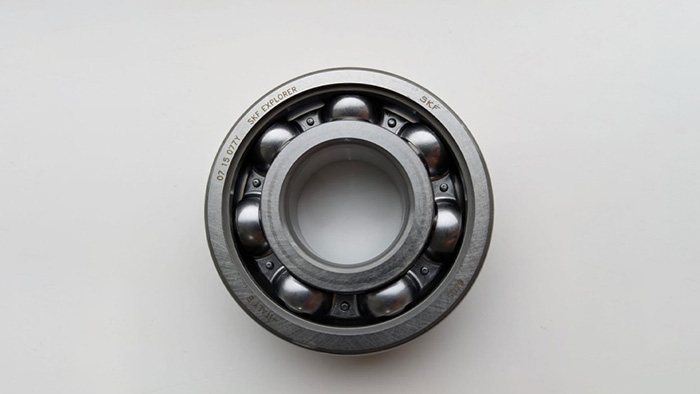
The difference between metric vs inch bearings is perhaps most visible in tapered roller bearings. In the metric system, a tapered roller bearing is typically sold as a complete set under a single part number. The cup and cone are designed to work together as a matched pair, and the dimensions are governed by ISO 355.
In the inch system, the cone (inner part) and the cup (outer ring) are often sold separately and have their own individual part numbers. This allows for a “mix and match” approach where a single cone might be compatible with several different cups to create different outside diameters or widths. While this provides flexibility for designers, it makes the procurement process for maintenance teams more complicated, as they must ensure they have the correct number for both halves of the assembly.
Because tapered roller bearings are heavily used in automotive axles and heavy machinery, many American trucks and older European vehicles still rely on inch-series tapered bearings. Even in modern times, Timken (the inventor of the tapered roller bearing) remains a primary source for these imperial components.
Application Trends
Most new industrial machinery, robotics, and consumer electronics use metric bearings. If you are working on a piece of equipment made in Japan, Germany, or China, it is almost certain to contain metric components. The logic of the metric system aligns perfectly with modern CAD software and automated manufacturing processes.
Inch bearings are still the standard for many American-made agricultural machines, oil field equipment, and older heavy-duty trucks. Furthermore, the aviation industry remains a stronghold for inch dimensions. Because aircraft designs are certified for decades, the bearings used in their turbines and landing gear often remain in the imperial system to maintain consistency with original engineering blueprints.
In the food and beverage industry, you might find a mix of both. A conveyor system made in the USA might use inch-series mounted units (pillow blocks), while the electric motors driving those conveyors (if they are high-efficiency IEC motors) might contain metric ball bearings. This “hybrid” environment requires maintenance staff to be extra vigilant.
Precision and Tolerances
There is a common misconception that one system is more precise than the other. In reality, both metric vs inch bearings can be manufactured to extremely high precision levels. In the metric system, precision is graded using “P” ratings (P0, P6, P5, etc.) or the ABEC scale (1, 3, 5, 7, 9).
Inch bearings also use the ABEC scale. An ABEC 7 inch bearing is just as precise as an ABEC 7 metric bearing. The difference lies in the specific measurement of the tolerance. A metric tolerance might be expressed as a deviation in micrometers, while an inch tolerance is expressed in ten-thousandths of an inch. While the units are different, the level of engineering excellence required to reach high-precision grades is identical.
The choice between them is rarely about which is “better” in terms of quality. Instead, it is about which system fits the surrounding components. A high-precision metric bearing is useless if your shaft was ground to an imperial dimension.
Sourcing and Availability
In the global market, metric bearings are generally easier to find and often more cost-effective due to the sheer volume of production. Almost every bearing distributor in the world stocks a wide range of metric 6000-series bearings.
Sourcing inch bearings can be more challenging outside of North America. While major brands like SKF and NSK produce inch sizes, they may not be stocked as heavily in regional warehouses. This can lead to longer lead times or higher prices for what might otherwise be a simple ball bearing.
For companies operating in regions like the Middle East or Europe, it is often wise to keep a small safety stock of inch bearings if you have American-made machinery. Relying on local “off-the-shelf” availability for a specialized R-series or an imperial tapered roller bearing can be a risky strategy during a breakdown.
CTA 1: Identify Your Bearing Standard Correctly
Converting Between Metric and Inch
Sometimes, engineers consider “converting” a machine from one system to the other during a major overhaul. This usually involves machining the shafts and housings to accept a more commonly available bearing size. For example, turning a 1-inch shaft down to 25mm to accommodate a standard metric bearing.
While this can simplify future maintenance, it is a significant undertaking. You must ensure that the new bearing has the same load-carrying capacity as the old one. Metric and inch bearings of similar sizes do not always have the same internal geometry or load ratings.
Before attempting a conversion, consult with a bearing specialist. Changing the dimensions of a shaft can also affect its strength and its compatibility with other components like seals, gears, or couplings. In most cases, it is safer and more economical to source the correct original size.
CTA 2: Shop Our Full Range of Metric and Inch Bearings
Whether you need a standard ISO metric ball bearing or a specialized ANSI inch-series tapered roller bearing, Alma Bearings offers a comprehensive inventory of genuine products to keep your equipment running.
Conclusion
The distinction between metric vs inch bearings is a vital piece of knowledge for anyone involved in industrial machinery. While the two systems may occasionally overlap in physical size, they are mathematically and mechanically distinct. Metric bearings offer the advantages of global standardization and logical numbering, while inch bearings remain essential for maintaining American-made, aerospace, and legacy equipment.
The key to success is never to guess. A difference of a fraction of a millimeter is enough to cause heat, vibration, and catastrophic failure. Accurate measurement with precision tools and a clear understanding of part numbering systems are the only ways to ensure a proper fit.
By respecting the standards behind each system, you can avoid the common pitfalls of bearing replacement. Whether your machine speaks the language of millimeters or inches, providing it with the correctly sized, high-quality bearing is the best way to ensure long-term reliability and performance.
Our Products: Needle Roller Bearings
Frequently Asked Questions
1. Can I use a 25mm bearing on a 1-inch shaft?
No. A 1-inch shaft is 25.4mm. A 25mm bearing is too small and will not fit without damaging the components. Conversely, a 1-inch bearing on a 25mm shaft will be too loose.
2. How can I tell if a bearing is metric or inch just by looking at it?
It is difficult to tell by sight alone. You should check the part number or use a digital caliper to measure the bore, outside diameter, and width. If the measurements are clean whole numbers or common decimals in millimeters, it is likely metric. If they match common fractions of an inch, it is an inch bearing.
3. Which system is more common in modern industry?
The metric system is the most common worldwide and is used in the vast majority of new industrial machinery, motors, and electronics produced today.
4. Are inch bearings more expensive?
They can be more expensive in regions where the metric system is the primary standard, as they are produced in lower volumes and may require specialized shipping or stocking.
5. Why does the US still use inch bearings?
The US has a massive infrastructure of existing machinery designed around the imperial system. Transitioning entirely to metric would require redesigning thousands of components and replacing expensive tooling across many industries.
6. Do metric and inch bearings use the same seals?
While the materials (like NBR or Viton) are the same, the dimensions of the seals are specific to the bearing size. A seal for a metric bearing will usually have metric dimensions, while an inch bearing seal will be sized in inches.
Comments (0)