
Shopping Cart
There are no more items in your cart
- News
- 0 likes
- 180 views
- 0 comments
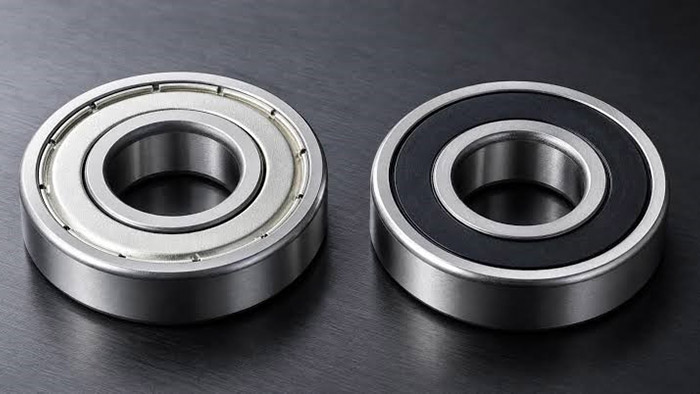
The closure design of a bearing can have a significant effect on lubrication, friction, speed capability, maintenance requirements, and service life. Although open and sealed bearings may share the same dimensions and basic internal geometry, they can perform very differently once installed in industrial machinery.
Understanding open vs sealed bearings is therefore essential for engineers, maintenance teams, equipment manufacturers, and procurement specialists. Open bearings provide direct access to the rolling elements and can support flexible lubrication strategies. Sealed bearings contain integrated protective seals that help retain grease and prevent contaminants from reaching the internal components.
Neither design is automatically better. An open bearing may be the right choice in a clean machine with an effective external lubrication system. A sealed bearing may be more reliable in equipment exposed to dust, moisture, debris, or limited maintenance access. Selecting the wrong version can cause grease leakage, overheating, contamination, excessive friction, or premature bearing failure.
This guide compares open vs sealed bearings across their most important performance characteristics and explains which design is better suited to different industrial applications.
Our Products: Ball Bearings
What Is an Open Bearing?
An open bearing has no integrated seals or shields covering its sides. Its cage, rolling elements, and raceways are exposed and can usually be seen from the side. This design provides direct access to the internal components and allows lubricant to move into and out of the bearing relatively freely.
Open bearings are commonly installed inside enclosed housings, gearboxes, transmissions, and other systems that already protect the bearing from environmental contamination. In these arrangements, a separate housing seal or external sealing system prevents dirt and moisture from reaching the bearing.
Because there is no integrated seal rubbing against the inner ring, open bearings produce minimal seal related drag. This makes them suitable for applications in which low friction, heat control, or high rotational speed is important.
Their open construction also makes relubrication more straightforward. Oil or grease can circulate through the bearing, making this design particularly suitable for centralized lubrication systems, oil baths, and oil circulation arrangements.
What Is a Sealed Bearing?
A sealed bearing has an integrated closure on one or both sides. The seal is commonly manufactured from an elastomeric material supported by a metal insert. Depending on the design, it may contact the inner ring or operate with a very small clearance.
The primary purpose of the seal is to retain lubricant and keep contaminants away from the raceways and rolling elements. Many sealed bearings are prelubricated with grease during manufacturing and designed to operate for a long period without additional lubrication.
Sealed bearings are especially useful in compact machinery, electric motors, conveyors, wheels, and equipment installed in dusty or damp environments. Their self contained design simplifies installation and reduces the need for complex external sealing or lubrication arrangements.
However, the increased protection creates a tradeoff. A contacting seal generates friction, which can increase operating temperature and limit maximum speed. The effect varies according to seal material, contact pressure, bearing size, lubricant, and operating conditions.
The Main Difference Between Open and Sealed Bearings
The fundamental difference in the open vs sealed bearings comparison is how the internal bearing components interact with the surrounding environment. An open bearing permits access to its internal surfaces, while a sealed bearing creates an integrated barrier between those surfaces and external conditions.
This difference affects almost every part of bearing operation. Open bearings offer greater lubrication flexibility and lower seal related friction, but their performance depends heavily on external protection. Sealed bearings provide better grease retention and contamination resistance, but they may operate with additional drag.
The right choice is determined by the complete bearing arrangement rather than the bearing alone. Housing design, shaft seals, lubricant delivery, contamination levels, speed, temperature, and maintenance access must all be evaluated.
Our Products: Roller Bearings
Open vs Sealed Bearings: Quick Comparison
| Selection factor | Open bearings | Sealed bearings |
|---|---|---|
| Integrated protection | None | Moderate to strong |
| Seal related friction | None | Higher, especially with contact seals |
| Speed capability | Generally higher | May be limited by seal design |
| Lubrication access | Direct and flexible | Limited after installation |
| Grease retention | Depends on surrounding system | Generally very good |
| Contamination resistance | Requires external protection | Better built in protection |
| Relubrication | Easier | Often unnecessary or restricted |
| Maintenance approach | Supports planned lubrication | Often used for low maintenance operation |
| Typical environment | Clean or externally sealed | Dusty, damp, or exposed |
| Initial bearing cost | Usually lower | Usually higher |
These differences provide a useful starting point, but actual operating limits must always be confirmed using the manufacturer’s technical data. Not every seal design provides the same level of protection, and not every sealed bearing is intended to be maintenance free.
Contamination Protection
Contamination is one of the most common causes of bearing damage. Dust, metal particles, moisture, and process residue can enter the raceway contact zone, interfere with lubrication, and create surface indentations. Over time, this damage can lead to noise, vibration, fatigue, and early failure.
Sealed bearings have a clear advantage when the bearing itself must provide protection. Their integrated seals help block contaminants before they can reach the grease and rolling surfaces. This makes them well suited to equipment exposed to moderate dust, splashing, or debris.
Open bearings do not provide this protection independently. However, this does not mean they are unsuitable for contaminated industrial environments. An open bearing installed inside a properly sealed housing can be protected more effectively than a standard sealed bearing operating without adequate external safeguards.
For extremely dirty or wet conditions, an integrated bearing seal may not be sufficient on its own. Labyrinth seals, shaft seals, flingers, protective covers, or purging arrangements may still be necessary.
Friction and Speed Capability
Open bearings normally offer the lowest drag because no seal contacts the rotating ring. This can be valuable in high speed equipment, precision machinery, and systems where heat generation must remain low.
Sealed bearings may create more friction, particularly when fitted with contact seals. At higher rotational speeds, seal lip friction can increase temperature and reduce efficiency. Excessive heat can also affect grease consistency, seal condition, and bearing life.
Not all sealed designs behave in the same way. Low friction and noncontact seals can provide a compromise between speed and protection. They generally create less drag than full contact seals but may not block fine contamination or moisture as effectively.
When speed is a major selection factor, engineers should compare the reference speed or limiting speed of the exact bearing variant. The speed rating of an open bearing should not automatically be applied to the sealed version of the same size.
Our Products: Deep Groove Ball Bearings
Lubrication and Grease Retention
Lubrication is another major difference between open vs sealed bearings. Open bearings allow oil or grease to reach the rolling elements directly. They are compatible with manual relubrication, automatic grease systems, oil baths, oil mist, and circulating oil systems.
This flexibility makes open bearings suitable for machinery where lubricant must also remove heat or carry contaminants away from the bearing. Gearboxes and some heavy industrial systems, for example, may use the same oil to lubricate both gears and bearings.
Sealed bearings are usually filled with a specified quantity of grease before installation. The seal helps retain that grease and reduces leakage. This can provide long operating life when the grease type and fill quantity match the application.
However, sealing does not make lubricant permanent. Grease still ages because of temperature, oxidation, mechanical working, and contamination. If the expected grease life is shorter than the required machine service interval, a sealed for life bearing may not be appropriate.
Maintenance Requirements
Sealed bearings are often selected to reduce routine maintenance. Since the lubricant is retained inside and the internal components are protected, periodic relubrication may not be required during the intended service life.
This is useful in machines where bearings are difficult to reach, maintenance labor is expensive, or relubrication creates a risk of introducing contamination. It can also eliminate problems associated with applying the wrong grease or adding excessive quantities.
Open bearings require a more deliberate lubrication and sealing strategy. Maintenance teams may need to monitor lubricant condition, replenish grease, change oil, and inspect the external seals. This creates additional responsibility but also provides greater control over long term operation.
For large, critical, or continuously operating machines, that control can be an advantage. An open arrangement may allow lubricant replacement without replacing the bearing, while a sealed bearing may need to be removed once its internal grease reaches the end of its useful life.
Heat Management
Temperature affects lubricant life, internal clearance, seal performance, and fatigue resistance. Open bearings often manage heat more effectively because they have lower drag and can work with circulating oil systems that transfer heat away from the contact zone.
Sealed bearings retain grease within a relatively closed space. This is efficient for lubrication retention, but excessive speed, overfilling, misalignment, or seal friction can raise the operating temperature.
A sealed bearing should not be selected solely because it appears more protected. If the machine operates at high speed or near a heat source, the additional temperature created by the seal could outweigh its protective benefit.
The complete thermal environment should be evaluated, including ambient temperature, shaft speed, load, lubricant viscosity, housing design, and the ability of the machine to dissipate heat.
Load Capacity and Bearing Life
For bearings with the same internal geometry and material, open and sealed versions may have similar basic load ratings. The presence of a seal does not necessarily increase the mechanical load carrying capability of the raceways and rolling elements.
In practice, however, sealing can have a substantial effect on service life. A sealed bearing may last longer in a contaminated environment because it protects the raceways. An open bearing may last longer in a clean, high speed system because it generates less friction and receives fresh lubricant.
Bearing life is therefore not determined by the closure type alone. Load, speed, alignment, mounting accuracy, lubrication quality, contamination, temperature, and internal clearance all influence the final result.
When Should You Use Open Bearings?
Open bearings are generally appropriate when the surrounding machine already provides effective environmental protection and a suitable lubrication system. They can be an efficient choice for high speed or high temperature systems where lubricant circulation and low drag are priorities.
Common uses include enclosed gearboxes, transmissions, machine tool assemblies, industrial housings, oil lubricated systems, and machinery equipped with centralized lubrication. They may also be selected when maintenance teams require regular access to inspect or replenish the lubricant.
An open design is usually most successful when contamination is controlled and the lubrication plan is reliable. Without those conditions, the lack of integrated protection can quickly become a weakness.
More Bearings: Spherical Plain Bearings
When Should You Use Sealed Bearings?
Sealed bearings are usually preferred when the bearing is exposed to dust, moisture, or process debris and no separate sealing arrangement is available. They are also useful when the bearing location is difficult to service or when the equipment is designed for minimal routine maintenance.
Typical applications include small electric motors, conveyor rollers, household appliances, wheels, fans, power tools, agricultural equipment, and general industrial machines. The exact suitability depends on the seal design and the severity of the environment.
Sealed bearings are not automatically waterproof. Standard contact seals may resist splashes and contamination, but continuous submersion, pressure washing, aggressive chemicals, or highly abrasive material can require a more specialized sealing solution.
Single Sealed and Double Sealed Bearings
Some bearings are sealed on only one side, while others are sealed on both sides. A single sealed bearing may be appropriate when protection is needed from one direction but lubricant must still enter from the other side.
A double sealed bearing provides protection on both sides and is commonly supplied pregreased. This configuration is frequently used where the bearing operates as a self contained unit.
The common suffixes used to identify seals vary among manufacturers. Codes such as RS, 2RS, RSH, or other brand specific designations should not be treated as universally interchangeable. The bearing manufacturer’s catalog should always be checked to confirm seal contact, material, temperature limit, and protection level.
Can You Remove the Seals from a Sealed Bearing?
Some seals can be physically removed, but doing so is not always recommended. A tool can damage the seal lip, cage, raceway, or rolling elements. Once removed, the seal may not provide the same protection if reinstalled.
Removing a seal also changes the bearing’s lubrication and contamination control. If the bearing was filled with grease for sealed operation, opening it may expose that grease to debris or allow it to escape.
If an application requires an open bearing, purchasing the correct open version is usually safer than modifying a sealed product. Any modification should be supported by the bearing manufacturer or an experienced technical specialist.
Common Selection Mistakes
One frequent mistake is assuming that sealed bearings always last longer. They may last longer in contaminated conditions, but seal friction and grease aging can be disadvantages in high speed or high temperature systems.
Another mistake is installing an open bearing without considering external protection. Even a high quality bearing can fail quickly if particles or moisture reach its rolling surfaces.
Overlooking the manufacturer’s suffix is also risky. Two bearings with the same base number may have different seals, internal clearances, grease fills, temperature limits, or speed ratings. The complete designation must be verified before purchase or installation.
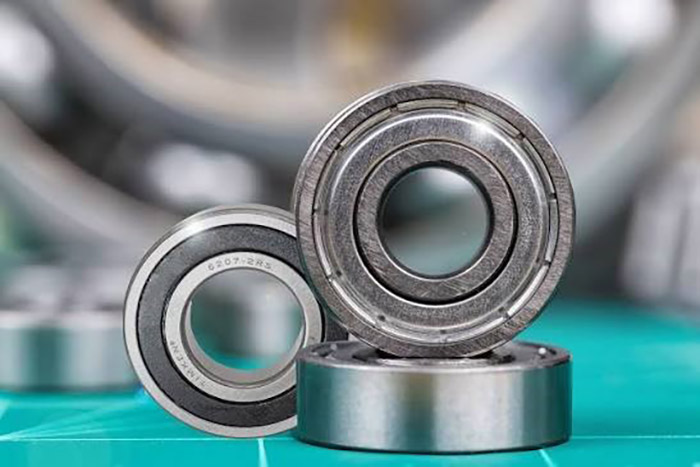
Finally, users should not confuse sealed bearings with shielded bearings. Metal shields generally provide lower friction but less protection against moisture and fine contamination than elastomer contact seals.
How to Choose Between Open and Sealed Bearings
When comparing open vs sealed bearings, consider these practical selection factors:
- Evaluate contamination, moisture, speed, temperature, load, maintenance access, expected service life, and the existing lubrication system.
- Confirm the exact seal design, grease specification, clearance, speed limit, and operating temperature in the manufacturer’s technical documentation.
A bearing should be selected as part of the entire machine arrangement. Focusing only on the bearing price or base designation can overlook the conditions that ultimately determine reliability.
Total Cost Considerations
Open bearings are often less expensive as individual components, but the complete installation may require external seals, lubricant delivery equipment, and regular maintenance. These additional requirements can increase the total operating cost.
Sealed bearings typically have a higher purchase price, but they may simplify housing design and reduce maintenance. In small or inaccessible machinery, this convenience can provide better overall value.
The correct comparison should include bearing cost, external sealing, lubricant consumption, maintenance labor, downtime risk, and expected replacement frequency. The cheapest bearing at the time of purchase is not necessarily the most economical solution over the life of the machine.
Conclusion
The choice between open vs sealed bearings depends on the balance between lubrication flexibility, rotational efficiency, contamination protection, and maintenance needs. Open bearings provide low seal related friction, direct lubricant access, and strong compatibility with external oil or grease systems. They are particularly effective inside clean, protected machinery.
Sealed bearings retain grease and provide integrated protection against contaminants. They are often the better option for dusty, damp, compact, or difficult to maintain equipment. Their main tradeoffs are additional friction, possible speed limitations, and restricted access to the internal lubricant.
Neither design is universally superior. Open bearings are usually preferable when the machine already supplies effective sealing and lubrication, while sealed bearings are generally more practical when built in protection and reduced maintenance are priorities.
A reliable decision requires reviewing the complete bearing designation and actual operating conditions. By considering speed, temperature, contamination, lubrication, and service access together, users can improve bearing life and reduce avoidable equipment downtime.
Contact Alma Bearings for technical guidance and access to open, sealed, and other industrial bearing configurations selected according to your machinery and operating conditions.
Our Products: Angular Contact Ball Bearings
Frequently Asked Questions
1. What is the main difference between open and sealed bearings?
Open bearings have no integrated closures, allowing direct lubricant access and lower seal related friction. Sealed bearings use built in seals to retain grease and reduce the entry of contaminants.
2. Are sealed bearings better than open bearings?
Sealed bearings are generally better in dusty, damp, or difficult to maintain applications. Open bearings can be better in clean, externally protected systems requiring high speed or continuous lubrication.
3. Do open bearings need more maintenance?
Open bearings often require an external lubrication and sealing strategy. Maintenance frequency depends on the machine design, lubricant, operating temperature, contamination, and duty cycle.
4. Can sealed bearings operate at high speeds?
Yes, but their maximum speed may be lower than that of an equivalent open bearing because the seals create drag and heat. Low friction seal designs can support higher speeds than full contact seals.
5. Are sealed bearings permanently lubricated?
Many sealed bearings are prelubricated and intended to operate without relubrication for their calculated service life. However, grease still ages, so the bearing is not literally lubricated forever.
6. Are sealed bearings waterproof?
Not necessarily. Standard seals can resist contamination and moderate moisture, but they may not withstand submersion, high pressure washing, or aggressive fluids. Specialized sealing may be required for severe exposure.
Comments (0)