
Shopping Cart
There are no more items in your cart
- News
- 0 likes
- 113 views
- 0 comments
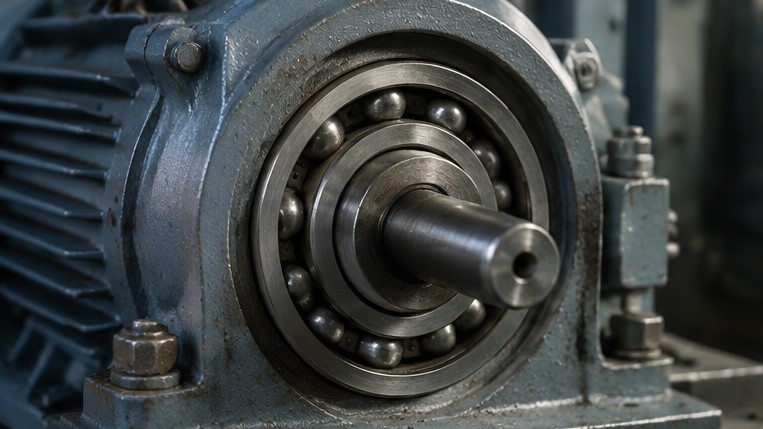
In the intricate landscape of mechanical engineering and industrial maintenance, the distinction between standard and precision bearings is fundamental to the operational integrity of rotating machinery. Selecting the appropriate bearing class is not merely an exercise in procurement; it is a critical engineering decision that dictates machine reliability, precision, and service life. The ongoing discussion surrounding precision bearings vs standard bearings is essentially a question of “fit for purpose.” An industrial bearing must be meticulously selected based on the precise demands of the application, including the peak rotational speed, dynamic load profiles, operating temperature fluctuations, and the necessary geometric accuracy of the final product.
Standard bearings serve as the workhorses of the global industry, designed to provide cost-effective reliability in general-purpose machinery. Conversely, precision bearings are engineered to push the boundaries of mechanical capability, minimizing geometric errors to operate at ultra-high speeds while maintaining extreme dimensional stability. The engineer who understands these technical nuances is better equipped to avoid the dual traps of over-engineering—which squanders capital—and under-engineering—which invites catastrophic mechanical failure. This comprehensive guide delves into the metallurgical, geometric, and operational parameters that separate these two distinct classes, providing a robust framework for making the correct selection for your specific industrial requirements.
Our Products: Deep Groove Ball Bearings price
The Engineering of Standard Bearings
Standard bearings, frequently classified by ISO tolerance class P0 or the “Normal” class, are engineered to satisfy the baseline requirements of the vast majority of industrial equipment. These bearings are mass-produced with cost-efficiency as a primary objective, yet they maintain a high degree of reliability for moderate speeds and loads. They are characterized by standardized tolerances for ring dimensions, runout, and internal clearance, ensuring they can be mounted onto standard shafts and housings without specialized adjustments.
The manufacturing process for standard bearings prioritizes a balance between mass output and consistent performance. They typically utilize high-grade chrome steel and standardized cage designs—often composed of pressed steel or injection-molded polymer—to ensure reliable operation in non-critical machinery. While they do not provide the extreme dimensional accuracy of high-precision grades, they are perfectly sufficient for equipment where running accuracy is not the limiting factor of performance. For the vast majority of conveyor systems, electric motors, centrifugal fans, and general-purpose industrial pumps, the standard tolerance class provides an optimal balance of fatigue life and operational stability. They are the economical choice for applications where the cost of a bearing replacement is significantly lower than the cost of machine downtime.
The Engineering of Precision Bearings
Precision bearings are clearly identified by higher tolerance classes, such as P6, P5, P4, and P2 according to ISO standards, or the equivalent ABEC 5, 7, and 9 grades. The primary objective of these components is to minimize errors in the geometric rotation of the shaft, thereby reducing vibration, harmonic excitation, and friction while maximizing the positional accuracy of the supported mechanism. These bearings undergo intensive, multi-stage manufacturing processes, including enhanced centerless grinding, precision honing of raceways, and more rigorous quality inspection protocols.
Beyond tighter dimensional tolerances, precision bearings often incorporate specialized internal design features that distinguish them from standard units. These may include customized internal clearances, high-stability cage materials like phenolic resins or high-tensile brass, and optimized contact angles tailored to handle complex load patterns. They are frequently utilized in applications where the bearing must maintain a stable, predictable position under varying dynamic loads. Furthermore, the materials used in precision bearings—often vacuum-degassed, high-purity steel—are processed to minimize the presence of subsurface inclusions, which directly translates into a significantly longer fatigue life in high-speed, high-load environments. When a machine requires stability that cannot be compromised by micro-variations, the precision bearing is the only viable component.
Technical Differences in Geometry and Tolerance
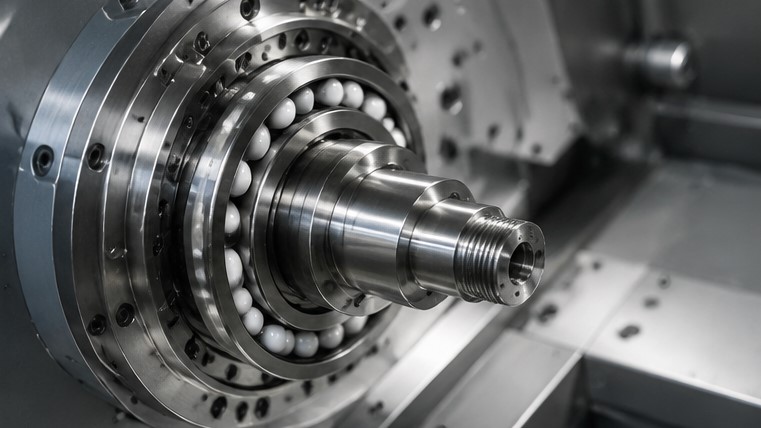
The primary technical differentiator in the precision bearings vs standard bearings comparison is the precision of the geometry. Standard bearings are manufactured with tolerance bands that allow for more variance in the bore diameter, outside diameter, and ring width. While this facilitates ease of installation, it introduces more “clearance” or “slack” into the system. In precision bearings, these tolerance bands are reduced by factors of five or ten. This tight dimensional control ensures a superior fit on the shaft and within the housing, which is essential for reducing “runout.” Runout is the measure of deviation from a perfect circular path during rotation.
In high-speed machine tool spindles, even a few micrometers of runout can result in the loss of workpiece surface finish. Precision bearings address this by ensuring the raceways are not only round but also square to the axis of rotation with extreme precision. Furthermore, the internal clearance of these bearings is managed with high rigor. Standard bearings often feature a C3 clearance to accommodate thermal expansion in general industrial motors. Precision bearings, however, are frequently manufactured with highly specific internal clearances tailored to the thermal and load conditions of the application, often involving matched pairs specifically designed for preloading. Preloading is a technique that maintains stiffness by ensuring that all rolling elements are constantly in contact with the raceways, a state of mechanical tension that is impossible to achieve with loose, standard internal clearances.
Our Products: Split Roller Bearings price
Vibration, Noise, and Harmonic Excitation
One of the most observable performance differences between standard and precision bearings is the behavior of the machine regarding noise and vibration. Because precision bearings are manufactured with superior raceway geometry and a finer surface finish, they generate less friction and cause less excitation of the machine housing. In applications where noise control is a vital performance metric—such as high-end laboratory equipment or silent-running pharmaceutical pumps—precision bearings are often selected even if the speed or load requirements are not extreme.
Standard bearings, while excellent for general use, possess more geometric variance in their ball or roller diameters and raceway waviness. Under high rotational speeds, these minor variations can sum up to generate significant vibration, which propagates into the machine structure. This vibration is not merely an acoustic nuisance; it is a destructive force that accelerates the wear of seals, gears, and other critical components. By upgrading to a higher precision class, maintenance engineers can often resolve chronic vibration issues that have plagued a machine’s lifespan, provided the root cause is indeed bearing-related geometry. This transition from standard to precision components changes the resonance profile of the machine, effectively shifting harmonic frequencies away from the machine’s natural operating range.
Cost Considerations and Total Cost of Ownership
When analyzing precision bearings vs standard bearings, the initial purchase cost is a major differentiator. Precision bearings can cost significantly more than their standard counterparts due to the added manufacturing stages, tighter quality control, and superior-grade materials utilized. However, it is a narrow view to consider only the upfront price. The total cost of ownership (TCO) perspective is essential in heavy-duty or critical industrial environments.
Using a standard bearing in an application that demands high-precision performance leads to early failure. The combined cost of unscheduled downtime, the labor required for frequent replacements, and the potential for secondary damage to the machine shaft or housing often dwarfs the price difference between a standard and a precision bearing. Conversely, using a precision bearing in a slow-speed, non-critical application provides no tangible performance benefit and represents unnecessary capital expenditure. The objective for maintenance managers and design engineers is to align the bearing’s tolerance class with the actual operational requirement. Alma Bearings emphasizes this balance, ensuring that capital is allocated toward bearings that deliver measurable improvements in machine uptime and performance without wasting resources on excessive precision where it is not required.
Installation and Maintenance Sensitivity
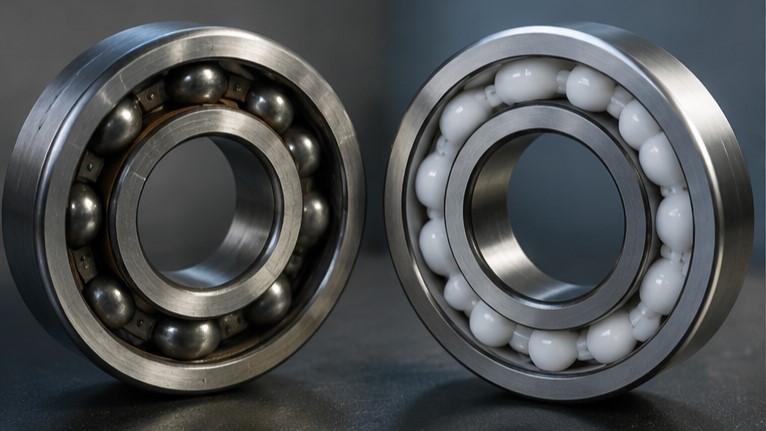
Precision bearings are significantly more sensitive to improper installation practices than standard bearings. Because they are designed to operate with exceptionally tight tolerances, any contamination during the installation process, improper fits on the shaft or housing, or misalignment during mounting can negate the precision benefits. A standard bearing is generally more forgiving of minor installation variations, which is one reason why they remain the standard for general-purpose maintenance environments.
Technicians installing precision bearings must adhere to stringent clean-room standards, utilize precision heating tools like induction heaters with temperature control, and often employ hydraulic mounting techniques to ensure precise seating. Because of their tight internal geometry, precision bearings also require specific lubrication regimes. For example, high-speed precision bearings might require oil-air lubrication or high-speed synthetic greases to manage heat efficiently, whereas a standard bearing would function perfectly with general-purpose grease. Following the manufacturer’s installation manual is not merely a recommendation; it is an absolute necessity when working with P5 or higher tolerance classes to ensure the precision built into the bearing is maintained in the machine.
Our Products: Angular contact Ball Bearings price
Performance Metrics Comparison
The following table provides a high-level summary of the engineering performance and physical characteristics that distinguish these two classes, aiding in the selection process for industrial applications:
| Performance Characteristic | Standard Bearings (P0) | Precision Bearings (P5/P4/P2) |
|---|---|---|
| Dimensional Tolerance | Standard/Normal | High to Ultra-High |
| Running Accuracy | Moderate | Excellent |
| Vibration/Noise Levels | Standard | Low to Very Low |
| Speed Capability | Moderate | High to Ultra-High |
| Internal Clearance | Fixed/Standard | Customized/Preloaded |
| Installation Sensitivity | Low (Forgiving) | High (Requires Precision) |
| Cost | Economical | Premium |
Industrial Applications and Selection Logic
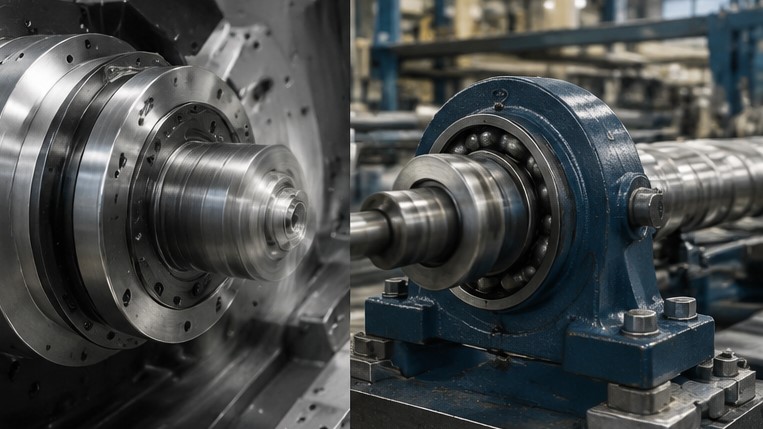
The selection logic between these two classes is primarily driven by the operational environment and the performance requirements of the machine. If a machine requires high positioning accuracy, operates at speeds that approach the physical limit of the bearing type, or demands zero-vibration performance, precision bearings become a requirement rather than a luxury. Failure to use precision bearings in such critical cases results in mechanical resonance, thermal runaway, and rapid degradation of the raceway surfaces.
For machinery where reliability is the chief concern but extreme positioning accuracy is secondary, standard bearings are the preferred, pragmatic choice. In the realm of high-speed spindles used in CNC machining, precision bearings are essential because they dictate the accuracy of the finished part. In contrast, for a large industrial blower or a standard conveyor motor, the standard bearing is more than adequate. The selection process should be guided by an honest assessment of whether the bearing is the bottleneck for the machine’s performance. If the machine’s accuracy is limited by structural rigidity or electrical control, putting a P4 bearing into that machine will provide no benefit. If the machine’s accuracy is limited by the bearing’s runout, then the upgrade is mandatory.
Conclusion
The decision regarding precision bearings vs standard bearings is a foundational choice in both machine design and long-term maintenance strategy. By recognizing that precision bearings are not simply “better” components, but rather highly specialized tools, engineers can make informed decisions that optimize both mechanical reliability and capital allocation. Precision bearings are indispensable for applications demanding extreme accuracy, high stiffness, and vibration-free operation. Conversely, standard bearings deliver the necessary performance and economic value for the vast majority of general industrial applications.
Careful analysis of your machine’s speed, load, runout requirements, and operating environment is necessary to prevent the dual risks of premature mechanical failure and excessive capital waste. Regardless of the class chosen, the key to longevity remains the consistent use of genuine, high-quality products. Alma Bearings is dedicated to providing the technical guidance and a comprehensive range of both standard and precision bearings, ensuring that your equipment receives the exact grade of support it requires to maintain peak operational performance.
Our Products: Needle Roller Bearings price
Frequently Asked Questions
1. Can I use a precision bearing to replace a standard bearing?
Yes, it is technically possible and often provides better performance, but it is usually an unnecessary expense if the machine design does not require it. You must ensure the installation environment is clean and the fitting process is precise, as precision bearings are more sensitive to poor installation.
2. What happens if I use a standard bearing in a high-speed application?
The standard bearing will likely experience excessive vibration, thermal instability, and rapid wear. The loose geometric tolerances will lead to noise and potentially catastrophic failure as the bearing reaches its speed limit.
3. Do precision bearings last longer than standard bearings?
In an application specifically designed for precision, yes, they last significantly longer because they run cooler and with less vibration. However, in an application that does not require high precision, they may not offer a longer lifespan than a standard bearing.
4. Is it necessary to use specific lubricants for precision bearings?
Often, yes. Because precision bearings are frequently used in high-speed applications, they require lubricants (grease or oil) that are optimized for high speeds to prevent churning and heat buildup.
5. What does the “P” class represent?
The “P” rating stands for “Precision” class in ISO standards. Lower numbers represent higher precision (e.g., P2 is more precise than P5).
6. Are precision bearings always more expensive?
Generally, yes, due to the additional grinding, polishing, and quality control steps required during manufacturing to achieve tighter tolerances.
7. Can precision bearings be repaired?
In most industrial settings, it is not recommended to repair precision bearings. The cost of restoring the original precision tolerances and internal clearances is often higher than purchasing a new, genuine bearing.
8. Why is preloading used with precision bearings?
Preloading is used to eliminate internal clearance, which increases the stiffness of the bearing and ensures the rolling elements remain in contact with the raceways at all times, reducing vibration and increasing accuracy.
Comments (0)