
Shopping Cart
There are no more items in your cart
- News
- 0 likes
- 543 views
- 0 comments
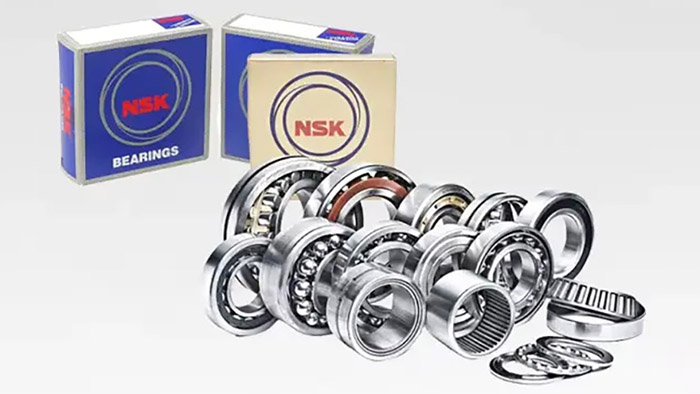
When selecting industrial bearings, the brand often becomes an important consideration alongside technical specifications. Engineers, maintenance teams, and procurement specialists frequently compare well‑known manufacturers to determine which products offer the best combination of performance, reliability, and cost efficiency. One of the most common comparisons in the bearing industry is SKF vs NSK bearings.
Both companies are globally recognized manufacturers with decades of engineering experience and extensive product portfolios. Their bearings are widely used in industries such as automotive manufacturing, heavy machinery, energy production, and precision equipment. However, differences in design philosophy, production technology, and application focus can influence which brand is more suitable for a particular industrial environment.
Companies that require dependable supply chains and access to multiple bearing brands often work with specialized distributors like AlmaBearings, where engineers and buyers can source high‑quality bearings for a wide range of industrial applications worldwide.
Read More: Ball Bearings
Understanding the Global Bearing Market
The global bearing industry is highly competitive and driven by continuous technological development. Manufacturers invest heavily in research, materials engineering, and production technologies to improve durability, efficiency, and reliability.
Companies like SKF and NSK have established strong reputations through decades of innovation and large‑scale manufacturing capabilities. Their products are commonly used in critical equipment where mechanical failure could disrupt production or damage expensive machinery.
When comparing brands, engineers typically evaluate factors such as:
- Manufacturing quality
- Product range and availability
- Application specialization
- Performance consistency
- Global distribution networks
These factors help determine which brand provides the most suitable solution for a particular machine or industrial environment.
Overview of SKF Bearings
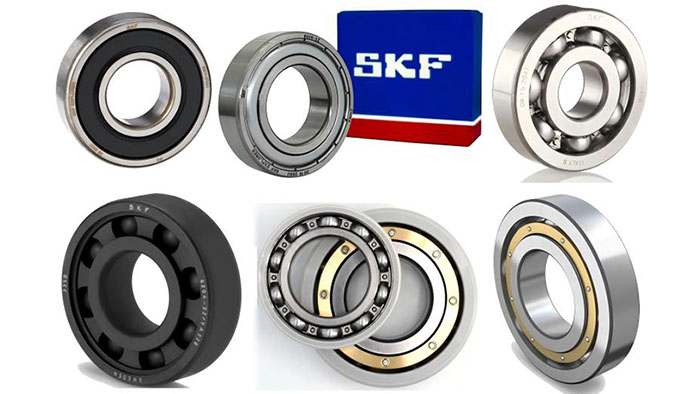
SKF is a Swedish company founded in 1907 and is widely regarded as one of the pioneers of modern bearing technology. Over more than a century, the company has developed a broad portfolio of mechanical components and engineering services.
SKF products are widely used across industries including automotive manufacturing, aerospace, energy production, and industrial automation. The company focuses heavily on research and development, particularly in areas such as lubrication systems, condition monitoring, and predictive maintenance technologies.
Among the products commonly produced by SKF are Deep Groove Ball Bearings, Spherical Roller Bearings, Tapered Roller Bearings, and Angular Contact Ball Bearings, which are designed to meet a wide variety of industrial performance requirements.
SKF is particularly known for integrating advanced engineering solutions with its bearing products, helping companies improve equipment reliability and operational efficiency.
Overview of NSK Bearings
NSK is a Japanese manufacturer founded in 1916 and recognized as one of the leading bearing producers in Asia and worldwide. The company has developed a strong reputation for precision engineering and manufacturing excellence.
NSK bearings are commonly used in automotive systems, machine tools, robotics, and high‑precision industrial equipment. Their manufacturing approach emphasizes strict quality control, advanced metallurgy, and high‑precision machining processes.
NSK produces a wide range of products including Cylindrical Roller Bearings, Needle Roller Bearings, Deep Groove Ball Bearings, and Angular Contact Ball Bearings, offering solutions for both heavy industrial machinery and high‑precision applications.
Many industries value NSK products for their consistency in quality and their strong focus on high‑speed and precision engineering environments.
Engineering Philosophy: European vs Japanese Design Approach
Although both companies produce high‑quality bearings, their engineering philosophies have slightly different focuses shaped by their industrial backgrounds.
European manufacturers like SKF historically developed many solutions for heavy industry, mining, and large‑scale industrial machinery. As a result, many SKF bearing designs emphasize durability, load capacity, and long service intervals in demanding environments.
Japanese manufacturers such as NSK have traditionally focused strongly on precision manufacturing, automotive engineering, and high‑speed machinery. Their products are often associated with extremely tight tolerances and smooth rotational performance.
These differences do not mean one brand is universally better than the other. Instead, they reflect different engineering priorities that may suit certain machines more effectively.
Performance in Heavy Industrial Applications
Heavy industrial equipment often places significant stress on mechanical components. Machinery used in mining, construction, material processing, and large manufacturing systems typically operates under heavy loads, vibration, and continuous duty cycles.
In these environments, bearings must maintain structural strength while distributing forces evenly across the rolling elements. Durability and resistance to fatigue become critical performance factors.
SKF products have historically been widely used in heavy industrial environments due to their strong engineering focus on load‑bearing capability and robust construction. However, NSK bearings are also increasingly used in these applications thanks to improvements in materials and heat treatment technologies.
Ultimately, both brands are capable of supporting demanding industrial equipment when properly selected for the application.
Performance in High‑Precision Machinery
High‑precision machinery introduces different engineering challenges. Equipment such as machine tools, robotics systems, semiconductor manufacturing equipment, and automated production lines requires extremely stable rotational motion.
In these applications, factors such as vibration control, rotational accuracy, and smooth motion are more important than raw load capacity. Bearings must maintain tight tolerances while minimizing friction and heat generation.
NSK bearings are widely recognized for their strong presence in high‑precision industries, particularly in machine tools and robotics. Their focus on precision manufacturing and high‑speed performance makes them a common choice in applications where accuracy is critical.
That said, SKF also produces advanced precision bearings designed specifically for machine tool spindles and other high‑accuracy systems.
Availability and Global Distribution
Another important factor when comparing bearing brands is global availability. Industrial companies often require consistent supply across multiple locations and production facilities.
Both SKF and NSK maintain large international distribution networks and operate manufacturing plants around the world. This global presence ensures that replacement bearings and maintenance components can be sourced relatively quickly in most regions.
Working with experienced suppliers also plays an important role in availability. Industrial distributors such as AlmaBearings provide access to multiple global bearing brands, helping companies maintain stable supply chains and reduce downtime caused by component shortages.
Cost Considerations
Price is often a practical consideration for procurement teams. Bearings from premium global manufacturers typically command higher prices due to strict manufacturing standards, advanced materials, and extensive quality control.
SKF bearings are sometimes perceived as slightly more expensive in certain markets, particularly in Europe and North America. NSK products may offer competitive pricing depending on region and distribution channels.
However, focusing solely on purchase price can be misleading. In industrial machinery, the total cost of ownership—including service life, maintenance requirements, and downtime risk—is usually more important than the initial component cost.
Selecting a bearing that lasts longer and performs more reliably can significantly reduce overall operational expenses.
Read More: Roller Bearings
Reliability and Quality Standards
Both SKF and NSK maintain extremely strict quality standards and invest heavily in engineering research and development. Their products are manufactured using advanced materials, precision machining processes, and extensive testing procedures.
These quality standards ensure that bearings can operate reliably under demanding industrial conditions. Engineers typically evaluate performance characteristics such as fatigue resistance, vibration levels, lubrication performance, and load distribution when comparing brands.
Because both manufacturers meet high international standards, the choice between them often depends more on application requirements and supplier availability rather than overall product quality.
Even when comparing well‑known brands, the reliability of the supplier remains a key factor in ensuring consistent product quality and availability.
Industrial distributors like AlmaBearings help companies source bearings from trusted manufacturers while ensuring proper product verification and technical support. Working with an experienced supplier can simplify procurement and help businesses find the most suitable bearing solutions for their equipment.
Which Brand Is Better?
The answer depends largely on the application and operational requirements.
SKF bearings are widely recognized for their strong presence in heavy industry and their focus on durability, load capacity, and integrated engineering solutions. NSK bearings are often associated with precision manufacturing, high‑speed performance, and advanced machining applications.
Both brands produce extremely high‑quality products that meet international engineering standards. When properly selected and installed, either brand can provide reliable performance in demanding industrial environments.
Instead of asking which brand is universally better, engineers usually focus on identifying which product design best matches the specific operating conditions of their machinery.
Conclusion
The comparison between SKF vs NSK bearings highlights two of the most respected manufacturers in the global bearing industry. Each company has built its reputation through decades of engineering innovation, strict manufacturing standards, and extensive global distribution networks.
SKF products are often favored in heavy industrial environments where durability and load capacity are critical, while NSK bearings are widely used in precision machinery and high‑speed applications. Both brands offer reliable solutions for modern industrial systems.
For companies looking to source high‑quality bearings from leading manufacturers, AlmaBearings provides access to a wide range of global bearing brands, helping businesses maintain efficient, reliable machinery across a variety of industries.
FAQ – SKF vs NSK Bearings
1. Are SKF and NSK bearings both high‑quality brands?
Yes. Both companies are among the most respected bearing manufacturers in the world and produce bearings that meet strict international quality standards.
2. Which brand is better for heavy industrial machinery?
SKF bearings are widely known for their performance in heavy industrial environments, although NSK products are also capable of handling demanding applications.
3. Are NSK bearings good for precision machinery?
Yes. NSK has a strong reputation for high‑precision bearings used in machine tools, robotics, and high‑speed equipment.
4. Do SKF bearings cost more than NSK bearings?
Pricing can vary by region and distributor, but SKF products are sometimes slightly more expensive due to their engineering features and brand reputation.
5. Can SKF and NSK bearings be used interchangeably?
In many cases, bearings from both brands follow international standards and may be interchangeable if the dimensions and specifications match.
6. Where can businesses buy SKF or NSK bearings?
Industrial suppliers such as AlmaBearings provide access to bearings from leading global manufacturers for a wide range of applications.
Comments (0)