
Shopping Cart
There are no more items in your cart
- News
- 0 likes
- 103 views
- 0 comments
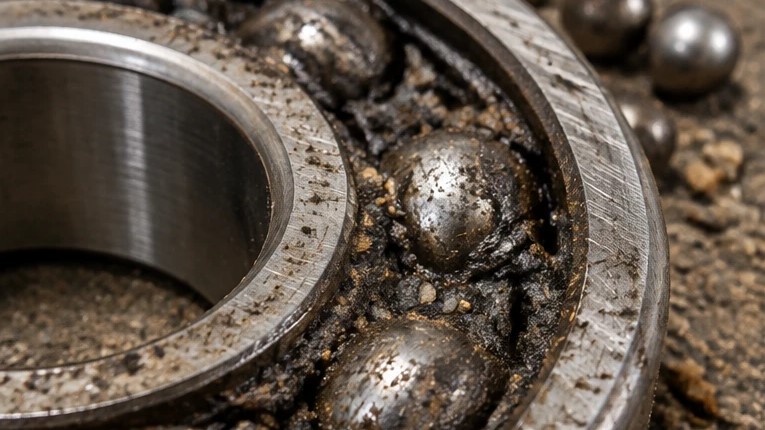
Industrial machinery relies on high-precision bearings to support heavy rotating loads efficiently. These components operate on the principle of a microscopic oil film that separates moving metal surfaces, allowing for smooth, friction-free rotation. However, this delicate interface is highly vulnerable to external environments. When foreign substances like dust, grit, or moisture breach the housing, the result is known as bearing contamination. This article explains how these foreign particles destroy robust steel components, the visible signs of degradation, and the practical steps maintenance teams can take to prevent costly failures. Understanding the mechanics of contamination is the first essential step toward achieving long-term machinery reliability.
Our Products: Needle Roller Bearings
What Is Bearing Contamination and Why Does It Matter?
Bearings need a microscopic, smooth layer of oil or grease to spin freely without metal touching metal. This protective film keeps parts cool, prevents friction, and allows heavy industrial machines to run smoothly for years. When unwanted materials get inside the bearing housing, this critical protective layer breaks down. The arrival of these unwanted substances is known as bearing contamination.
Contamination is one of the most common reasons why industrial bearings fail long before their expected lifespan. Foreign particles turn smooth lubricants into abrasive grinding paste. Instead of protecting precision components, the contaminated lubricant starts grinding down the polished steel tracks. Understanding how solid particles and moisture enter and destroy bearings helps operators catch issues early, prevent machine downtime, and save substantial repair costs.
Solid vs Liquid Contaminants: How They Enter and Attack
Not all contaminants behave the same way. In factory and field environments, contaminants fall into two basic groups: solid particles and liquids. Both ruin the bearing, but they do it in completely different ways.
Solid particles include sand, cement dust, airborne grit, and tiny metal shavings from other worn machine parts. When these hard particles get trapped between the rolling balls and the raceway track, they act like sandpaper. Hard particles press directly into the steel, leaving small dents, gouges, and rough spots. Even soft particles like lint or rubber bits can clog grease pathways, starving the moving metal of fresh lubricant.
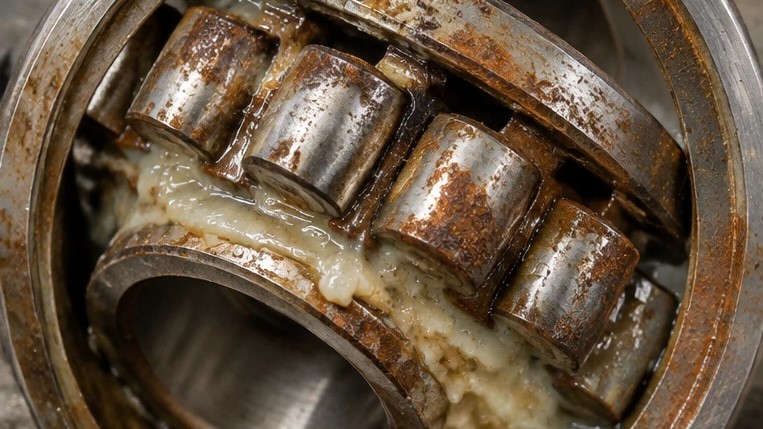
Liquid contaminants usually mean water, cleaning chemicals, cooling fluids, or condensation. Water is especially dangerous for high-speed bearings. Even a tiny amount of moisture in the lubricant weakens the oil film, allowing bare metal to hit bare metal. Water also causes chemical reactions that weaken the steel structure from within, creating microscopic cracks, rust spots, and rapid corrosion.
| Contaminant Type | Common Sources in Factories | What It Does to the Bearing | Early Warning Signs |
|---|---|---|---|
| Hard Dust and Sand | Mining dust, unsealed breathers, dirty grease tools | Scratches smooth steel, dents raceways, creates abrasive wear | High-pitched grinding noise, elevated operating temperature |
| Water and Moisture | High-pressure washdowns, rain, internal condensation | Breaks down oil film, creates rust pits, weakens steel | Milky or cloudy lubricant, reddish-brown rust stains on rings |
| Metal Shavings | Upstream gear wear, burrs from improper shaft installation | Cuts deep grooves, dents rolling elements, breaks cages | Sudden spikes in vibration, metallic glitter visible in grease |
| Process Chemicals | Acidic vapors, aggressive detergents, cleaning solvents | Dissolves grease thickeners, pits polished surfaces | Rapid grease drying, black or hardened sludge inside housing |
The Step-by-Step Process of Contamination Damage
Damage from contamination does not happen all at once. It follows a steady, destructive path that turns minor surface scratches into complete mechanical failure if left unchecked.
First, hard particles roll over the mirror-like surfaces of the bearing tracks. As the heavy load pushes down on the balls or rollers, the trapped dirt particles crush against the steel, leaving tiny indentations with raised edges. This process is called surface denting. These raised edges create small bumps on a surface that was engineered to be completely smooth and flat.
Next, every time a ball or roller passes over one of these tiny raised edges, it hits the bump with tremendous force. Over millions of rotations, these constant micro-impacts cause tiny cracks to spread beneath the surface of the steel. Soon, small flakes of metal begin peeling away from the raceway track, a condition known as flaking or spalling. Once metal flakes break off, they enter the lubricant as new, sharp contaminants, speeding up the destruction of the entire bearing assembly.
- Main Factors That Speed Up Contamination Damage:
- Operating machines in dusty or wet environments without proper secondary covers or seals.
- Storing fresh grease in open containers or applying lubricant with dirty grease guns.
- Spraying high-pressure water or steam directly at bearing seals during routine plant washdowns.
- Running equipment continuously after vibration alarms or unusual hissing sounds appear.
- Reusing old seals or failing to replace worn rubber lip seals during standard maintenance overhauls.
Read More: Bearing Noise
How to Spot Bearing Contamination Early
Catching contamination early can mean the difference between simply flushing out dirty grease and having an entire production line shut down due to a seized bearing. Fortunately, machinery sends clear warning signals when dirty lubricant begins destroying internal surfaces.
The most noticeable sign is a change in sound. A clean, healthy bearing produces a quiet, consistent hum. When dirt enters, the bearing creates a harsh, high-pitched scratching or hissing noise as particles rub between rolling surfaces. If water is present, the grease often turns into a cloudy, milky emulsion, losing its original color and slippery texture.
Maintenance teams can also use basic condition monitoring tools. Vibration sensors pick up early friction shocks before human ears can hear them. When dirt particles dent the steel tracks, vibration readings in the higher frequency ranges immediately jump. Measuring housing temperature is another reliable check, as contaminated lubricants generate higher friction, causing bearing housings to run noticeably hotter than adjacent components.
| Detection Method | What It Measures | Difficulty Level | When to Use It |
|---|---|---|---|
| Visual Grease Inspection | Changes in grease color, cloudiness, presence of grit | Very Easy | During every routine walk-around and lubrication round |
| Audio Listening Probe | Scratching, hissing, or grinding noises from housing | Easy | Weekly checks on critical rotating equipment |
| Handheld Infrared Thermometer | Surface temperature rise caused by friction buildup | Easy | Daily or weekly operational rounds |
| Vibration Monitoring | High-frequency stress waves from dent impacts | Moderate | Continuous or monthly predictive maintenance routes |
Practical Ways to Keep Bearings Clean and Running
Protecting bearings from contamination is straightforward when maintenance teams adopt simple, disciplined shop practices. Prevention requires far less effort and money than replacing ruined bearings and damaged shafts.
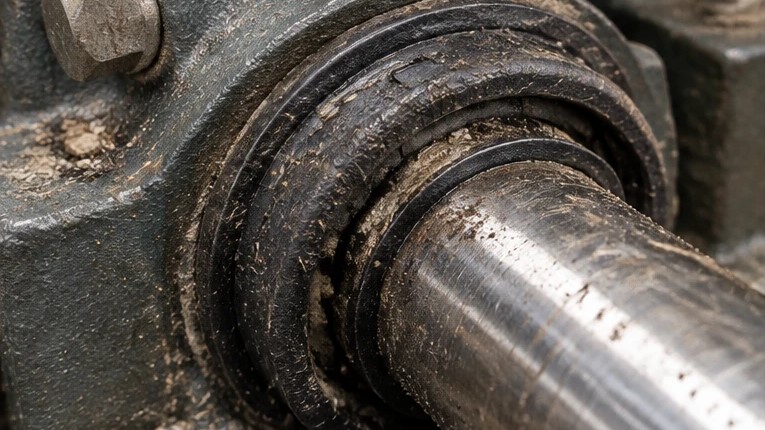
First, invest in high-quality sealing solutions. Standard rubber seals work well in clean environments, but dirty, wet applications require non-contact labyrinth seals or bearing isolators. These advanced seals block dust and liquids from reaching the shaft interface while eliminating friction wear on the rubber itself. Adding external splash guards or flinger rings provides an extra layer of defense against high-pressure water jets and heavy falling debris.
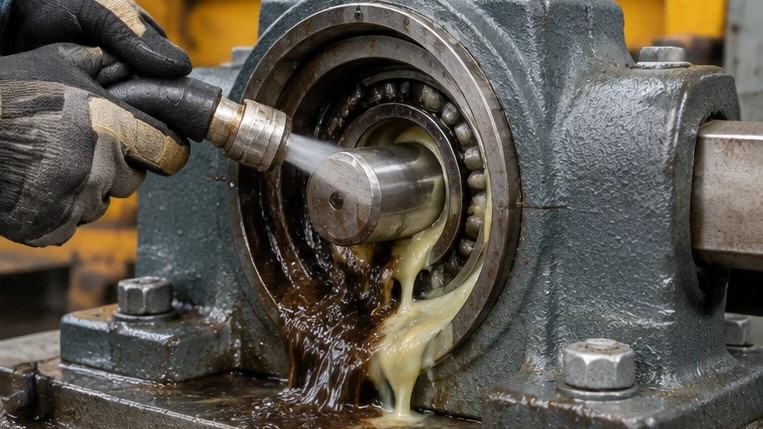
Second, practice clean lubrication management. Many bearings become contaminated before they are even installed because grease is stored in open tubs or pumped through dirty grease gun nozzles. Always wipe grease fittings clean before attaching a grease gun. When adding grease, apply fresh lubricant slowly so the old, contaminated grease purges safely out of the relief port, taking collected dirt with it. Finally, replace standard open breathers with desiccant breathers, which filter incoming air and remove moisture before it enters the bearing oil sump.
- Golden Rules for Contamination-Free Bearing Maintenance:
- Store all spare bearings in their original, sealed packaging until the exact moment of installation.
- Always clean the grease fitting and nozzle with a clean lint-free rag before pumping fresh lubricant.
- Install desiccant air breathers on oil housings to stop humid air from condensing inside the sump.
- Never wash bearings with unconditioned shop water or direct high-pressure spray jets onto seal lips.
- Flush out old lubricant completely whenever particulate contamination is detected during oil checks.
Conclusion
Bearing contamination is rarely a sudden accident; it is almost always a slow, preventable process that compromises the integrity of critical rotating machinery. By understanding how solid particles and moisture interact with rolling elements, maintenance teams can shift their strategy from reactive repairs to proactive protection. The cost of implementing robust sealing, desiccant breathers, and disciplined lubrication practices is negligible compared to the significant financial impact of unscheduled downtime and catastrophic equipment failure.
Ultimately, maintaining clean lubricant and isolating bearing housings from environmental ingress are the most effective ways to maximize the service life of industrial assets. Reliability begins with a rigorous commitment to preventing contamination at the source, ensuring that precision components can perform their functions without the abrasive influence of foreign debris. Consistent monitoring, coupled with clean maintenance protocols, guarantees that machinery remains operational, efficient, and profitable for its entire design life.
Our Products: Ball Bearings
Frequently Asked Questions
1. Can a contaminated bearing be saved by flushing it with clean oil?
If the contamination is caught immediately and consists only of light dust or moisture, thoroughly flushing the housing and refilling it with clean lubricant can save the bearing. However, if the particles have already dented the raceway or caused metal flaking, flushing will not reverse the physical damage, and the bearing will need replacement soon.
2. Why does water cause so much damage inside a bearing?
Water destroys the thin oil film separating moving metal parts, causing immediate metal-to-metal contact. It also attacks the steel chemically, leading to rust pits and hydrogen damage, which makes the hard bearing steel brittle and prone to cracking under load.
3. How does dirt get past tight bearing seals?
Dirt usually enters when rubber seal lips wear down, harden from high heat, or get grooved by grit. Contaminants can also be sucked inside when a warm bearing cools down, creating a mild vacuum that pulls in moist, dirty air through worn seals or open breathers.
Comments (0)