
Shopping Cart
There are no more items in your cart
- News
- 0 likes
- 120 views
- 0 comments
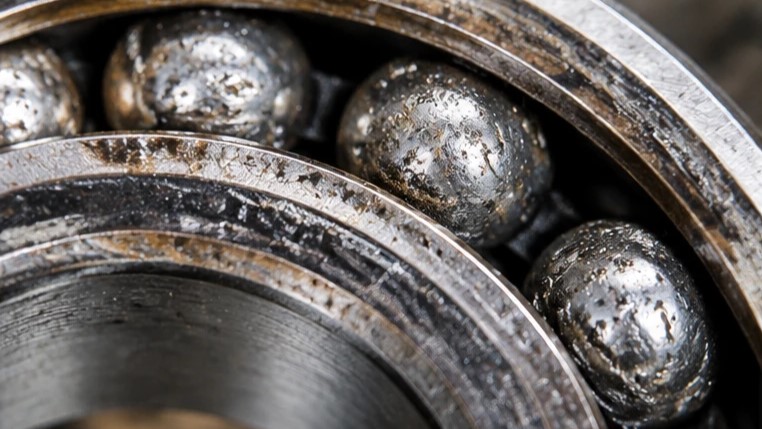
In industrial manufacturing, plant reliability depends heavily on the health of rotating machinery. Electric motors, gearboxes, industrial fans, pumps, and conveyor drives all rely on bearings to maintain smooth motion and support mechanical loads. When these critical components begin to wear down, they rarely fail without warning. Long before a bearing overheats or completely locks up, it produces distinct acoustic signals.
Changes in sound are among the earliest and most direct indicators of mechanical distress. Ignoring abnormal bearing noise allows minor surface imperfections to develop into severe mechanical failures that can damage motor shafts, ruin bearing housings, and bring entire production lines to an unexpected stop.
Addressing abnormal sounds requires a clear understanding of lubrication, mechanical alignment, and operational wear. Rather than treating noise simply as an inconvenience to be masked by adding more grease, maintenance teams must treat sound as valuable diagnostic feedback. By learning how to listen to equipment and interpret these acoustic patterns, technicians can identify problems early, make targeted repairs, and keep machinery running reliably.
Our Products: Deep Groove Ball Bearings
How Sound Develops Inside a Bearing
To fix abnormal noise, it is helpful to understand how sound is created inside a rolling element bearing. In a healthy machine, the rolling elements, such as balls or cylindrical rollers, travel along inner and outer raceways. They are separated from the steel raceways by a microscopic film of oil or grease. When this protective layer is intact, the bearing operates with a smooth, quiet, and steady sound.
Noise begins when something disrupts this smooth contact surface or breaks the lubricant film. As rolling elements travel across rough areas, scratches, or microscopic indentations, they create physical impacts. These impacts send mechanical vibrations through the bearing rings, into the housing, and out into the surrounding air as audible sound.
In the earliest stages of surface damage, the impacts produce very high-frequency vibrations that the human ear cannot hear. Specialized acoustic tools can detect these signals early. Over time, as microscopic fatigue expands into surface flaking and pitting, the vibration energy grows stronger and shifts into the lower frequencies that plant operators can clearly hear on the factory floor. By the time a bearing is noticeably loud to someone walking by, the physical wear is already well underway.
Common Bearing Sounds and What They Mean
Different mechanical problems create distinct types of noise. Learning to recognize the specific character of a sound provides immediate clues about what is going wrong inside the machine.
|
Acoustic Sound |
Most Likely Cause |
Typical Working Situation |
|
High-Pitched Whine or Squeal |
Lack of lubrication or excessive friction |
Dry bearing, incorrect grease type, or seal rubbing |
|
Deep Rumbling or Roaring |
Raceway surface damage or fatigue |
High operating hours, heavy overload, or aged equipment |
|
Irregular Clicking or Crunching |
Solid dirt or dust inside raceways |
Harsh environments with failed or damaged seals |
|
Steady Metallic Buzzing |
Electrical fluting from motor currents |
Electric motors powered by variable frequency drives |
|
Chattering or Rattling |
Loose housing fit or cage wear |
Excessive internal clearance or severe machine vibration |
1. High-Pitched Whining or Squealing
A steady, high-pitched screeching or squealing noise usually points to severe friction and a lack of proper lubrication. When the oil film thins or dries out completely, metal surfaces slide directly against each other. This friction causes the bearing rings to vibrate at high frequencies, creating a sharp whistling or screaming sound.
Interestingly, a whining sound can also appear immediately after a technician adds too much grease. When a bearing cavity is packed completely full, the rolling elements must push hard through the thick grease mass. This churning creates fluid friction, drives temperatures upward, and generates a distinct whining noise until the excess lubricant finds a way out.
Our Products: Ball Bearings
2. Deep Rumbling or Roaring
A low, continuous rumbling or roaring noise generally indicates advanced surface fatigue on the raceways. When rolling elements travel across areas where the steel has begun to pit, peel, or flake off, they create a steady series of low-frequency vibrations that echo through the machine frame.
Rumbling can also happen when a bearing is installed in a distorted or twisted housing. If the housing bore is out-of-round, the bearing ring gets squeezed unevenly. This removes the natural operating clearance in certain spots, forcing the rolling elements to carry excessive loads each time they pass through the tight zone.
3. Clicking, Ticking, or Crunching
Irregular snapping, clicking, or crunching noises usually mean that hard solid particles have entered the bearing. Grains of sand, grinding dust, or small metal chips get trapped between the rolling elements and the raceways. As the balls roll over these hard contaminants, they crush them against the polished steel, producing distinct crunching sounds and leaving tiny dents behind.
If the clicking sound occurs at perfectly regular intervals and speeds up as the motor spins faster, the issue is often a single flat spot, chip, or crack on an individual ball or roller. Every time that specific damaged spot rolls across the raceway, it produces a clear, repetitive click.
4. Continuous Buzzing or Metallic Hissing
A continuous buzzing or harsh hissing sound on an electric motor often points to electrical damage caused by variable frequency drives. Modern motor drives can induce electric currents along the motor shaft. When this electrical voltage builds up, it discharges by jumping across the thin oil film in the bearing to reach the ground.
These microscopic electrical sparks melt tiny craters into the raceways. Over weeks or months of continuous running, thousands of these micro-sparks create a washboard pattern of ridges across the metal, known as fluting. As the rolling elements pass over these tiny ridges at high speed, they generate a characteristic electric buzzing sound, and the grease often turns dark or burnt.
Primary Root Causes of Bearing Noise
Identifying why a bearing is noisy requires looking at the machine operating conditions and maintenance history. While the noise is the visible symptom, the real root cause usually traces back to one of several common areas.
|
Root Cause Category |
Specific Problem |
Observable Result on the Bearing |
|
Lubrication Problems |
Under-greasing, over-greasing, or wrong viscosity |
Dry surfaces, grease churning, or oil film collapse |
|
Environmental Ingress |
Dust, abrasive sand, process chemicals, or water |
Surface scratching, abrasive wear, or rust corrosion |
|
Installation Errors |
Hammer impacts, shaft misalignment, or tight fits |
Dents on raceways, edge loading, or bound bearings |
|
Electrical Currents |
Shaft voltages from variable speed drive motors |
Fluting ridges on raceways and blackened lubricant |
1. Inadequate or Incorrect Lubrication
Lubrication failure is the single most frequent cause of bearing noise in industrial plants. Lubricants break down when machinery runs hot for extended periods. Heat causes the base oil to oxidize and separate from the grease thickener, leaving behind a hard, dry residue that cannot lubricate moving parts.
Using a lubricant with the wrong base oil viscosity can also create noise. If the oil is too thin for the weight of the load, the fluid film collapses and allows metal contact. If the oil is too thick, the bearing must work harder to push through it, creating unnecessary drag and elevated noise.
Our Products: Roller Bearings
2. Contamination from Dirt and Moisture
Operating environments are often filled with dust, grit, washdown water, and chemical vapors. If bearing seals become worn, hardened, or improperly seated during maintenance, these contaminants enter the bearing cavity.
Solid particles act like sandpaper inside the bearing, continuously scratching the polished raceways and increasing background noise. Moisture causes chemical oxidation and rust. When a machine sits idle in a humid plant, rust spots form where the rollers touch the raceways. Once the machine starts up again, rolling across these rusty patches produces immediate vibration and noise.
3. Installation Errors and Misalignment
Mechanical mistakes made during installation frequently lead to early noise problems. One common error is using a mechanical hammer or direct force to push a bearing onto a shaft. Hitting the outer ring to mount the inner ring transfers impact force directly through the rolling elements, leaving small indentations on the raceway that click and rumble from the very first day.
Misalignment is another common culprit. When the motor shaft and driven equipment shaft are not perfectly straight, the bearing is twisted at an angle. This forces the rolling elements to ride along the edges of the raceway instead of the center, creating concentrated mechanical stress, heat, and high-pitched noise.
How to Diagnose the Source of the Noise
Before tearing down a machine, technicians should take a structured approach to confirm where the noise is coming from. Acoustic energy travels easily along steel pipes, shafts, and motor frames. It is very easy to mistake noise from a worn gearbox, a cavitating pump, or an unbalanced cooling fan for a damaged bearing.
Technicians should use a systematic diagnostic approach to verify the problem:
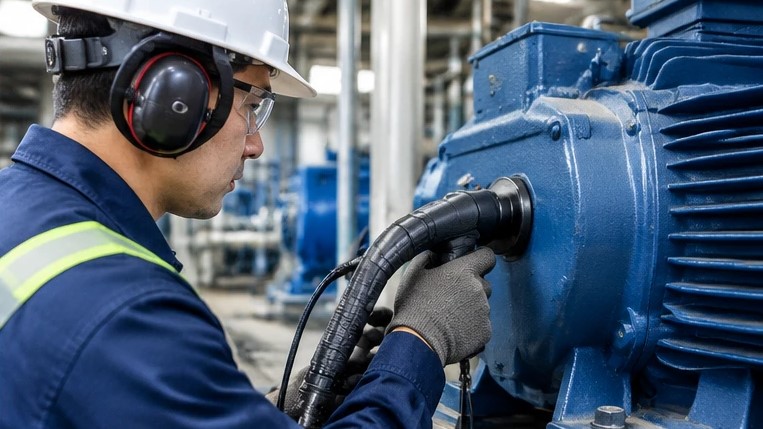
- Ultrasonic Listening Tools: Handheld ultrasonic detectors capture high-frequency sounds that human ears cannot pick up while filtering out general factory background noise. This tool lets a technician clearly hear whether a bearing is dry or experiencing internal micro-impacts long before it becomes audible across the room.
- Vibration Spectrum Analysis: Placing a vibration sensor on the bearing housing measures movement across various frequencies. Technicians can match the vibration peaks to specific defect patterns to see whether the problem is on the inner ring, the outer ring, or the rolling elements themselves.
- Thermal Inspection: Pairing acoustic checks with an infrared thermometer or thermal camera provides immediate clarity. A noisy bearing that is suffering from lack of oil, excess grease, or mechanical binding will almost always show an abnormal hot spot.
- Grease Inspection: Taking a small sample of grease provides immediate visual clues. Dark, blackened grease indicates thermal burning or electrical sparks, milky grease reveals water contamination, and gritty residue confirms that dirt has entered the housing.
Our Products: Needle Roller Bearings
Practical Ways to Fix Bearing Noise
Once the cause of the noise is clear, technicians can apply the correct mechanical fix. Applying a temporary shortcut without addressing the root cause will only lead to repeated failures.
1. Correcting Lubrication Issues
If diagnostic checks show that the bearing surfaces are still smooth and undamaged, and the noise is caused purely by dry operation:
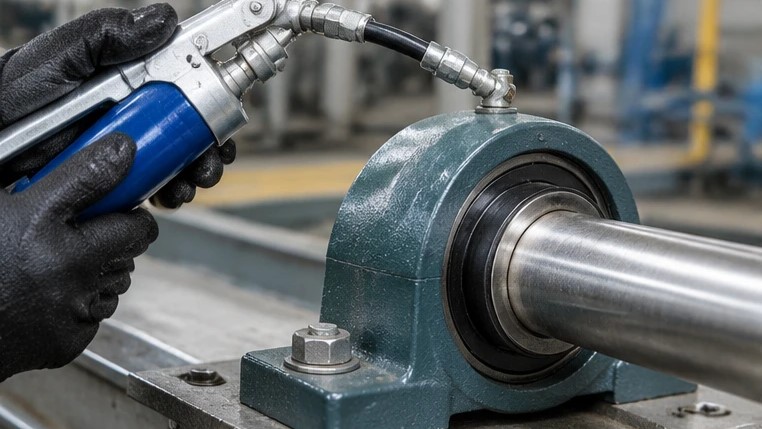
- Add the correct volume of manufacturer-specified grease slowly.
- A simple formula can help calculate the required grease quantity: multiply the bearing outer diameter in millimeters by the total width in millimeters, then multiply by 0.005 to find the required grease weight in grams.
- If possible, use an ultrasonic tool while greasing. Listen to the sound level drop as grease enters the bearing cavity, and stop pumping as soon as the decibel level stabilizes.
- If the existing grease is hardened, contaminated, or mixed with incompatible grease types, clean out the housing thoroughly and refill it with fresh, clean lubricant.
2. Correcting Misalignment and Fit Issues
If the sound comes from mechanical binding or misalignment:
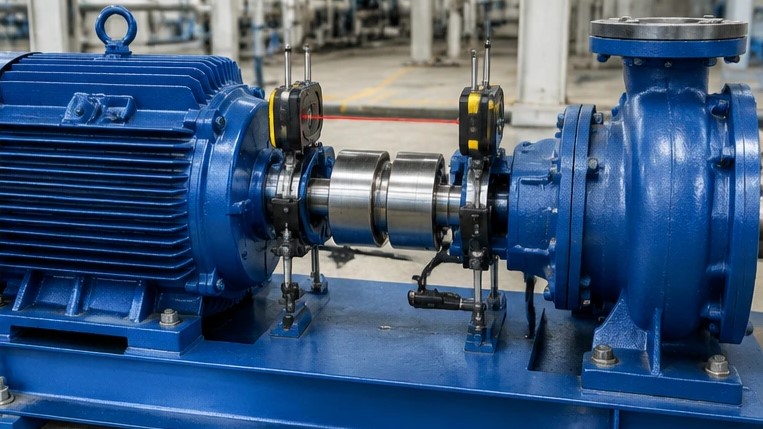
- Use laser alignment tools to check shaft alignment across couplings, keeping angular and parallel offset within recommended manufacturer limits.
- Check the machine base for soft foot, where one mounting foot does not sit completely flat against the baseplate.
- Check the shaft and housing dimensions with micrometers. If a loose housing bore is allowing the bearing outer ring to slip and chatter, the housing must be sleeved, remachined, or replaced.
3. Replacing Worn or Damaged Bearings
When inspection confirms that the raceways are flaked, pitted, or dented, the bearing cannot be restored and must be replaced:
- Remove the old bearing using proper mechanical pullers or hydraulic tools that pull directly on the fitted ring, avoiding damage to the shaft journal.
- Clean and inspect the shaft seat and housing bore, removing any burrs, dirt, or rust.
- Heat the new bearing evenly using an induction heater with automatic demagnetization. Never use a direct torch flame or an open oil bath, which can weaken the bearing steel.
- Slide the heated bearing smoothly onto the shaft shoulder and hold it firmly in place until it cools to ensure it seats squarely against the backing shoulder.
- Check that all seals are properly oriented and greased to keep contaminants out.
4. Fixing Electrical Current Noise
If the noise is caused by electrical fluting in a variable speed motor:
- Install a shaft grounding ring on the drive-end shaft to redirect parasitic currents away from the bearing and safely into the motor casing.
- For larger electric motors, install insulated bearings with an electrically non-conductive ceramic coating on the outer ring, or use hybrid bearings with ceramic balls to break the electrical circuit completely.
Our Products: Bearing Units
Proactive Steps to Prevent Future Noise
Preventing bearing noise is much easier and cheaper than fixing emergency breakdowns. Establishing clean, disciplined maintenance habits keeps equipment running quietly for years:
- Keep Bearings Clean and Protected: Always store replacement bearings flat in a clean, dry, temperature-controlled room in their original sealed packaging. Never wash off the factory-applied protective oil, and keep the work area spotless during assembly.
- Follow Controlled Lubrication Schedules: Move away from guessing greasing intervals based on calendar days alone. Use condition-monitoring tools to add grease only when the bearing requires it, and use color-coded grease guns to ensure lubricants are never accidentally mixed.
- Record Baseline Data on New Machines: Whenever a new machine or rebuilt motor is put into service, record baseline vibration, acoustic, and temperature readings. Having an accurate baseline makes it easy to spot small acoustic increases months later, long before damage becomes critical.
Conclusion
Abnormal bearing noise is never something to ignore; it is a clear warning that moving components are experiencing mechanical or lubrication stress. Whether the sound is a high-pitched squeal from lack of grease, an irregular click from dirt particles, or a deep rumble from surface fatigue, listening carefully allows maintenance teams to identify the real issue quickly.
By combining routine acoustic checks, precision installation methods, and disciplined lubrication practices, industrial plants can stop reacting to unexpected equipment failures and start preventing them instead. Catching bearing noise early protects expensive shafts and motors, prevents unscheduled production downtime, and extends machinery service life.
Need help identifying the source of recurring bearing noise in your machinery? Contact the engineering experts at Alma Bearings for precision components, condition-monitoring support, and professional failure analysis.
Read More: Bearing Overheating
Frequently Asked Questions
1. Does a noisy bearing always need to be replaced immediately?
Not always. If the sound is caused simply by dry contact and the steel surfaces have not suffered pitting or flaking, adding clean, correct grease can eliminate the noise and restore normal operation. However, if the noise comes from physical raceway damage, dents, or cage wear, the bearing is permanently worn and should be scheduled for replacement soon.
2. Why does a bearing get noisy right after being greased?
If too much grease is pumped into the bearing housing, the moving parts must push through excessive grease mass. This creates fluid friction and churning, which rapidly increases temperature and produces a temporary whining or whistling sound. The noise usually fades once the excess grease vents out through the drain port.
3. How does an ultrasonic tool help find bearing noise earlier than the human ear?
Human hearing only detects sound waves up to around twenty kilohertz. Most early bearing friction and microscopic surface strikes produce sound waves above this range, between twenty and one hundred kilohertz. Ultrasonic tools listen specifically to these high frequencies, warning technicians of dry bearings or micro-cracks weeks before any sound becomes audible.
4. Can a motor drive really cause bearing noise?
Yes. Variable speed drives can generate small voltages along the motor shaft. When this voltage builds up, it discharges through the bearing oil film to reach the ground. These repetitive electrical sparks etch tiny washboard grooves into the raceways, creating a distinct buzzing sound as the rollers pass over them.
5. How can I tell bearing noise apart from pump cavitation or gear noise?
Acoustic and vibration tools help isolate the exact source. Bearing defects create specific repetitive frequencies that match the speed of the balls rolling over the inner or outer rings. Gear noise matches the specific tooth count of the gear set, while pump cavitation produces a wide, irregular crunching sound like rocks tumbling through the pump casing.
Comments (0)