
Shopping Cart
There are no more items in your cart
- News
- 0 likes
- 282 views
- 0 comments
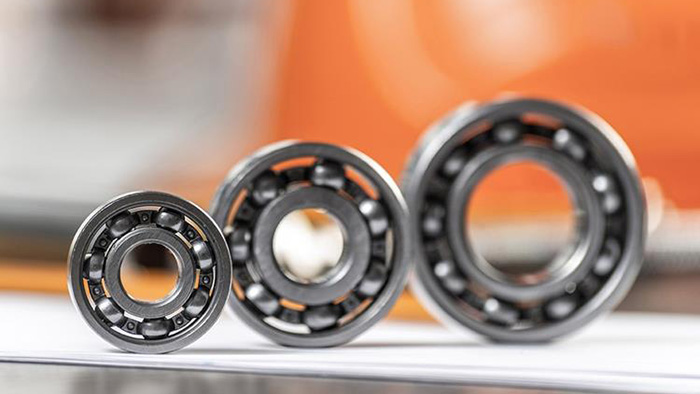
When engineers, buyers, or equipment manufacturers compare Miniature Bearings vs Standard Bearings, the main difference may seem obvious at first: miniature bearings are smaller. But in real mechanical applications, the distinction goes far beyond physical size. These two bearing categories are designed for different spaces, load conditions, speed requirements, precision levels, installation methods, and performance expectations.
A standard bearing is usually selected for general industrial machinery where there is enough space, higher load capacity is needed, and the equipment is built around conventional shaft and housing dimensions. A miniature bearing, on the other hand, is used where space is extremely limited and the machine requires compact, smooth, accurate motion. This makes miniature bearings common in medical devices, small motors, robotics, dental tools, instruments, compact gearboxes, optical systems, and precision electronics.
Understanding the difference between Miniature Bearings vs Standard Bearings is important because choosing the wrong size category can lead to performance problems. A standard bearing may be too large or heavy for a compact system. A miniature bearing may not provide enough load capacity for a larger industrial assembly. Even when both bearings perform the same basic function—reducing friction and supporting motion—their design priorities are not the same.
This guide explains the key differences between miniature and standard bearings, focusing only on how they compare in size, load capacity, speed, precision, construction, application fit, and selection logic.
Our products: Ball Bearings
What Are Miniature Bearings?
Miniature bearings are small bearings designed for compact mechanical assemblies. They are commonly used where shaft sizes are very small and the available installation space is limited. In many industry classifications, miniature bearings are associated with very small bore diameters, often below 10 mm, although exact definitions may vary by manufacturer.
The purpose of a miniature bearing is the same as any other bearing: it reduces friction, supports rotating or moving parts, and helps maintain smooth motion. However, because it is much smaller than a standard bearing, it must operate within tighter dimensional limits. This makes design, material quality, lubrication, and precision especially important.
Miniature bearings are often used in applications where low torque, quiet running, high speed, and accurate rotation are required. Their small size makes them suitable for delicate or compact equipment, but it also limits their load capacity compared with larger bearings.
In the comparison of Miniature Bearings vs Standard Bearings, miniature bearings are best understood as precision-focused components for compact systems rather than simply “small versions” of regular bearings.
What Are Standard Bearings?
Standard bearings are bearings used in general mechanical and industrial applications. They are available in a wide range of sizes, but compared with miniature bearings, they usually have larger bore diameters, larger outside diameters, wider rings, and greater load-carrying capacity.
Standard bearings are commonly found in electric motors, pumps, gearboxes, conveyors, agricultural machinery, automotive systems, industrial fans, compressors, and manufacturing equipment. They are designed to support moderate to heavy loads and are often selected based on common industry dimensions and standard part numbers.
Unlike miniature bearings, standard bearings usually have more physical space to distribute loads. Their larger rolling elements and raceways allow them to handle greater radial and axial forces. They can also be easier to install and maintain because the parts are larger and less delicate.
In the discussion of Miniature Bearings vs Standard Bearings, standard bearings are generally the stronger and more load-capable option, while miniature bearings are the better choice when compactness and precision are the main requirements.
Size Difference: The Most Obvious Comparison
The most visible difference between miniature bearings and standard bearings is size. Miniature bearings are designed for small shafts and compact housings. Standard bearings are designed for larger shafts and more conventional mechanical assemblies.
A miniature bearing may have a very small bore diameter, thin rings, tiny rolling elements, and a narrow width. This allows it to fit into devices where every millimeter matters. A standard bearing has more material, larger raceways, and more space for rolling elements, which gives it higher strength and greater load capacity.
However, size is not just a dimensional issue. It affects almost every other performance factor. Smaller bearings have smaller contact areas, which limits how much load they can carry. They also have less space for lubricant, seals, and cages. This means miniature bearings require careful selection and handling.
Standard bearings, because of their larger dimensions, generally offer more flexibility in load handling and installation. They can tolerate certain operating conditions better simply because they have greater physical capacity.
So, when comparing Miniature Bearings vs Standard Bearings, size is the starting point, but it is not the full explanation.
Our products: Deep Groove Ball Bearings
Load Capacity: Standard Bearings Usually Carry More
Load capacity is one of the biggest functional differences between the two categories. Standard bearings usually carry higher radial and axial loads because they have larger rolling elements, wider raceways, and stronger rings.
A miniature bearing can support load relative to its size, but it cannot compete with a standard bearing when heavy forces are involved. In compact devices, loads are usually lighter, and the bearing is selected for smooth movement rather than heavy-duty support.
For example, a miniature bearing in a medical instrument may only need to support a small rotating shaft at high speed. A standard bearing in an industrial pump or gearbox may need to carry continuous radial loads, shaft forces, and vibration for long operating hours.
This difference is critical. If a miniature bearing is used in an application that requires standard-bearing load capacity, it may wear quickly, overheat, deform, or fail. On the other hand, using a standard bearing in a small precision device may be impossible because it simply will not fit.
In the comparison of Miniature Bearings vs Standard Bearings, standard bearings are usually the better option for heavy loads, while miniature bearings are better for compact, light-load, precision systems.
Speed Capability: Miniature Bearings Can Be Very Fast
Although miniature bearings are smaller and carry less load, they can often operate at very high speeds. This is because their smaller rolling elements have lower mass and generate less centrifugal force. For small motors, dental tools, precision instruments, and micro-mechanical systems, this is a major advantage.
Standard bearings can also operate at high speeds, depending on their design, lubrication, cage type, and precision grade. However, larger bearings generally generate more heat and friction at high rotational speeds because of their larger contact surfaces and heavier rolling elements.
This does not mean every miniature bearing is automatically suitable for high-speed use. Speed performance still depends on bearing quality, lubrication, internal clearance, cage design, and installation accuracy. But in many compact high-speed devices, miniature bearings are the natural choice.
When comparing Miniature Bearings vs Standard Bearings, miniature bearings often have an advantage in small high-speed applications, while standard bearings are better suited to larger machines where speed and load must be balanced.
Precision and Tolerance Differences
Precision is another important difference. Miniature bearings are often used in applications where smooth rotation, low vibration, and accurate movement are essential. Because of this, they are frequently manufactured with tight tolerances and high surface quality.
In small devices, even a tiny amount of runout, vibration, or roughness can affect performance. A miniature bearing used in an optical device, medical handpiece, or micro motor must rotate smoothly and consistently. Any defect may create noise, heat, or accuracy problems.
Standard bearings are also available in precision grades, and many standard-size bearings are used in high-accuracy machinery. However, in general industrial applications, standard bearings may be selected more for load capacity and durability than ultra-fine rotational accuracy.
The main point is that miniature bearings are more sensitive to small imperfections. A tiny particle, slight misalignment, or minor clearance error can have a noticeable effect. Standard bearings, because they are larger, may be more forgiving in some applications.
In the context of Miniature Bearings vs Standard Bearings, miniature bearings often require more careful attention to precision, cleanliness, and tolerance control.
Friction and Torque Differences
Miniature bearings are often selected for low friction and low starting torque. In small devices, the motor may have limited power, so the bearing must rotate with minimal resistance. If torque is too high, the device may lose efficiency, generate heat, or fail to start smoothly.
Standard bearings, especially larger ones, may have higher friction simply because they have larger contact areas, heavier components, and more lubricant volume. This is not necessarily a problem in industrial machines, where motors are stronger and loads are higher.
However, friction must always be judged in relation to the application. A standard bearing may have acceptable friction for an industrial fan or gearbox, but that same level of resistance would be too high for a compact precision instrument.
In the comparison of Miniature Bearings vs Standard Bearings, miniature bearings are often better for low-torque systems, while standard bearings are designed to handle stronger mechanical forces.
Lubrication Differences
Lubrication is important in both miniature and standard bearings, but the way it affects performance can be different.
Miniature bearings have very limited internal space. The amount and type of lubricant must be controlled carefully. Too much grease can increase drag and torque. Too little lubricant can cause wear and heat. In precision applications, lubricant cleanliness is also very important because even small contamination can affect smooth operation.
Standard bearings usually have more space for grease or oil and can often tolerate larger lubricant volumes. They may also be easier to relubricate in industrial equipment. In many standard applications, maintenance teams can access the bearing housing and apply lubrication at scheduled intervals.
Miniature bearings are often lubricated for life, especially when used in sealed compact devices. This means the initial lubricant selection is critical because later maintenance may not be practical.
So, in Miniature Bearings vs Standard Bearings, miniature bearings require more precise lubrication control, while standard bearings often allow more flexible lubrication and maintenance options.
Sealing and Shielding Differences
Both miniature and standard bearings may be open, shielded, or sealed. The difference is how these options affect performance.
In miniature bearings, seals and shields must be very small and lightweight. A contact seal may add noticeable torque because the bearing itself is small. For this reason, shielded designs are common in applications where low friction is important and contamination risk is moderate.
Sealed miniature bearings are useful when dust or moisture protection is needed, but engineers must consider the added resistance. In very low-torque systems, even a small seal drag can matter.
Standard bearings have larger seals and shields, but the relative effect on torque may be less significant because the machines using them usually have more power. Sealed standard bearings are common in industrial applications where contamination protection and grease retention are more important than ultra-low torque.
When comparing Miniature Bearings vs Standard Bearings, miniature bearing sealing choices often require more delicate balancing between protection and friction.
Our products: Linear Bearings
Installation and Handling Differences
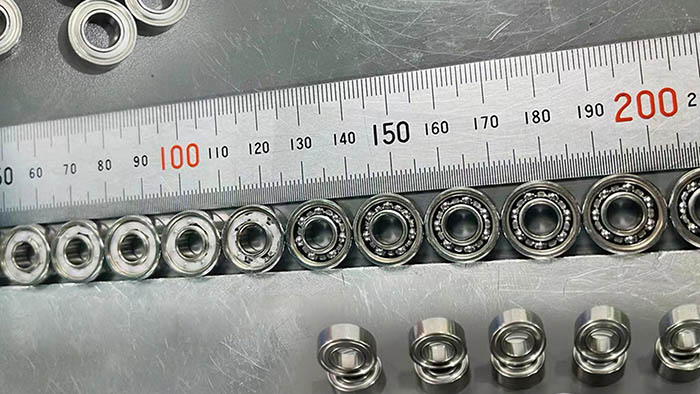
Miniature bearings require more careful handling than standard bearings. Their small rings, tiny rolling elements, and tight clearances make them vulnerable to damage during installation. Applying force incorrectly can damage the raceways or rolling elements before the bearing is even used.
Cleanliness is also more critical. A small dust particle may not seem important, but inside a miniature bearing it can create noise, rough rotation, or early wear. For this reason, miniature bearings are often installed in cleaner, more controlled environments.
Standard bearings are generally easier to handle because they are larger and stronger. However, they still require correct installation tools, proper alignment, and suitable fits. Poor installation can damage any bearing, regardless of size.
The main difference is that miniature bearings are less forgiving. A small mistake can have a large effect because the bearing’s internal geometry is so compact.
In Miniature Bearings vs Standard Bearings, installation sensitivity is one of the most practical differences buyers and technicians should understand.
Application Differences
Miniature bearings and standard bearings are used in different types of equipment because their strengths are different.
Miniature bearings are commonly used in:
- Small electric motors
- Dental handpieces
- Medical devices
- Robotics
- Optical instruments
- Laboratory equipment
- Precision tools
- Compact fans
- Miniature gearboxes
- Electronics and micro-mechanical systems
Standard bearings are commonly used in:
- Industrial motors
- Pumps
- Gearboxes
- Conveyors
- Compressors
- Agricultural machinery
- Automotive systems
- Machine tools
- Fans and blowers
- General manufacturing equipment
The difference is not that one category is better than the other. Each is designed for a different scale of operation. Miniature bearings are ideal where space, precision, and low torque matter most. Standard bearings are ideal where higher load capacity, durability, and general industrial compatibility are required.
Durability and Service Life Comparison
Service life depends on many factors, including load, speed, lubrication, contamination, installation quality, and material. Standard bearings may appear more durable because they are larger and can handle heavier loads. In heavy-duty applications, this is true.
However, miniature bearings can also provide long service life when used correctly. If the application has light loads, clean conditions, suitable lubrication, and proper installation, a miniature bearing can operate reliably for a long time.
The problem occurs when a miniature bearing is used beyond its intended capacity. Because it has smaller contact surfaces and less internal space, it may fail quickly under excessive load, contamination, or poor lubrication.
Standard bearings are often easier to maintain and relubricate, which can extend service life in industrial settings. Miniature bearings are more often replaced as part of a compact assembly rather than serviced individually.
In the comparison of Miniature Bearings vs Standard Bearings, service life is not simply about size. It depends on whether the bearing is properly matched to the application.
Cost Differences
Miniature bearings may be small, but they are not always cheap. High-quality miniature bearings require precise manufacturing, clean assembly, and careful quality control. Precision-grade miniature bearings, stainless steel versions, or hybrid ceramic designs can be relatively expensive compared with their size.
Standard bearings vary widely in cost depending on size, type, brand, material, and load rating. In many common industrial sizes, standard bearings may be cost-effective because they are produced in large volumes.
However, the real cost comparison should not focus only on purchase price. A low-quality miniature bearing in a precision device can create noise, warranty claims, and product failure. A poorly selected standard bearing in industrial machinery can lead to downtime and equipment damage.
In Miniature Bearings vs Standard Bearings, the better value is the bearing that matches the application, not necessarily the one with the lower unit price.
Which One Should You Choose?
The choice between miniature bearings and standard bearings depends on the machine design and operating requirements.
Choose miniature bearings when the application has limited space, small shafts, low to moderate loads, high-speed operation, low torque requirements, and precision movement. They are the right choice for compact systems where smooth, quiet, and accurate motion is more important than heavy load capacity.
Choose standard bearings when the application involves larger shafts, higher loads, industrial operating conditions, easier maintenance access, and conventional machinery design. They are better suited for equipment that needs strength, durability, and load support.
The simplest rule is this: miniature bearings are built for compact precision; standard bearings are built for broader industrial use and higher load capacity.
When evaluating Miniature Bearings vs Standard Bearings, never choose based only on size. Consider load, speed, torque, precision, lubrication, sealing, installation, and environment.
Conclusion
The difference between Miniature Bearings vs Standard Bearings is much more than physical size. Miniature bearings are designed for compact, precise, low-torque, and often high-speed applications. Standard bearings are designed for larger machines, higher loads, and general industrial use.
Miniature bearings require careful attention to cleanliness, lubrication, tolerance, and installation because their small dimensions make them highly sensitive. Standard bearings usually offer greater load capacity, easier handling, and more flexibility in heavy-duty applications.
Neither type is universally better. The correct choice depends on the application. If your equipment needs compact precision motion, miniature bearings are usually the right solution. If your machinery requires higher load support and standard industrial dimensions, standard bearings are usually more suitable.
Understanding these differences helps engineers and buyers avoid selection mistakes, improve reliability, and choose bearings that match the real demands of the machine.
Our products: Roller Bearings
Frequently Asked Questions
1. What is the main difference between miniature bearings and standard bearings?
The main difference is size and application purpose. Miniature bearings are designed for compact, precision systems with small shafts and limited space, while standard bearings are used in larger machinery where higher load capacity and conventional dimensions are required.
2. Are miniature bearings weaker than standard bearings?
Miniature bearings usually have lower load capacity because they are smaller, but that does not mean they are weak. They are engineered for light-load, high-speed, and precision applications. Standard bearings are better for heavier industrial loads.
3. Can miniature bearings run faster than standard bearings?
In many cases, yes. Because miniature bearings have smaller rolling elements and lower mass, they can perform well in high-speed applications. However, their speed capability still depends on bearing quality, lubrication, clearance, and installation accuracy.
4. When should I choose miniature bearings instead of standard bearings?
Choose miniature bearings when the application requires compact size, low torque, smooth rotation, high precision, and limited installation space. They are commonly used in medical devices, robotics, instruments, small motors, and precision electronics.
5. Are standard bearings better for industrial machinery?
Yes, in most heavy-duty industrial applications, standard bearings are more suitable. They offer higher load capacity, stronger construction, easier handling, and better compatibility with pumps, motors, gearboxes, conveyors, and manufacturing equipment.
Comments (0)