
Shopping Cart
There are no more items in your cart
- News
- 0 likes
- 724 views
- 0 comments
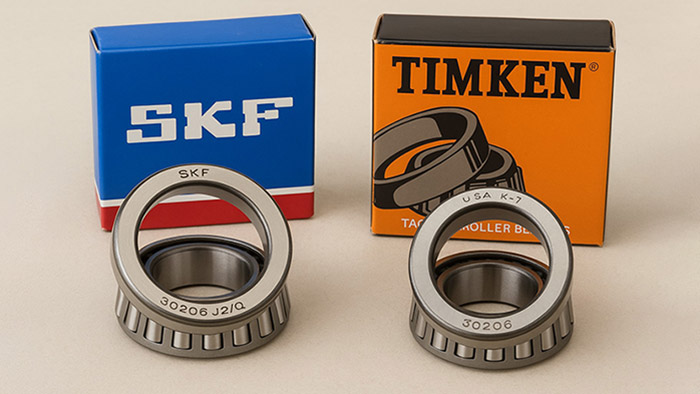
When engineers, maintenance managers, and industrial buyers compare Timken vs SKF bearings, they are usually deciding between two of the most respected bearing manufacturers in the world. Both companies have built strong reputations for engineering excellence, reliability, and innovation. Their bearings are widely used in industries such as automotive, mining, wind energy, heavy machinery, manufacturing, and industrial automation.
Bearings play a critical role in almost every rotating machine. They reduce friction, support loads, maintain shaft alignment, and help equipment operate efficiently. A poorly selected bearing can lead to vibration, overheating, premature failure, and costly downtime. Because of this, choosing the right brand and bearing type is an important decision for many industrial operations.
Our Products: Ball Bearings
Timken and SKF both produce high‑quality bearings, but they have different engineering strengths, product portfolios, and historical focuses. Timken is widely recognized for its expertise in tapered roller bearings and heavy-duty industrial applications. SKF, on the other hand, is known for its extensive bearing range, strong research and development capabilities, and advanced solutions for precision machinery and rotating equipment.
Understanding the differences between these two brands helps buyers make informed decisions based on real performance requirements rather than brand reputation alone. In this article, we will explore the key technical and practical differences in the Timken vs SKF bearings comparison, including load capacity, precision, durability, lubrication, applications, cost, and long-term reliability.
Overview of Timken Bearings
Timken is an American company founded in 1899 and is widely known for its innovations in tapered roller bearing technology. The company has a long history of supplying bearings for automotive systems, heavy industry, rail transportation, mining equipment, construction machinery, and industrial gearboxes.
Timken bearings are often associated with high load capacity, durability, and reliable performance in demanding operating conditions. The company focuses heavily on engineered solutions for industries where equipment reliability is critical.
Common Timken bearing products include:
- Tapered roller bearings
- Cylindrical roller bearings
- Spherical roller bearings
- Ball bearings
- Thrust bearings
- Mounted bearing units
- Precision bearings
- Large industrial bearings
Timken has particularly strong expertise in tapered roller bearings. These bearings are widely used in automotive wheel hubs, gearboxes, heavy trucks, rail systems, and industrial machinery where combined radial and axial loads are present.
In the Timken vs SKF bearings comparison, Timken is often preferred in heavy-load applications where durability and mechanical strength are top priorities.
Our Products: Roller Bearings
Overview of SKF Bearings
SKF is a Swedish company founded in 1907 and is one of the largest bearing manufacturers in the world. The company has an extensive product portfolio and is known for innovation, precision engineering, and advanced bearing technologies.
SKF bearings are used in a wide range of industries including manufacturing, energy, automotive, aerospace, robotics, machine tools, and industrial automation. The company invests heavily in research, condition monitoring technology, lubrication systems, and intelligent maintenance solutions.
SKF’s product range includes:
- Deep groove ball bearings
- Angular contact ball bearings
- Cylindrical roller bearings
- Spherical roller bearings
- Tapered roller bearings
- Needle roller bearings
- Thrust bearings
- Super precision bearings
- Magnetic bearings
- Large diameter bearings
SKF is often recognized for its strong focus on precision engineering and system-level solutions. In addition to bearings, the company provides lubrication systems, condition monitoring equipment, and predictive maintenance technologies.
In the comparison of Timken vs SKF bearings, SKF is frequently considered a leading choice for high‑precision industrial equipment and advanced rotating systems.
Brand Reputation and Global Presence
Both Timken and SKF are premium global brands with strong reputations for quality and reliability. They serve major OEM manufacturers and industrial users around the world.
Timken is particularly strong in North American industrial markets and has a long history in heavy-duty sectors such as mining, steel production, and transportation. Its bearings are commonly found in equipment that operates under extreme mechanical stress.
SKF has an extremely broad global presence and is widely recognized for its innovation and research capabilities. The company operates in more than 100 countries and supplies bearings for everything from small electric motors to large wind turbines.
In the Timken vs SKF bearings comparison, reputation alone should not determine the final decision. Both brands produce excellent products. The real difference lies in application suitability and specific bearing designs.
Load Capacity and Heavy-Duty Performance
One of the most important factors when comparing Timken vs SKF bearings is load capacity. Bearings must support radial loads, axial loads, or a combination of both while maintaining stable rotation and minimizing wear.
Timken bearings are particularly known for their strong performance under heavy loads. Their tapered roller bearings are designed to handle combined radial and axial forces effectively. This makes them suitable for applications such as:
- Truck wheel hubs
- Heavy gearboxes
- Construction equipment
- Mining machinery
- Rail systems
- Industrial drives
Timken designs often focus on durability, strong raceways, and high fatigue resistance.
SKF also offers excellent load-bearing capabilities. Its spherical roller bearings, cylindrical roller bearings, and tapered roller bearings are widely used in industries such as mining, wind energy, and heavy manufacturing.
However, in many heavy-duty mechanical systems, Timken tapered roller bearings are particularly valued for their strength and reliability. This gives Timken a slight advantage in certain load-intensive applications.
Precision and High-Speed Performance
Precision is another important factor in the Timken vs SKF bearings comparison. Applications such as machine tools, electric motors, robotics, and high-speed rotating equipment require extremely accurate bearing performance.
SKF has a strong reputation in this area. The company produces a wide range of high-precision bearings used in:
- CNC machines
- Industrial automation
- Aerospace systems
- High-speed motors
- Precision manufacturing equipment
SKF’s super precision bearings are designed to provide minimal vibration, low friction, and stable performance at high rotational speeds.
Timken also manufactures precision bearings and high-speed solutions, but SKF’s extensive experience in precision engineering often gives it an advantage in applications where extremely tight tolerances and smooth rotation are required.
For high-speed and precision machinery, SKF is frequently considered the preferred option in the Timken vs SKF bearings comparison.
Durability and Service Life
Durability is critical in industrial environments where bearing failure can stop production lines and cause expensive repairs.
Timken bearings are widely known for their durability in heavy industrial applications. Their engineering approach emphasizes robust materials, strong heat treatment processes, and designs capable of handling shock loads and difficult operating conditions.
SKF bearings are also highly durable and are supported by advanced research in bearing materials, lubrication technology, and fatigue analysis. SKF often integrates bearing solutions with condition monitoring systems to extend service life and improve reliability.
In real-world industrial conditions, both brands offer long service life when the bearing is properly selected and maintained. The key factors influencing durability include:
- Correct load rating
- Proper lubrication
- Effective sealing
- Accurate installation
- Clean operating conditions
- Proper alignment
In the Timken vs SKF bearings comparison, durability is usually comparable, but Timken may be favored in extremely heavy-duty environments.
Lubrication and Maintenance Solutions
Lubrication plays a major role in bearing performance and lifespan. Bearings must maintain a stable lubricant film to reduce friction and prevent metal-to-metal contact.
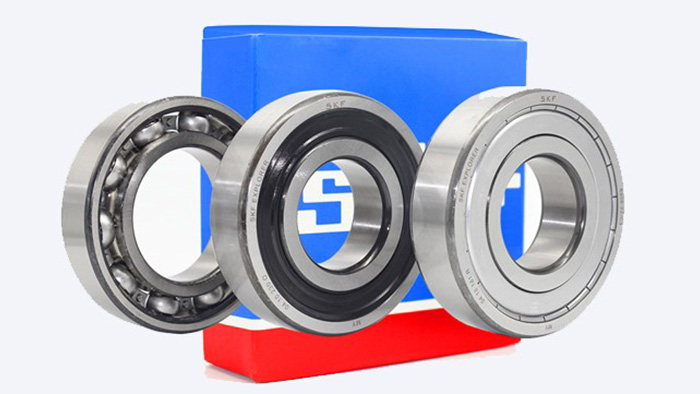
SKF has invested heavily in lubrication technologies and maintenance systems. The company offers automatic lubrication systems, grease solutions, and monitoring tools that help improve bearing performance.
Timken also provides lubrication products and maintenance solutions, including specialized greases designed for industrial applications. However, SKF’s integrated lubrication and maintenance technologies often make it attractive for companies implementing predictive maintenance strategies.
When evaluating Timken vs SKF bearings, SKF may have an advantage in advanced lubrication systems and maintenance support.
Application Range
Another important difference between Timken and SKF is their application focus.
Timken is strongly associated with:
- Heavy trucks
- Rail transportation
- Mining equipment
- Industrial gearboxes
- Construction machinery
- Agricultural equipment
SKF has a broader product portfolio covering:
- Electric motors
- Machine tools
- Industrial automation
- Wind turbines
- Automotive systems
- Aerospace applications
- Robotics
Because of this wide range, SKF bearings are often used in both heavy industry and precision equipment.
When comparing Timken vs SKF bearings, Timken often excels in heavy-duty mechanical systems, while SKF offers broader application coverage across multiple industries.
If you are comparing Timken vs SKF bearings for your equipment, the experts at Alma Bearings can help you identify the best option based on load conditions, speed requirements, and machine environment.
Availability and Global Supply
Availability can significantly influence purchasing decisions. Industrial maintenance teams often need replacement bearings quickly to minimize downtime.
SKF has one of the largest global distribution networks in the bearing industry. Its products are widely stocked by distributors around the world.
Timken also has a strong distribution network, particularly in North America and industrial markets. However, availability may vary depending on region and bearing type.
In urgent maintenance situations, the availability of stock may become a deciding factor in the Timken vs SKF bearings decision.
Price and Value
Both Timken and SKF are considered premium bearing brands, and their products are generally more expensive than low-cost alternatives.
However, price alone should not determine the decision. Bearings influence machine reliability, maintenance costs, and production efficiency.
Factors that affect bearing price include:
- Bearing type
- Size
- Precision grade
- Seal type
- Internal clearance
- Manufacturing origin
- Supplier pricing
In many cases, the price difference between Timken and SKF is relatively small compared to the potential cost of machine downtime.
The best approach is to evaluate the total cost of ownership, including reliability, service life, and maintenance costs.
Key Comparison Table
| Factor | Timken Bearings | SKF Bearings |
|---|---|---|
| Origin | United States | Sweden |
| Industry reputation | Premium brand | Premium brand |
| Strengths | Heavy-duty performance | Precision and innovation |
| Tapered roller expertise | Very strong | Strong |
| High-speed applications | Good | Excellent |
| Precision machinery | Strong | Very strong |
| Heavy industry | Excellent | Excellent |
| Product range | Wide | Extremely wide |
| Maintenance technology | Good | Advanced |
| Global availability | Strong | Very strong |
Which Brand Should You Choose?
Choosing between Timken vs SKF bearings ultimately depends on the application.
Timken may be the better choice when:
- Heavy loads are present
- Tapered roller bearings are required
- Equipment operates in harsh industrial environments
- Durability and mechanical strength are priorities
SKF may be the better choice when:
- High precision is required
- Equipment operates at high speeds
- Advanced monitoring and lubrication systems are needed
- The application requires specialized bearing solutions
In many industrial systems, both brands can perform equally well if the bearing is correctly selected and installed.
To ensure reliability and avoid counterfeit products, it is important to purchase bearings from a trusted supplier. Alma Bearings provides genuine Timken and SKF bearings for industrial applications worldwide.
Conclusion
The comparison of Timken vs SKF bearings shows that both manufacturers produce high-quality bearings suitable for demanding industrial environments. Timken is widely recognized for its expertise in heavy-duty applications and tapered roller bearing technology, while SKF is known for its precision engineering, innovation, and broad product portfolio.
Rather than focusing only on brand preference, engineers and buyers should consider the operating conditions of their machinery. Load requirements, speed, lubrication, environment, and maintenance strategy all influence the ideal bearing choice.
In many cases, both Timken and SKF offer excellent solutions. The key is selecting the bearing that best matches the specific technical requirements of the application.
Frequently Asked Questions
1. Are Timken bearings better than SKF bearings?
Both brands are considered premium manufacturers. Timken is often preferred for heavy-duty applications and tapered roller bearings, while SKF is widely known for precision bearings and advanced technologies.
2. Which brand is better for high-speed applications?
SKF is often favored for high-speed and precision applications such as machine tools and electric motors, although Timken also produces high-speed bearing solutions.
3. Are Timken bearings more durable than SKF?
Both brands offer excellent durability when used correctly. Timken may be preferred in very heavy industrial environments, while SKF provides strong reliability across many applications.
4. Can SKF and Timken bearings be used interchangeably?
In some cases, bearings from both brands with the same dimensions and specifications can be substituted. However, engineers should always verify load ratings, clearance, sealing, and precision class before replacing one brand with another.
Comments (0)