
Shopping Cart
There are no more items in your cart
- News
- 0 likes
- 138 views
- 0 comments
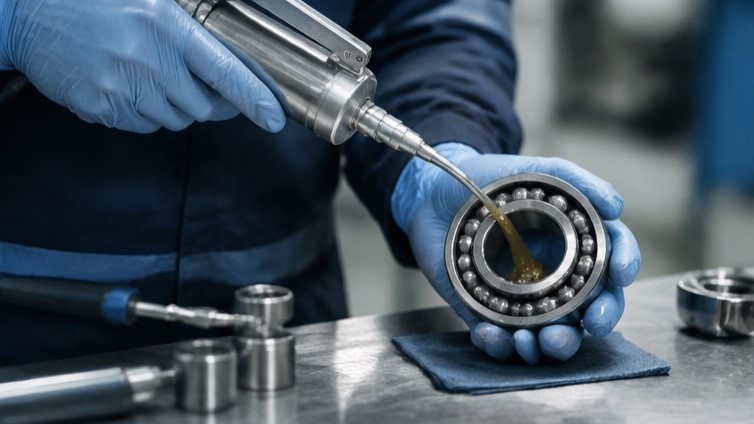
Industrial machinery is the backbone of production, and at the heart of that machinery lies the rolling bearing. These precision components support loads, guide shafts, and ensure smooth rotation under demanding conditions. However, when a bearing fails, the result is rarely just a localized component replacement. Instead, it leads to costly downtime, damaged housings, bent shafts, and compromised production schedules. Preventing bearing failure is not just about changing parts; it is about establishing a culture of maintenance excellence that prioritizes the health of the machine from the moment it is commissioned.
The vast majority of premature bearing failures are entirely preventable. While some failures are the result of unavoidable fatigue after years of service, most are caused by external factors such as poor lubrication, contamination, or improper mounting. By shifting the focus from reactive repair to proactive prevention, maintenance teams can significantly extend the mean time between failures (MTBF) and ensure that machinery operates within its designed capacity for the duration of its service life.
Our Products: Deep Groove Ball Bearings
The Foundation: Precision Lubrication Management
Lubrication is arguably the most critical aspect of bearing health. A bearing operates effectively because of a microscopic film of lubricant that separates the rolling elements from the raceways. When this film is compromised, metal-on-metal contact occurs, leading to rapid wear and heat generation. Prevention begins with selecting the correct lubricant for the specific operating environment. Factors such as rotational speed, temperature fluctuations, and load capacity dictate the viscosity requirements of the oil or the base oil consistency of the grease.
Maintenance teams must ensure that re-greasing intervals are strictly followed. Over-greasing is just as dangerous as under-greasing, as it creates fluid friction and heat, which breaks down the grease structure and destroys the seals. Implementing a standardized lubrication program—using ultrasonic monitoring or volumetric grease guns—allows operators to provide the precise amount of lubricant required without overfilling the housing. This simple discipline eliminates the leading cause of premature failure in the industrial sector.
Best Practices for Installation and Handling
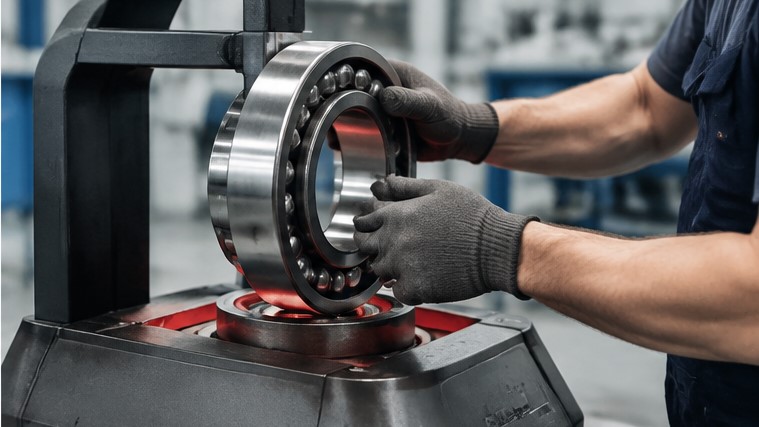
Many bearings are damaged before the machine is ever energized. Improper installation is a significant culprit in early-stage failures. Using brute force, such as hammering the outer ring to drive a bearing onto a shaft, transfers impact forces directly through the rolling elements. This creates permanent indentations in the raceways known as Brinelling. Once these dents are formed, they serve as focal points for stress and metal fatigue, leading to vibration and noise within a short period.
To ensure long-term reliability, maintenance professionals should utilize induction heating or hydraulic mounting tools designed to press the inner ring onto the shaft evenly. Heating the bearing uniformly—never using an open flame—allows for easier assembly and prevents damage to the seals and internal clearances. Furthermore, measuring shaft and housing fits with precision instruments ensures that the internal clearance () is maintained according to the manufacturer’s specifications.
Read more: How to Choose the Right Bearing for Any Industrial Application
Environmental Control and Contamination Prevention
Industrial environments are often filled with dust, moisture, and abrasive particles. If contaminants enter the bearing housing, they mix with the grease to form an abrasive slurry that grinds away at the internal surfaces. Preventing this requires robust sealing solutions. In environments exposed to heavy washdowns or harsh chemicals, cassette seals or labyrinth seals should be prioritized over standard dust shields.
Maintaining a clean workspace during inspection and installation is also paramount. Even microscopic debris can cause significant damage to high-precision ball bearings or roller bearings. Keeping spare bearings in their original, sealed packaging until the exact moment of installation prevents moisture and dust from settling on the polished surfaces.
Monitoring and Predictive Maintenance
Even with the best installation and lubrication practices, machines require ongoing monitoring to catch early signs of distress. Modern predictive maintenance technology allows teams to observe the condition of a bearing without dismantling the equipment. By establishing a baseline of normal operation—including vibration spectrums, operating temperature, and acoustic levels—technicians can identify anomalies before they lead to catastrophic failure.
The following list outlines the primary pillars of a proactive maintenance strategy:
- Lubrication Management: Establish rigorous scheduling based on machine duty cycles, ensure compatibility between grease types, and utilize ultrasonic monitoring to avoid over-lubrication.
- Precision Mounting: Use induction heating and hydraulic presses for all installations, ensuring that interference fits are within defined tolerances to prevent internal clearance loss.
- Operational Alignment: Regularly verify shaft alignment between motors and driven equipment using laser tools to eliminate the cyclic stress caused by misalignment.
- Environmental Sealing: Upgrade to high-performance contact seals or bearing isolators in dusty, wet, or chemically aggressive environments to exclude contaminants.
To facilitate early detection and prevent unexpected downtime, technical teams should leverage advanced diagnostic tools:
- Vibration Analysis: Track velocity and acceleration trends to detect early-stage raceway fatigue or cage damage before it becomes audible.
- Thermal Imaging: Identify hotspots in bearing housings, which often indicate internal friction, loss of clearance, or lubrication failure.
- Acoustic/Ultrasonic Testing: Listen for high-frequency noise that indicates dry or damaged rolling elements, often detectable long before heat or vibration sensors provide an alarm.
Conclusion
Preventing bearing failure is a continuous process of discipline and observation. By focusing on the fundamentals—lubrication, clean environments, correct mounting, and predictive monitoring—operators can transform their maintenance approach. These actions do not require complex overhauls, but rather a commitment to technical precision.
Ready to enhance your machinery’s reliability and source high-performance industrial bearings? Connect with the engineering team at Alma Bearings for professional advice, component selection, and failure analysis support.
Read more: How to Choose Bearings for High Speed Machines
Frequently Asked Questions
1. What is the most effective way to prevent bearing failure?
The most effective way is a combination of proper lubrication management and ensuring that the bearing is installed with precision using correct tools, avoiding any physical impact on the rings.
2. Can vibration analysis really stop a failure?
Yes, vibration analysis detects the early stages of raceway fatigue, cage wear, or misalignment long before the damage becomes severe, allowing for repairs during scheduled downtime rather than emergency stops.
3. How often should industrial bearings be lubricated?
The interval depends on the machine’s speed, load, and environmental temperature. It is best to follow the original manufacturer’s specifications or consult with a lubrication specialist to create a customized schedule for each asset.
4. Does misalignment always cause immediate failure?
Misalignment often leads to accelerated wear and reduced component lifespan rather than an immediate explosion. However, it places uneven load on the bearing, leading to premature fatigue and eventual lockup.
5. Why is over-greasing considered a failure cause?
Over-greasing forces the rolling elements to churn through excess lubricant, which generates significant heat, damages internal seals, and degrades the grease, rendering it ineffective at protecting the metal surfaces.
Comments (0)