
Shopping Cart
There are no more items in your cart
- News
- 0 likes
- 333 views
- 0 comments
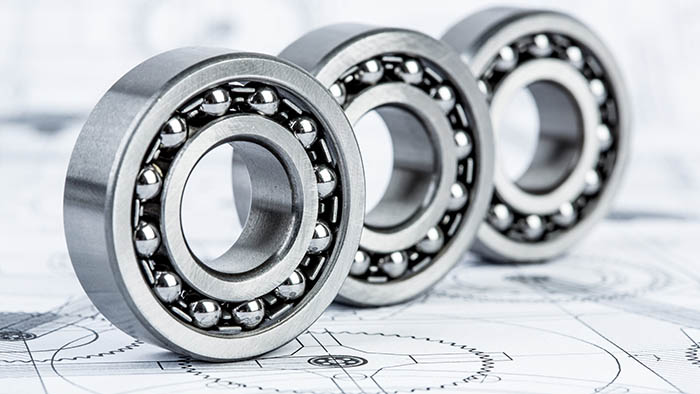
When comparing Large Diameter Bearings vs Standard Bearings, the difference is not only about size. The real difference is performance under specific operating conditions. Bearings are critical mechanical components that reduce friction, support rotating parts, maintain alignment, and help machinery operate efficiently. However, a bearing used in a small electric motor cannot perform the same role as a bearing used in a crane, wind turbine, mining crusher, steel mill, or large industrial gearbox.
Standard bearings are commonly used in general machinery, automotive systems, pumps, motors, fans, conveyors, and medium-duty equipment. They are compact, widely available, cost-effective, and usually easier to replace. Large diameter bearings, on the other hand, are designed for heavy-duty industrial machinery where high load capacity, structural support, shock resistance, and long-term reliability are essential.
Understanding Large Diameter Bearings vs Standard Bearings helps engineers, maintenance managers, and industrial buyers choose the correct component based on load, speed, environment, lubrication needs, installation conditions, and total cost of ownership. Selecting the wrong bearing may lead to vibration, overheating, premature wear, unplanned downtime, and expensive equipment damage.
This article explains the key performance differences between large diameter bearings and standard bearings, with a practical focus on industrial applications.
Our products: Ball Bearings
What Are Standard Bearings?
Standard bearings are bearings manufactured in common dimensions and designs for general mechanical and industrial use. They are usually available in standard series and can be easily sourced from bearing suppliers. Common types include deep groove ball bearings, angular contact bearings, cylindrical roller bearings, tapered roller bearings, spherical roller bearings, needle roller bearings, and thrust bearings.
Standard bearings are widely used in:
- Electric motors
- Pumps
- Fans and blowers
- Compressors
- Small and medium gearboxes
- Conveyors
- Automotive systems
- Agricultural machinery
- Packaging machines
- Textile machinery
- General industrial equipment
The main advantage of standard bearings is availability. They are produced in large quantities, have well-defined catalog specifications, and can often be replaced quickly. For many machines, standard bearings provide excellent performance when loads, speeds, temperatures, and contamination levels are within normal limits.
However, standard bearings have limitations. They may not be suitable for very large shafts, extreme radial loads, heavy axial forces, shock loads, moment loads, or large rotating structures. In these cases, large diameter bearings are often required.
What Are Large Diameter Bearings?
Large diameter bearings are bearings with significantly larger bore diameters, outside diameters, and rolling contact surfaces than standard bearings. They are used in heavy industrial machinery where conventional bearings cannot provide enough load capacity, rigidity, or structural support.
Large diameter bearings are commonly found in:
- Cranes
- Excavators
- Wind turbines
- Mining equipment
- Steel mills
- Cement plants
- Marine systems
- Tunnel boring machines
- Rotary kilns
- Heavy gearboxes
- Paper mills
- Large industrial turntables
- Construction machinery
Large diameter bearings may include large spherical roller bearings, large cylindrical roller bearings, tapered roller bearings, thrust bearings, split bearings, and slewing ring bearings. In many applications, they are not only friction-reducing components. They also act as structural elements that support heavy rotating assemblies and complex loads.
In the comparison of Large Diameter Bearings vs Standard Bearings, the most important point is that large diameter bearings are designed for heavy loads, harsh environments, and demanding operating conditions.
1. Load Capacity
The biggest difference between Large Diameter Bearings vs Standard Bearings is load capacity.
Standard bearings are suitable for light to medium loads. They perform well in electric motors, pumps, fans, and general industrial equipment. Their rolling elements and raceways are designed to handle typical radial and axial loads within standard operating ranges.
Large diameter bearings are designed for much heavier loads. Their larger raceways, bigger rolling elements, and wider contact areas allow them to distribute force more effectively. This makes them suitable for high radial loads, high axial loads, shock loads, and moment loads.
In heavy machinery, loads are often complex. A bearing may need to support:
- Radial load from rotating shafts
- Axial load from thrust forces
- Shock load from impact
- Moment load from overturning forces
- Combined load from several force directions
For example, a slewing bearing in a crane must support vertical load, side force, and overturning moment at the same time. A standard bearing is not designed for this type of combined loading. Large diameter bearings are therefore the better solution for machines that operate under heavy and complex force conditions.
2. Speed Capability
Speed is another important factor when comparing Large Diameter Bearings vs Standard Bearings.
Standard bearings are usually better for high-speed applications. Because they are smaller and lighter, they generate less internal friction and lower centrifugal force. This makes them suitable for electric motors, fans, pumps, spindles, and compact rotating systems.
Large diameter bearings usually operate at lower or moderate speeds. Their larger rolling elements and greater contact surfaces can create more friction and heat. Even at low RPM, the surface speed of a large bearing can be significant because of its diameter.
This does not mean large diameter bearings are inefficient. It simply means they are designed for a different performance priority. In most heavy-duty applications, the main requirement is not very high speed. The key requirements are load capacity, stability, durability, and safety.
For example, a standard deep groove ball bearing may operate at high speed inside an electric motor. A large slewing ring bearing in a crane may rotate slowly but carry extremely heavy loads. Both bearings perform well when used in the right application.
3. Durability and Service Life
Durability depends on bearing design, material quality, load, lubrication, contamination, alignment, and installation. Both standard bearings and large diameter bearings can offer long service life when properly selected and maintained.
However, large diameter bearings are usually more durable in heavy industrial applications because they are designed for severe mechanical stress. Their larger contact areas help reduce stress concentration. They may also include stronger cages, special heat treatment, improved sealing systems, and heavy-duty lubrication features.
Standard bearings can fail early if they are used outside their design limits. Common causes of standard bearing failure include:
- Overloading
- Poor lubrication
- Contamination
- Excessive heat
- Misalignment
- Incorrect mounting
- Vibration
- Fatigue damage
Large diameter bearings can also fail from these issues, but they are better suited to harsh industrial conditions when correctly selected. In mining, steel production, cement manufacturing, and wind energy, service life depends heavily on choosing the correct bearing type and maintenance strategy.
In Large Diameter Bearings vs Standard Bearings, service life should always be evaluated based on real operating conditions, not just bearing size.
If you are comparing Large Diameter Bearings vs Standard Bearings for industrial machinery, Alma Bearings can help you evaluate load conditions, operating speed, environment, and maintenance requirements before purchasing.
4. Structural Support and Machine Stability
One major performance difference is structural support. Standard bearings mainly support rotating shafts inside housings. They are not normally designed to support large rotating structures or heavy machine assemblies.
Large diameter bearings, especially slewing ring bearings, can support entire rotating platforms and heavy structures. They are used where the bearing must carry axial load, radial load, and moment load while allowing controlled rotation.
This is why large diameter bearings are used in cranes, excavators, wind turbines, large turntables, rotary kilns, and tunnel boring machines. In these applications, the bearing is a key part of the machine structure.
Machine stability is critical in heavy industry. If the bearing cannot maintain proper support, the machine may experience vibration, misalignment, uneven loading, and structural damage. For this reason, large diameter bearings are preferred when the bearing must provide both rotational movement and mechanical support.
5. Shock Load and Vibration Resistance
Heavy industrial machines often experience shock loads and vibration. These conditions are common in crushers, mining equipment, construction machinery, steel mills, and heavy material handling systems.
Standard bearings may not perform well under strong impact loads unless they are specifically selected for that purpose. Sudden impact can damage raceways, create dents, or accelerate fatigue.
Large diameter bearings are generally better suited for shock loading because they have larger rolling elements and greater load distribution capacity. Heavy-duty roller bearing designs, such as spherical roller bearings and tapered roller bearings, can handle impact forces more effectively.
However, proper internal clearance, lubrication, mounting, and material quality are still essential. Even a large bearing can fail if it is poorly installed or insufficiently lubricated.
In the comparison of Large Diameter Bearings vs Standard Bearings, large diameter bearings usually offer better performance in applications with vibration, impact, and unstable loading.
6. Misalignment Tolerance
Misalignment occurs when the shaft, housing, or bearing arrangement is not perfectly aligned. It can result from shaft deflection, installation error, housing distortion, thermal expansion, or heavy loading.
Some standard bearings have limited tolerance for misalignment. Deep groove ball bearings, for example, require accurate alignment. If misalignment becomes excessive, internal stress increases and bearing life decreases.
Some large diameter bearings, especially spherical roller bearings, can tolerate misalignment better. This is useful in heavy machinery where loads can bend shafts or distort housings. However, not all large diameter bearings are self-aligning. Slewing bearings and cylindrical roller bearings often require accurate mounting surfaces and careful alignment.
Therefore, when evaluating Large Diameter Bearings vs Standard Bearings, it is important to consider the specific bearing design. Size alone does not guarantee misalignment tolerance.
7. Lubrication Requirements
Lubrication is critical for both standard and large diameter bearings, but the lubrication strategy is often very different.
Standard bearings may use grease or oil depending on application speed and temperature. Many smaller standard bearings are sealed and lubricated for life. Maintenance is often simple, and replacement is usually easy.
Large diameter bearings require more careful lubrication planning. They carry heavier loads, have larger contact surfaces, and often operate in harsh environments. Lubrication must reduce friction, protect the raceways, prevent wear, control temperature, and help remove contamination.
Large diameter bearings may require:
- Manual relubrication
- Automatic lubrication systems
- Grease lines
- Oil circulation systems
- Lubricant monitoring
- Regular inspection
Poor lubrication is one of the most common causes of bearing failure. In large diameter bearings, incorrect grease type, insufficient lubrication, contamination, or irregular relubrication can quickly lead to overheating, pitting, surface fatigue, and premature failure.
This makes lubrication one of the most important factors in Large Diameter Bearings vs Standard Bearings.
8. Sealing and Contamination Protection
Contamination is another major performance factor. Dust, water, metal particles, chemicals, and abrasive materials can damage bearing surfaces and reduce lubricant performance.
Standard bearings often use simple shields or rubber seals. In clean indoor applications, these seals may be enough.
Large diameter bearings are often used in harsh environments such as mining sites, cement plants, steel mills, marine equipment, and outdoor machinery. These applications require stronger contamination protection. Large bearings may use heavy-duty seals, labyrinth seals, grease barriers, external covers, or customized sealing systems.
A bearing with excellent load capacity can still fail early if contamination enters the raceway. For this reason, sealing should be considered as part of the bearing selection process, not as an afterthought.
In dirty or wet environments, large diameter bearings need a stronger sealing strategy than standard bearings.
9. Installation Complexity
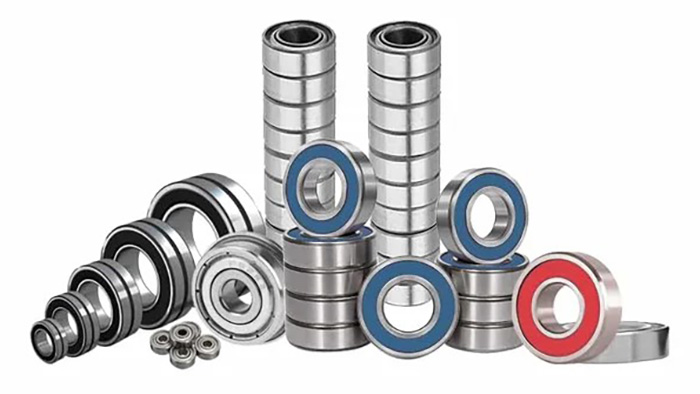
Standard bearings are generally easier to install and replace. They are smaller, lighter, and often require only standard workshop tools such as pullers, presses, heaters, and basic measuring instruments.
Large diameter bearings are much more difficult to install. Their size and weight require proper handling equipment, lifting devices, hydraulic tools, heating methods, and precise installation procedures.
Installation of large diameter bearings may require:
- Crane or lifting equipment
- Shaft and housing inspection
- Controlled heating
- Hydraulic mounting tools
- Accurate alignment checks
- Clean assembly conditions
- Correct bolt tightening sequence
- Lubrication before startup
- Run-in monitoring
Incorrect installation can damage a large diameter bearing before the machine starts operating. Raceway dents, poor fits, uneven bolt tightening, contamination, and misalignment can reduce service life significantly.
In Large Diameter Bearings vs Standard Bearings, installation complexity is clearly higher for large diameter bearings.
Before choosing a bearing based only on size or price, contact Alma Bearings. Our team can help you select the right bearing type for your equipment, operating environment, and long-term maintenance goals.
10. Maintenance and Condition Monitoring
Maintenance requirements are different for standard and large diameter bearings.
Standard bearings are often easier and cheaper to replace. In many machines, maintenance teams may replace them during scheduled service without complex planning. Because they are widely available, spare parts management is usually simple.
Large diameter bearings are expensive, heavy, and difficult to replace. Replacement may require long machine downtime, cranes, disassembly of major components, and skilled technicians. Therefore, preventive maintenance and condition monitoring are much more important.
Maintenance for large diameter bearings may include:
- Regular lubrication
- Vibration analysis
- Temperature monitoring
- Seal inspection
- Grease or oil analysis
- Bolt torque checks
- Clearance measurement
- Noise monitoring
- Raceway inspection
Condition monitoring helps detect early signs of failure before serious damage occurs. In industries where downtime is costly, monitoring large diameter bearings can save significant money.
This is a major difference in Large Diameter Bearings vs Standard Bearings: standard bearings are often replaced more easily, while large diameter bearings require a strategic maintenance program.
11. Cost and Total Cost of Ownership
Standard bearings usually have a lower purchase price. They are mass-produced, widely stocked, and easy to replace. This makes them cost-effective for general machinery.
Large diameter bearings are more expensive because they require more material, advanced manufacturing, precision machining, heat treatment, inspection, and sometimes custom engineering. Installation and logistics costs are also higher.
However, the purchase price is only one part of the total cost. In heavy industry, total cost of ownership is more important than initial cost.
Total cost of ownership includes:
- Bearing purchase price
- Installation cost
- Lubrication cost
- Maintenance cost
- Downtime cost
- Replacement labor
- Production loss
- Risk of machine damage
- Expected service life
A cheaper standard bearing may become very expensive if it fails in a heavy-duty machine. A high-quality large diameter bearing may cost more initially but reduce downtime and improve long-term reliability.
When comparing Large Diameter Bearings vs Standard Bearings, buyers should evaluate cost based on machine criticality and operating risk.
12. Application Suitability
The correct choice depends on application requirements.
Standard bearings are usually suitable for:
- Electric motors
- Pumps
- Fans
- Light conveyors
- Automotive systems
- Small gearboxes
- Packaging machines
- General mechanical equipment
Large diameter bearings are usually suitable for:
- Cranes
- Wind turbines
- Excavators
- Mining crushers
- Steel rolling mills
- Cement kilns
- Marine systems
- Heavy gearboxes
- Large turntables
- Tunnel boring machines
If the application requires high speed, compact design, low cost, and moderate loads, standard bearings are often the best choice. If the application involves heavy loads, moment loads, shock forces, large shafts, and harsh conditions, large diameter bearings are usually necessary.
Key Comparison Table
|
Factor |
Standard Bearings |
Large Diameter Bearings |
|
Load capacity |
Light to medium loads |
Heavy and complex loads |
|
Speed capability |
Better for high speed |
Better for low to moderate speed |
|
Structural support |
Mainly supports shafts |
Supports large rotating structures |
|
Shock resistance |
Limited in standard designs |
Stronger for impact loads |
|
Installation |
Easier and faster |
More complex and specialized |
|
Maintenance |
Simple replacement |
Requires monitoring and planning |
|
Cost |
Lower initial cost |
Higher initial cost |
|
Availability |
Usually widely available |
May require longer lead time |
|
Typical applications |
Motors, pumps, fans |
Cranes, mining, wind turbines |
Common Selection Mistakes
One common mistake is assuming that a larger bearing is always better. This is not true. A large bearing may be unnecessary for a compact high-speed machine and may increase friction, cost, and space requirements.
Another mistake is selecting a standard bearing for a heavy-duty application only because it is cheaper or available faster. If the bearing cannot handle the real load conditions, failure may occur quickly.
Many buyers also ignore lubrication and sealing. A bearing with the correct size and load rating can still fail early if it is exposed to contamination or insufficient lubrication.
Installation is another common issue. Large diameter bearings require accurate mounting, clean assembly, and proper tools. Poor installation can reduce bearing life even if the bearing itself is high quality.
The safest approach is to compare real operating conditions, not just dimensions or price.
How to Choose Between Large Diameter Bearings and Standard Bearings
To choose correctly, start by answering these questions:
- What radial and axial loads does the bearing carry?
- Are shock loads or moment loads present?
- What is the operating speed?
- Is the environment clean, dusty, wet, hot, or corrosive?
- Is high precision required?
- How easy is maintenance access?
- What lubrication system is available?
- What is the cost of downtime?
- Is the bearing supporting only a shaft or a large structure?
If the machine is compact, high-speed, and carries moderate loads, a standard bearing is usually suitable. If the machine is heavy-duty, exposed to harsh conditions, and carries complex loads, a large diameter bearing is normally the better choice.
If you are not sure which option is right for your machinery, Alma Bearings can help you compare Large Diameter Bearings vs Standard Bearings and select the best solution based on your technical requirements, budget, and operating conditions.
Conclusion
The comparison of Large Diameter Bearings vs Standard Bearings shows that size is only one part of the difference. The real differences are found in load capacity, speed capability, structural support, shock resistance, lubrication, sealing, installation, maintenance, and total cost of ownership.
Standard bearings are ideal for general machinery where speed, compact size, availability, and cost-effectiveness are important. Large diameter bearings are designed for heavy industrial equipment where high load capacity, durability, machine stability, and long service life are critical.
There is no universal winner. The best bearing is the one that matches the real operating conditions of the machine. Choosing based only on price or dimensions can lead to premature failure and costly downtime. A technical selection process helps ensure reliable operation and better long-term performance.
Read more: Miniature Bearings vs Standard Bearings
Frequently Asked Questions
1. What is the main difference between large diameter bearings and standard bearings?
The main difference is load capacity and application scale. Standard bearings are used in general machinery with light to medium loads, while large diameter bearings are designed for heavy industrial machinery, large shafts, structural support, and complex loads.
2. Are large diameter bearings always better than standard bearings?
No. Large diameter bearings are better for heavy-duty applications, but standard bearings are often better for high-speed, compact, and cost-sensitive machines such as electric motors, pumps, fans, and small gearboxes.
3. Why are large diameter bearings more expensive?
Large diameter bearings are more expensive because they require more material, advanced manufacturing, precise machining, heat treatment, stronger raceways, and sometimes custom engineering. Installation and maintenance costs are also usually higher.
4. When should I choose a large diameter bearing instead of a standard bearing?
You should choose a large diameter bearing when the machine has heavy radial or axial loads, moment loads, shock loads, large shafts, harsh operating conditions, or high downtime risk. Cranes, wind turbines, mining equipment, and steel mills are common examples.
Comments (0)