
Shopping Cart
There are no more items in your cart
- News
- 0 likes
- 67 views
- 0 comments
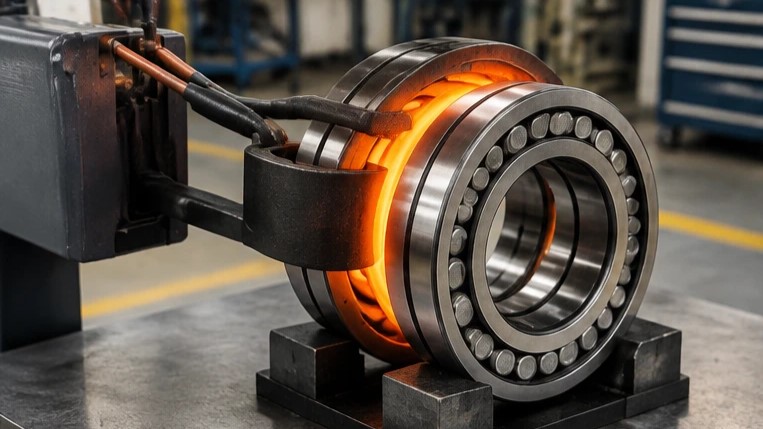
In industrial plants, bearing performance is rarely determined by the bearing alone. A high-quality bearing can still fail early if lubrication is wrong high-quality bearing can still fail early if lubrication is wrong, or installation practices create damage before the machine even starts. That is why teams focused on uptime do not treat bearing life as a fixed catalog value. In real operating conditions, bearing lifespan is the result of multiple controllable factors working together.
For maintenance managers, reliability engineers, and OEM buyers, the practical question is not only how long a bearing should last on paper, but how to increase the service life of bearings in actual industrial duty. In motors, pumps, conveyors, fans, gearboxes, compressors, and process equipment, longer bearing life means fewer stoppages, lower maintenance cost, better asset availability, and reduced risk of secondary shaft or housing damage. Extending bearing lifespan also improves lubrication efficiency, stabilizes temperatures, and reduces unplanned production losses caused by vibration or seizure events.
This guide explains how to extend bearing lifespan in industrial equipment using field-proven methods rather than abstract theory. It covers the main causes of premature failure, the role of lubrication and contamination control, the importance of alignment and mounting, and the value of condition monitoring in catching problems before damage becomes irreversible. The goal is simple: help industrial users create conditions in which bearings can reach or exceed their expected service life.
Our Products: Ball Bearings
Why Bearing Lifespan Is Shortened in Real Industrial Conditions
In theory, bearings are designed to operate for long periods under defined load and speed conditions. In practice, however, industrial environments introduce variables that reduce service life well before the calculated limit is reached. Dust, moisture, process washdown, thermal cycling, poor relubrication intervals, shaft deflection, and operator error all combine to create stress that accelerates fatigue and wear.
One of the most important things to understand is that most bearings do not fail because the rolling elements simply “wear out” naturally in ideal conditions. They fail because operating conditions become hostile to the lubricant film and to the precision contact surfaces inside the bearing. Once the film is disrupted or foreign particles enter the contact zone, the bearing moves from normal rolling contact into a damaging regime that includes abrasion, indentation, sliding, overheating, and surface fatigue.
The table below summarizes the most common practical factors that influence bearing lifespan in industrial service.
| Factor | How It Reduces Bearing Lifespan | Typical Plant-Level Consequence |
|---|---|---|
| Poor lubrication | Inadequate film thickness leads to metal-to-metal contact and heat buildup | Noise, temperature rise, premature wear |
| Contamination | Solid particles and moisture damage raceways and rolling elements | Abrasion, corrosion, grease degradation |
| Misalignment | Uneven load distribution increases local stress | Edge loading, vibration, accelerated fatigue |
| Incorrect mounting | Installation shock or fit errors damage internal geometry | Early failure shortly after startup |
| Overheating | Lubricant breakdown and material stress reduce durability | Oxidation, grease hardening, seal damage |
| Overloading | Contact stress exceeds intended operating range | Surface fatigue, spalling, cage stress |
| Poor sealing | Allows dirt, water, and process contaminants to enter | Frequent relubrication and reduced service life |
| Lack of monitoring | Problems remain undetected until severe damage develops | Unplanned downtime and costly repairs |
Understanding these mechanisms is the foundation of any serious bearing life extension program. If a plant treats bearing replacement as a routine consumable event without addressing root causes, the same failure pattern usually returns.
Our Products: Roller Bearings
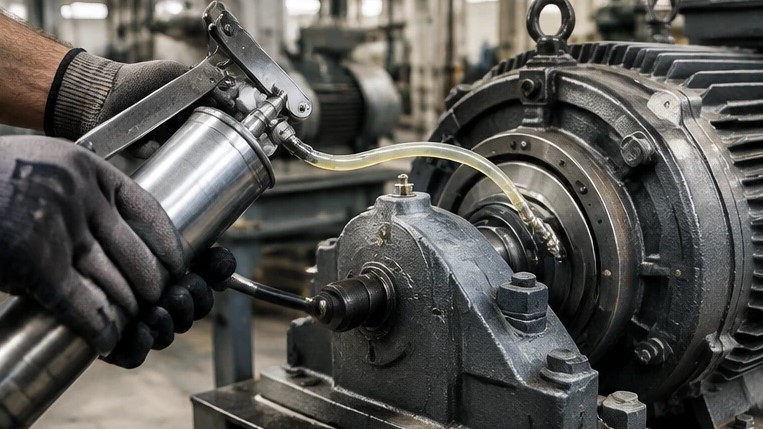
Start with Lubrication Quality, Not Just Lubrication Quantity
Lubrication is the single most important controllable variable affecting bearing lifespan. A bearing does not need grease or oil simply to reduce friction in a general sense. It needs a stable lubricant film that separates highly loaded metal surfaces under changing speed, load, and temperature conditions. If that film becomes too thin, contaminated, oxidized, or thermally degraded, internal contact damage begins quickly.
A common mistake in industry is to think lubrication problems only mean under-lubrication. In reality, both too little and too much lubricant can reduce bearing lifespan. Too little lubricant leads to starvation, increased friction, and elevated temperature. Too much grease can cause churning, heat generation, seal stress, and leakage. Wrong lubricant selection can be equally damaging if viscosity does not match operating speed and temperature, or if the grease thickener and additives are unsuitable for the environment.
When extending bearing lifespan, lubrication strategy should be designed around actual operating conditions rather than general habit. High-speed electric motors may require very different grease behavior compared with slow heavily loaded conveyors or wet process equipment. The same is true for bearings operating in hot zones, washdown areas, or dusty bulk material applications.
A practical lubrication program should focus on the following:
- selecting the correct lubricant type and viscosity for speed, load, and temperature
- applying the correct volume at the correct interval
- preventing contamination during storage, transfer, and relubrication
- monitoring lubricant condition where oil systems are used
In grease-lubricated systems, relubrication intervals should reflect real duty cycles. Bearings in continuous operation, hot environments, or dirty areas often need closer attention than bearings in stable indoor motor service. At the same time, aggressive relubrication without purge control can be as harmful as neglect. In oil-lubricated systems, the health of the oil itself becomes critical. Oxidation, water ingress, particle load, and additive depletion all directly influence bearing life.
Our Products: Bearing Units
Contamination Control Is One of the Fastest Ways to Increase Bearing Lifespan
In many industrial applications, contamination is the dominant reason bearings fail before their intended life. Even very small hard particles can create denting and abrasion in raceways and rolling elements. Those damaged zones then become stress concentrators, which increase vibration and initiate surface fatigue. Moisture is equally harmful because it weakens the lubricant film, promotes corrosion, and accelerates additive breakdown.
This is why contamination control often delivers faster and more visible gains than simply changing bearing brands. If the operating environment remains dirty or wet, a premium bearing can still fail early. Better sealing, cleaner mounting practices, controlled lubricant handling, and improved housing protection usually produce a larger reliability gain than relying on component quality alone.
The relationship between contamination source and damage pattern is shown below.
| Contamination Source | Typical Bearing Damage | Preventive Action |
|---|---|---|
| Airborne dust | Abrasive wear and denting | Upgrade seals and improve housing protection |
| Metal debris from adjacent components | Surface indentation and rolling track damage | Remove source of wear particles and improve filtration |
| Water ingress | Corrosion, lubricant breakdown, reduced film strength | Use better seals, breathers, and moisture control |
| Dirty grease handling | Embedded particles in grease path | Use clean tools, sealed cartridges, and controlled procedures |
| Washdown exposure | Moisture intrusion and seal overload | Use application-specific sealing and purge strategy |
| Internal residue from poor maintenance | Recontamination after servicing | Clean housings and parts thoroughly before reassembly |
Plants that want to extend bearing lifespan should examine the full contamination path, not just the bearing itself. The source may be a damaged seal, an open grease container, a breather pulling in humid air, shaft wear at the seal contact zone, or poor housekeeping around maintenance work. Reliability improves when contamination is managed as a system issue.
Alignment and Fit Conditions Strongly Affect Service Life
Even with good lubrication and clean operating conditions, bearings can fail early if shaft and housing geometry are not correct. Misalignment changes the load zone inside the bearing and concentrates stress where it should be distributed evenly. Over time, this leads to localized heating, edge loading, vibration, cage stress, and accelerated fatigue damage.
In rotating equipment, misalignment may come from poor installation, soft foot, base distortion, pipe strain, thermal growth, or structural movement during operation. Technicians sometimes replace a failed bearing without correcting these underlying mechanical conditions. As a result, the replacement bearing enters the same hostile geometry and follows the same failure path.
Proper fits are equally important. If the fit is too loose, creep may occur between the ring and its seat, causing fretting, wear, and heat. If the fit is too tight, internal clearance can be reduced excessively, increasing preload and operating temperature. The correct fit depends on load direction, operating temperature, shaft material, housing material, and application duty.
For industrial equipment, extending bearing lifespan requires more than checking catalog dimensions. It requires verifying shaft condition, housing bore integrity, shoulder geometry, runout, and real machine alignment under operating constraints. Laser alignment, controlled assembly methods, and tolerance verification are not optional extras in reliability-focused maintenance. They are primary life-extension tools.
Our Products: Plain Bearings
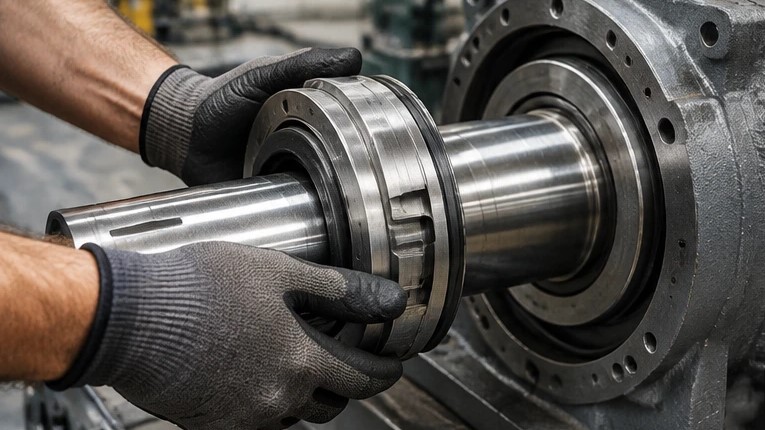
Installation Damage Often Happens Before the Machine Runs
A surprising number of bearing failures begin during mounting. If a bearing is installed with impact through the rolling elements, contamination enters during assembly, or thermal mounting is not controlled properly, the damage may already be present at startup. The machine may run for some time, but the internal surfaces have already been compromised.
Installation-related problems include brinelling from hammering, contamination introduced from dirty tools or benches, ring distortion from poor fit practice, and seal damage caused during handling. Improper poor fit practice, and seal damage caused during handling. Improper not controlled correctly. In some cases, maintenance teams unknowingly create false brinelling or denting while transporting or storing spare assemblies under vibration.
To extend bearing lifespan, installation procedures must be standardized and repeatable. Clean working conditions, correct tools, measured fits, controlled heating methods, and ring-specific mounting force are basic requirements. Precision components need precision handling. The cost of better installation discipline is low compared with the cost of repeated downtime and secondary machine damage.
Temperature Control and Operating Stability Matter More Than Many Plants Realize
Heat is both a symptom and a cause of bearing distress. A bearing may run hot because lubrication is wrong, fit is incorrect, load is excessive, or contamination has increased friction. Once temperature rises, lubricant oxidation accelerates and grease consistency may change. Seals harden, purge behavior worsens, and the bearing becomes even more vulnerable. This creates a self-reinforcing cycle in which elevated temperature steadily shortens bearing lifespan.
Plants that want longer bearing life should track normal temperature baselines for critical assets rather than reacting only when equipment becomes obviously hot. A gradual increase in operating temperature can indicate relubrication issues, load changes, alignment drift, or early internal damage. The earlier the change is detected, the more likely the bearing can be protected before irreversible failure develops.
Stable operation also matters. Repeated starts and stops, shock loading, vibration from adjacent machinery, and process overload events all reduce bearing life. A bearing that is correctly specified for steady-state duty may perform poorly if the machine frequently sees transient or abnormal conditions. Extending bearing lifespan therefore requires cooperation between maintenance, operations, and engineering, not just better spare parts.
Read More: bearing failure
Condition Monitoring Extends Bearing Life by Catching Problems Early
Condition monitoring does not directly change the mechanical life of a bearing, but it significantly increases the chance of intervening before minor damage becomes catastrophic. In practice, that means a monitored bearing often lasts longer in service because lubrication issues, contamination patterns, imbalance, or misalignment can be corrected before they destroy the raceways and rolling elements.
The most effective monitoring methods depend on asset criticality and machine type. Vibration analysis is widely used for trend detection and fault pattern recognition. Ultrasound is useful for lubrication assessment and early friction changes. Thermography helps identify abnormal heating. Oil analysis supports systems with circulating lubrication, especially where particle load and moisture are relevant.
A mature program does not treat monitoring as isolated data collection. It links findings to action. If ultrasound suggests grease starvation, the relubrication program is reviewed. If vibration patterns indicate misalignment or looseness, mechanical correction follows. If recurring debris appears in oil analysis, filtration and wear source investigation begin. Bearing lifespan improves when monitoring drives intervention, not when data is simply archived.
Storage, Handling, and Spare Management Also Influence Bearing Lifespan
Bearing life extension begins before installation. Poor storage conditions can shorten the useful life of the bearing and lubricant before the component is ever mounted. Humid storage areas, damaged packaging, uncontrolled shelf rotation, and rough handling all increase risk. Bearings stored near vibration sources may also develop damage over time, particularly if large components remain stationary under oscillating environmental vibration.
Good spare management includes dry clean storage, original packaging retention until use, proper stock rotation, corrosion protection, and handling methods that prevent impact or particulate exposure. For greased or sealed units, shelf-life guidance should be respected. For large bearings, storage position and periodic rotation practices may also be relevant depending on manufacturer recommendations and component size.
Many plants focus heavily on failure analysis after installation but overlook preventable issues introduced by storage and handling. In reliability terms, that is an avoidable weakness.
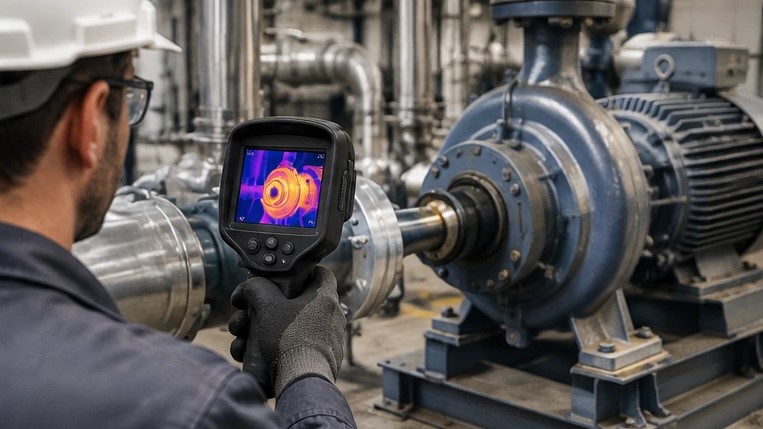
Practical Reliability Strategy for Longer Bearing Lifespan
If the objective is to improve bearing lifespan across a plant, isolated fixes rarely deliver the best result. The strongest gains come from a combined reliability approach in which lubrication, sealing, alignment, installation, and monitoring support each other. In most facilities, it is more effective to improve system discipline than to keep changing bearing suppliers after each failure event.
A practical site-level strategy usually includes two stages. First, identify the assets with the highest failure frequency, highest downtime cost, or most severe operating environment. Second, correct the specific life-reducing mechanisms on those assets and use the results to expand standards across similar equipment. This is usually faster and more economical than trying to redesign every machine at once.
The most effective plant-wide actions often include the following:
- standardize lubricant selection by application and operating condition
- improve sealing and contamination exclusion on dirty or wet assets
- verify shaft alignment and fit conditions on repeat-failure machines
- train technicians in precision installation and clean handling
- establish monitoring routes for temperature, vibration, and lubrication condition
- review failure history to identify recurring root causes rather than replacing parts reactively
Each of applied actions supports longer bearing life, but their value is greatest when applied together. Bearings survive longer when the entire operating environment becomes more controlled.
Read More: Bearing Noise
How to Measure Improvement in Bearing Lifespan
Industrial teams should not rely on assumptions when evaluating bearing reliability. Improvement should be tracked through practical maintenance indicators. These may include mean time between bearing replacements, lubrication-related work orders, temperature stability, contamination findings, emergency stoppages, and the repeat-failure rate on specific machine classes.
An increase in bearing lifespan is often visible before it appears in formal lifecycle calculations. For example, a plant may first notice fewer overheating calls, cleaner grease purge condition, reduced vibration alarms, or fewer emergency bearing swaps during shutdown-sensitive periods. These operational signals are valuable because they show that harmful mechanisms are being controlled.
For reliability programs, the most useful question is not simply whether a bearing lasted longer once, but whether the maintenance system now supports longer life consistently across similar assets. That is the difference between a temporary fix and a repeatable reliability gain.
Conclusion
Extending bearing lifespan in industrial equipment is not about a single upgrade or a single maintenance task. It is the result of controlling the operating conditions that determine whether the bearing runs inside a stable lubricated contact zone or inside a damaging environment of contamination, heat, misalignment, and surface stress. In most industrial settings, premature failure is preventable when these factors are addressed systematically.
The strongest improvements usually come from better lubrication practice, stronger contamination control, correct alignment and fit, cleaner installation, and earlier detection through condition monitoring. When these disciplines are combined, bearings run cooler, cleaner, and more predictably. That leads to fewer failures, longer maintenance intervals, and better production reliability.
For plants serious about uptime, the question is no longer whether bearing lifespan can be extended. The real question is how quickly maintenance standards can be improved to make that longer life normal rather than exceptional.
Read More: Bearing Vibration
FAQs
1. What is the most common reason for short bearing lifespan in industrial equipment?
Poor lubrication and contamination are among the most common causes. In many plants, bearings fail early not because of inherent product weakness, but because dirt, moisture, or incorrect lubricant conditions damage the rolling contact surfaces.
2. Does using a higher-quality bearing always increase bearing lifespan?
Not necessarily. A premium bearing can still fail early if sealing, lubrication, alignment, and installation conditions are poor. The operating environment usually has a greater effect on lifespan than brand alone.
3. Can too much grease reduce bearing lifespan?
Yes. Over-greasing can increase churning, raise operating temperature, stress seals, and cause lubricant leakage. Correct quantity and interval are as important as lubricant quality.
4. How does misalignment affect bearing lifespan?
Misalignment creates uneven internal loading, which increases localized stress, heat, and vibration. Over time, this shortens fatigue life and can produce recurring failure patterns if not corrected.
5. Why is condition monitoring important for bearing life extension?
Condition monitoring helps detect early signs of lubrication failure, contamination, vibration increase, and abnormal temperature before severe internal damage occurs. Early intervention often prevents premature replacement and secondary machine damage.
Comments (0)