
Shopping Cart
There are no more items in your cart
- News
- 0 likes
- 2 views
- 0 comments
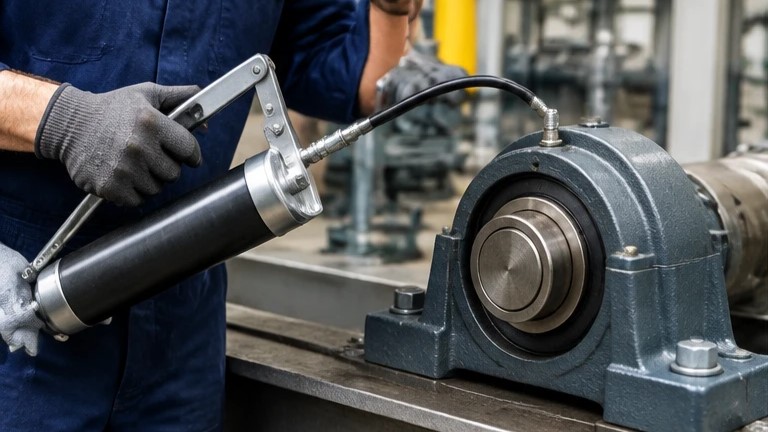
Correct bearing lubrication is the single most controllable factor in bearing reliability. It creates a protective film that separates rolling elements from raceways, removes heat, resists contamination, and prevents corrosion. In industrial plants, most premature bearing failures trace back to lubrication errors: wrong lubricant, incorrect quantity, poor relube interval, or inadequate contamination control.
This guide explains how to choose between grease and oil, select the right base oil viscosity and thickener, determine fill and relubrication practices, and implement condition-based lubrication using simple, repeatable routines that maintenance teams can adopt without complex math.
Our Products: Ball Bearings
Grease vs Oil: Choosing the Right Medium
Grease is oil held in a thickener matrix. It stays where placed, seals better against contaminants, and simplifies maintenance. Choose grease for electric motors, pillow blocks, fans, small to medium pumps, and slow to moderate speeds where leakage control and simplicity matter.
When to Select Grease Lubrication
Grease is ideal for standard industrial assets where accessibility is limited and contamination protection is paramount. It forms a protective collar at seal gaps that keeps ambient dust and moisture away from the internal raceways.
When to Specify Oil Lubrication
Oil is preferred when heat must be carried away, speeds are high, lubricant must be continuously refreshed, or when automatic circulation is needed. Use oil for high-speed compressors, large gearboxes with integrated bearings, heavily loaded paper machine rolls, or high-temperature applications where grease would oxidize quickly. When in doubt, check the bearing manufacturer’s speed factor guidance and the equipment maker’s recommendation.
Base Oil Viscosity: Matching Film Strength to Operating Conditions
In both grease and oil, the base oil viscosity is the backbone of film strength. Too thin and the film collapses under load; too thick and internal heat rises, shortening lubricant life. Selection starts with the operating temperature and speed.
Viscosity Grades for Electric Motors
Higher temperatures require higher viscosity grades to maintain film, while higher speeds tend to need lower viscosity to control churning. For most electric motor bearings in temperate environments, an ISO VG 68 to 100 base oil in a polyurea or lithium complex grease is a reliable default.
Heavy-Duty and Low-Speed Viscosity Selection
Heavily loaded, slow-turning bearings in conveyors or crushers often benefit from ISO VG 150–220 base oils to maintain film under load. Consult the equipment and bearing catalogs to fine-tune, then confirm with temperature and vibration feedback after commissioning.
Thickener Chemistry and Additives
Thickener type affects mechanical stability, water resistance, and compatibility. Lithium complex remains a general-purpose workhorse with good shear stability and pumpability. Polyurea is common in electric motors due to oxidation resistance and long life at moderate temperatures.
High-Performance Thickener Options
Calcium sulfonate complex offers natural extreme-pressure performance and excellent water resistance for wet, dirty environments. Always check compatibility before mixing; if uncertain, purge old grease completely during a planned changeover.
Additive Packages and Food-Grade Selection
Additives such as antiwear and extreme pressure agents, rust inhibitors, and solid lubricants should match the application. Avoid molybdenum disulfide in high-speed rolling bearings unless the OEM specifies it, as solids may disrupt film at speed. For food or pharmaceutical plants, use the appropriate H1-registered lubricants and maintain strict segregation from non-food-grade products.
Our Products: Roller Bearings
Grease Fill: How Much Is Enough?
Over-greasing is as harmful as under-greasing. Excess grease churns, raises temperature, and forces bleed into windings or seals. A conservative rule is partial fill of the free volume, allowing room for grease to migrate and release oil gradually.
Calculating Cavity Fill in Electric Motors
In electric motors, many OEMs specify a small percentage fill in the bearing plus a modest cavity fill with a relief path. Equip the housing with a clean purge exit and use short, controlled shots during operation to push out spent grease.
Pillow Block and Heavy Housing Procedures
For large pillow blocks, aim for a visible but controlled purge that expels discolored or contaminated grease without building pressure behind the seals. After relube, monitor temperature; a healthy bearing returns to baseline within hours. A steady temperature rise is a warning sign to stop and reassess quantity, viscosity, or seal condition.
Relubrication Intervals: From Calendars to Condition-Based
Calendar schedules are a starting point; condition-based intervals prevent both starvation and excess. Intervals shorten with higher temperature, speed, contamination, and vibration. For clean, cool motor bearings, intervals may be months to a year, whereas in wet, dusty environments with frequent washdowns, intervals shrink drastically.
Ultrasound-Assisted Relubrication
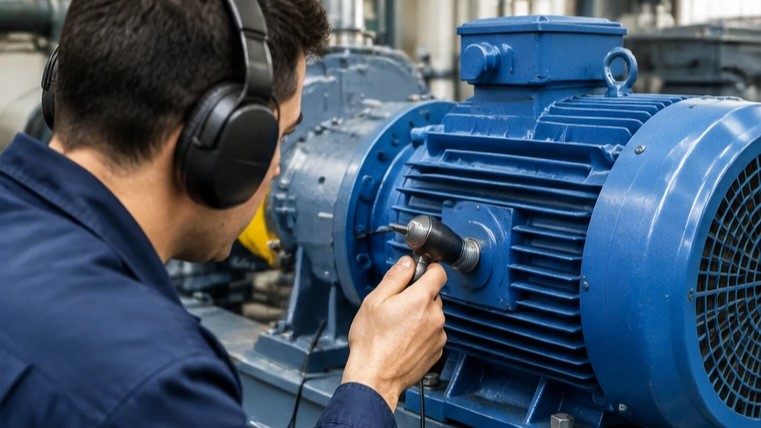
Move beyond fixed calendars by using ultrasound to detect acoustic friction changes that signal the need for fresh grease. Apply small, incremental shots while listening: the decibel level should drop and stabilize; if it rises or temperature spikes, stop immediately.
Thermal and Vibration Verification
Complement ultrasound with thermal imaging to confirm stable operating temperatures after lubrication, and with vibration trending to ensure no imbalance or misalignment is being masked by fresh grease.
Our Products: Bearing Units
Application Techniques: Getting the Grease Where It Works
Lubrication success depends on delivery. Use dedicated grease guns labeled by product to prevent cross-contamination. Calibrate grease guns so the team knows how much a “shot” delivers. Wipe fittings before connecting, and use clean, capped couplers to avoid injecting dirt.
Open Bearings and Purge Techniques
For shielded bearings, grease is routed through passages; slow, steady pumping prevents seal damage. For open bearings in housings, rotate the shaft slowly while applying to distribute grease evenly. In purge lubrication, run the machine at operating speed with the drain open so spent grease exits cleanly; then close the drain to maintain the protective barrier.
Centralized Lubrication System Maintenance
For centralized systems, verify pressure and metering device operation, and inspect lines for hardening or leaks that starve remote bearings.
Oil Lubrication Methods: Splash, Bath, and Circulation
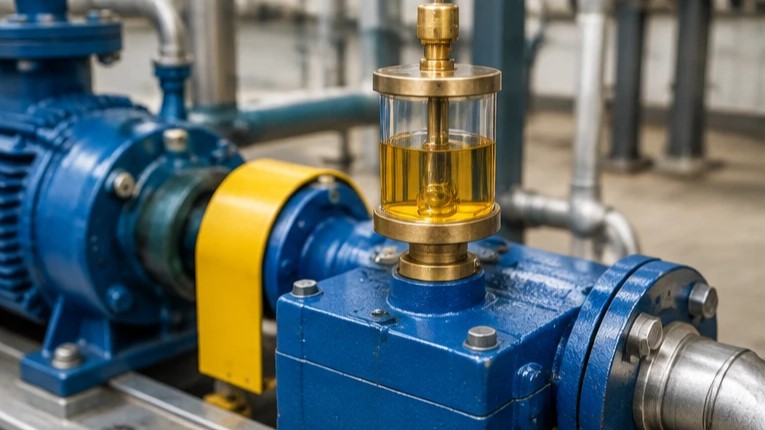
When oil is selected, maintaining level and cleanliness is vital. Splash or bath systems depend on correct oil level marks—too low starves the rolling elements, too high causes churning losses and heat.
Bath and Splash Level Control
Sight glasses with marked target zones eliminate guesswork; replace stained or fogged glasses. For higher speeds or hot, dirty service, circulating oil carries heat and particles to filters and coolers.
Filtration and Breather Upgrades
Maintain filter ΔP and change elements before bypass. Use breathers appropriate to the environment: desiccant breathers for humid areas, particulate breathers for dusty plants, and check valves to limit air exchange on thermal cycles. Schedule routine sampling ports at turbulent, representative points, and trend viscosity, water content, particle counts, and oxidation indicators.
Our Products: Plain Bearings
Contamination Control: Seals, Storage, and Handling
Even perfect lubricant selection fails without contamination control. Store drums and pails indoors, sealed, and off the floor. Use color-coded, sealed transfer containers with dedicated pumps, and never leave lids open in the shop.
Upgrading Plant Seals
On the machine, upgrade to labyrinth isolators where practical; they block dust and moisture without rubbing friction. In wet plants, shield grease fittings from washdown and relube after cleaning to restore the barrier.
Preventing Ingress in Oil and Grease Loops
Replace obsolete open vents with breathers and route relief ports away from splash zones. For oil systems, quick-connect sample ports and kidney-loop filtration during outages are inexpensive ways to strip varnish precursors and particles.
Temperature Management and High-Temperature Service
Lubricant life halves with each meaningful temperature rise. If operating temperatures trend upward, investigate the cause before switching to exotic greases. Start with quantity and viscosity, then alignment and load, then seal drag or over-packing.
High-Temperature Formulations
For truly high-temperature applications, choose greases with synthetic base oils and oxidation-resistant thickeners, and shorten relube intervals to keep the soap matrix refreshed. In oil systems, consider coolers or increased flow.
Post-Maintenance Thermal Verification
Always verify with thermal imaging after changes; the goal is a stable temperature profile under steady load.
Electrical Effects in VFD Environments
Modern inverter drives can create stray shaft currents that arc through bearings, degrading grease and pitting raceways. Lubrication alone cannot stop electrical erosion, but fresh, correctly selected grease slows surface damage and carries away debris.
Hardware Mitigation Strategies
Combine proper lubrication with mitigation hardware such as shaft grounding rings and insulated bearings on the non-drive end. After installing grounding, review lubrication intervals; reduced arcing typically lowers the rate of grease degradation.
Read More: bearing failure
Commissioning a New Bearing: First Grease, First Hours
During installation, cleanliness is non-negotiable. Pre-lube with the specified grease, rotating the bearing by hand to distribute. After start-up, check temperature every few minutes until it stabilizes.
Stabilization and Baseline Setting
A temporary rise can occur as the grease channels; it should settle as a stable baseline. Recheck housing torque fasteners and verify that purge points are not blocked by paint or debris. Set the initial condition-monitoring baselines for future relube decisions.
Troubleshooting Common Lubrication Symptoms
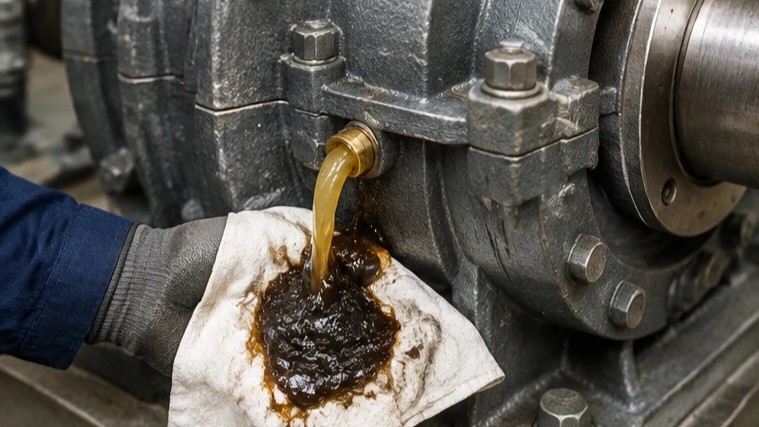
Grease purging from seals is often a sign of over-greasing or excessive housing pressure; reduce quantity and confirm the relief path. Persistent high temperatures suggest viscosity mismatch, overfill, or mechanical issues such as misalignment.
Identifying Oxidation and Water Contamination
Dark, burnt odor indicates oxidation; shorten intervals and switch to a higher-temperature grease. Milky appearance points to water ingress; replace breathers, improve seals, and purge thoroughly. Noise that temporarily quiets after greasing but returns quickly suggests underlying damage.
Read More: Bearing Vibration
Documentation, Labels, and Training
Sustainable lubrication programs run on standard work. Document each asset’s lubricant type, quantity per event, target interval or condition trigger, and delivery points. Use color codes and symbols on fittings and storage to prevent mix-ups.
Auditing and Reliability Culture
Calibrate grease guns annually and train technicians to use ultrasound headsets and thermal cameras. Finally, audit a sample of relube jobs monthly. Look for consistent coupler hygiene, correct purge practices, and stable post-lube temperatures. Small, disciplined routines prevent the majority of lubrication-caused failures.
Summary
Proper bearing lubrication is a system: choose the right medium and viscosity, deliver the correct amount at the right time, protect it from contaminants, and verify performance with simple condition monitoring. Plants that standardize on clean handling, modern breathers and labyrinth isolators, ultrasound-guided relube, and thermal confirmation routinely extend bearing life well beyond catalog expectations while reducing grease consumption and unscheduled downtime.
Read More: Bearing Noise
FAQ
How do I pick a default grease for most plant motors?
Select a high-quality electric-motor grease with a polyurea or lithium complex thickener and a base oil around ISO VG 68–100. Verify temperature and speed limits from the motor and bearing makers, then adjust by monitoring temperature after relube.
How often should I regrease a fan bearing?
Start with the OEM recommendation, then move to ultrasound-guided lubrication. In clean environments this may be quarterly; in dusty or hot service it may be monthly or even weekly. Use small shots and stop when the acoustic level stabilizes.
When should I switch from grease to oil?
Switch when heat removal is critical, speeds are very high, or continuous refresh is needed—such as large, high-speed pumps or hot, heavily loaded rolls. Oil systems also enable filtration for fine contamination control.
Is over-greasing worse than under-greasing?
Both are harmful, but chronic over-greasing is common and leads to elevated temperatures, seal damage, and premature failure. Use measured shots, provide a purge path, and confirm temperature returns to baseline.
Can I mix different greases?
Avoid mixing unless confirmed compatible by testing. If a change is required, purge old grease and clean cavities during a planned outage before introducing the new product.
Comments (0)